
Artifacts · No. 39
Liberty Bell
A cracked bell that abolitionists named and a movement made immortal: its inscription, Proclaim Liberty throughout all the Land, outgrew the bell itself.
1752 (recast 1753)Zoomable photographFamily viewing: Yes
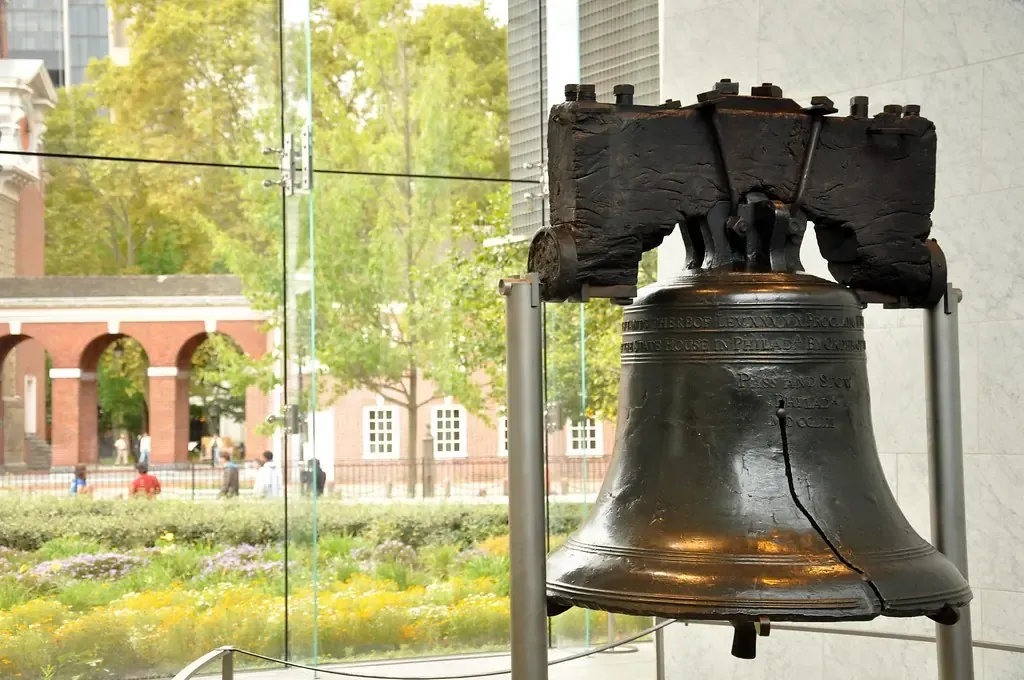
Photograph: pepsiline · Public domain 1.0 · Source
Held by: Liberty Bell Center, Independence National Historical Park, Philadelphia
The story
Pennsylvania ordered the bell in 1751 from the Whitechapel foundry in London for its new state house. It cracked at its first testing stroke, and two Philadelphia founders, Pass and Stow, recast it from the same metal in 1753, twice, before it sounded right. It rang for the Assembly, for the reading of the Declaration in July 1776, and for the ordinary business of the city for eighty years, until the famous crack spread beyond repair in the 1840s; its last clear ringing was for Washington's birthday in 1846.
The name came later. Abolitionists in the 1830s took the bell and its Leviticus inscription for their cause and called it the Liberty Bell, and the name, the crack and the verse became the national symbol together. It toured the country by train until 1915, when Philadelphia decided it was too fragile to travel, and it hangs now across from Independence Hall.
The inscription
PROCLAIM LIBERTY THROUGHOUT ALL THE LAND UNTO ALL THE INHABITANTS THEREOF LEV. XXV X
“From Leviticus 25:10, the law of the jubilee year, when slaves were freed and debts released.”
Below it the bell carries its makers' line: Pass and Stow, Philadelphia, MDCCLIII.
The record, not the myth
The beloved story that it rang on 4 July 1776 is not documented; it rang for the public reading on 8 July with the other bells of the city. How the final crack happened, a Washington's birthday ringing in 1846 is the city's own account, is tradition with partial records.
Sources
Image and model credits
- Photographpepsiline · Public domain 1.0 · Source