
Artifacts · No. 58
Bust of Nefertiti
The most famous face of ancient Egypt after Tutankhamun's mask: Thutmose's workshop model of Queen Nefertiti, limestone and stucco, with one eye never inlaid.
c. 1345 BCZoomable photographFamily viewing: YesCatalogue: ÄM 21300
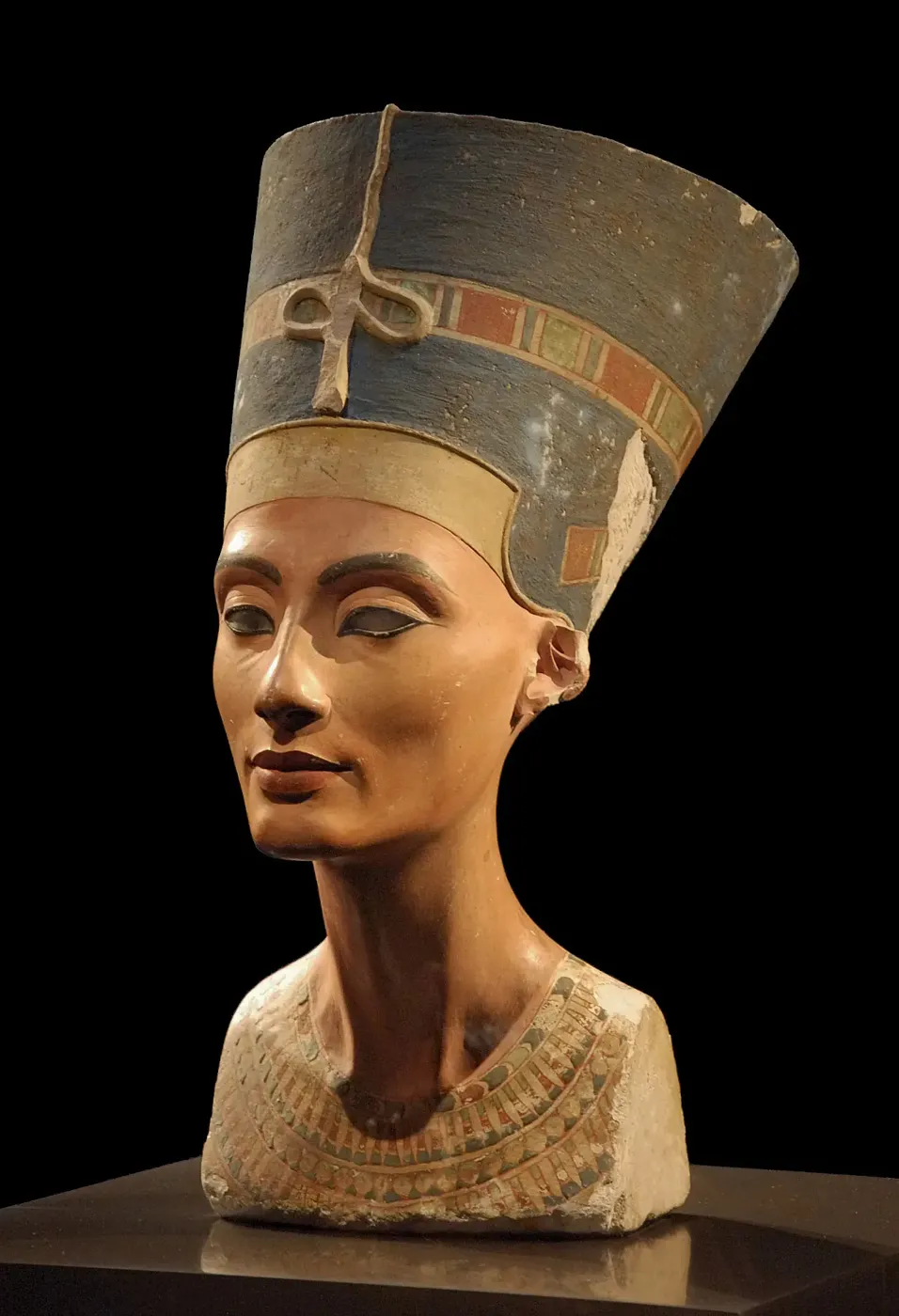
Photograph: Philip Pikart · CC BY-SA 3.0 · Source
Held by: Neues Museum, Berlin · Catalogue ÄM 21300
The story
Ludwig Borchardt's team found the bust on 6 December 1912 in the ruins of the sculptor Thutmose's workshop at Amarna, face down in the rubble of a storeroom. It is a studio model, made to be copied: a limestone core built up in stucco, painted, the queen in her tall blue crown with a uraeus, one eye inlaid with quartz and the other left blank, because a model does not need both. Borchardt's diary knew what they had: describing it is useless, one must see it.
The division of finds sent it to Berlin, and Egypt has argued the paperwork ever since, from claims the bust was hidden at the division to formal return requests. The museum released its own 3D scan in 2019 after a long freedom of information campaign, a fact this page records with respect: the scan is the museum's, and this page carries a photograph and links the museum.
The record, not the myth
The blank left eye is a workshop fact, not damage or symbolism, which the CT scans of the bust have confirmed in detail, including an older, less idealised face under the stucco. The 1913 division dispute is documented on both sides and unresolved.
Sources
Image and model credits
- PhotographPhilip Pikart · CC BY-SA 3.0 · Source
Continue on
Dancing Girl of Mohenjo-daroSanxingdui Bronze Standing Figure