
Artifacts · No. 57
Dancing Girl of Mohenjo-daro
A bronze girl ten centimetres tall, cast by the lost wax method in the Indus Valley 4,500 years ago, standing with a confidence no sculptor of her age was supposed to have.
c. 2500 BCZoomable photographFamily viewing: No
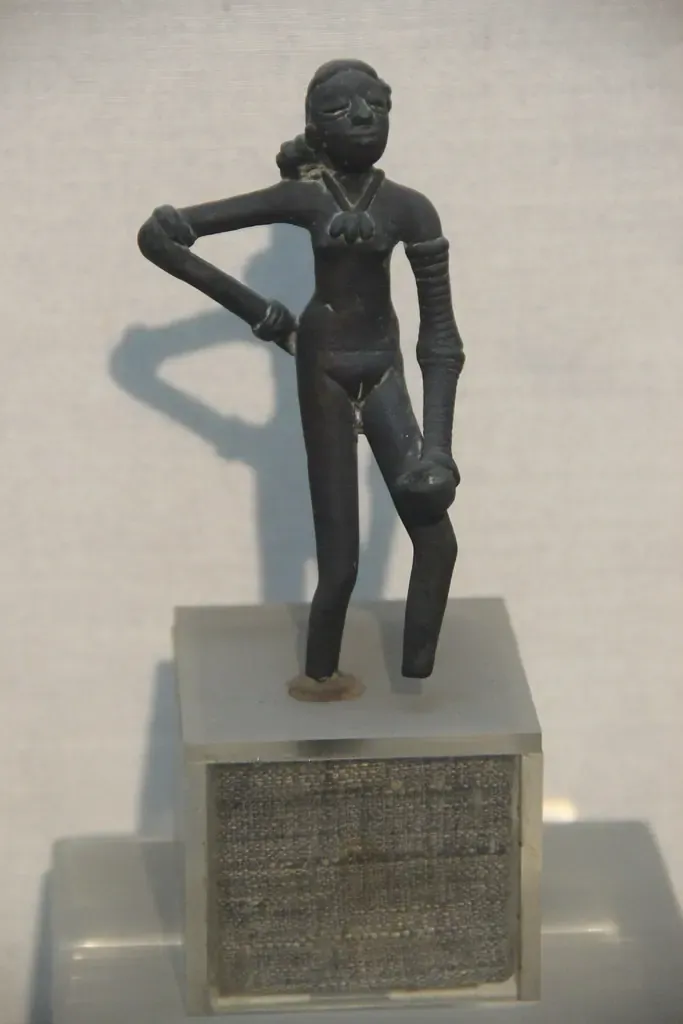
Photograph: Gary Lee Todd, Ph.D. · CC0 1.0 · Source
Held by: National Museum, New Delhi
The story
The figure was found at Mohenjo-daro in 1926, in the ruins of the great Indus city. She is cast bronze, naked but for a necklace and a stack of bangles up one arm, her hair in a bun, her weight on one leg and her hand on her hip, head tilted with an expression the excavators read as self assured to the point of impudence. John Marshall, the dig's director, wrote that she showed a young girl entirely confident of herself and the world.
The Indus script is undeciphered and the civilisation left no royal monuments, so this small figure carries an outsized share of what the world knows of its art: technically masterful casting and a naturalism nothing in the period's other work predicts. She is the National Museum in Delhi's most famous small object.
The record, not the myth
Dancing Girl is the excavators' name; nothing about the figure proves a dancer, and the pose may be simply a standing girl. Her display in Delhi has changed over the years with the galleries; the museum is the authority on seeing her.
Sources
Image and model credits
- PhotographGary Lee Todd, Ph.D. · CC0 1.0 · Source