
Artifacts · No. 56
Ram in a Thicket
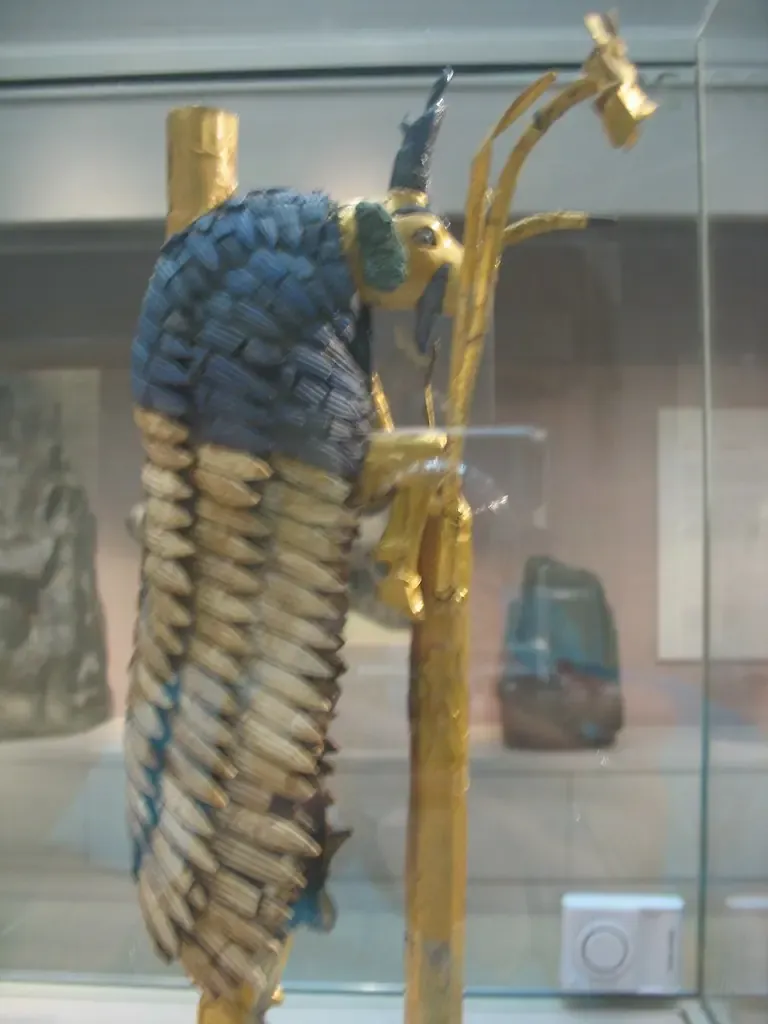
A goat rearing against a golden tree, in gold, lapis, shell and silver, from the death pits of Ur: Woolley named it for Abraham's ram, and it is not a ram at all.
c. 2600 BCZoomable photographFamily viewing: YesCatalogue: ME 122200
Photograph: nikoretro · CC BY-SA 2.0 · Source
Held by: British Museum, London (pair at the Penn Museum, Philadelphia) · Catalogue ME 122200
The story
There are two of them, a matched pair from the Royal Cemetery of Ur, found crushed in the Great Death Pit and rebuilt by Woolley. A male goat stands on its hind legs against a flowering tree, its fleece in lapis and shell, its horns and ears gold, the tree gold on a silver stem, the whole on a mosaic base. Woolley, reaching for a name the public would know, called them rams in a thicket after the Genesis story of Abraham and Isaac, and the name stuck to a goat.
What they were for is not known: the leading reading is that they were stands, the supports of a small table or offering frame, their tubes and sockets built into the design. One is in London, its twin in Philadelphia, and together they are the most decorative objects to come out of Ur.
The record, not the myth
It is a goat, not a ram; the name is Woolley's biblical flourish. The figures as displayed are heavily restored from crushed fragments, which the museums record and popular accounts skip.
Sources
Image and model credits
- Photographnikoretro · CC BY-SA 2.0 · Source