
Then and Now · E1
The Nile at Giza and Memphis
Félix Bonfils photographed the pyramids in the 19th century with the Nile flood spread below them, as it had come every year since the kings built them. The 2022 photograph shows the plateau dry above a city of millions, and Memphis, the capital the flood served, is low ruins among palm groves at Mit Rahina.
Then: The yearly flood reaching the Giza plateau, before the Aswan High DamHistorical imageFamily viewing: Yes
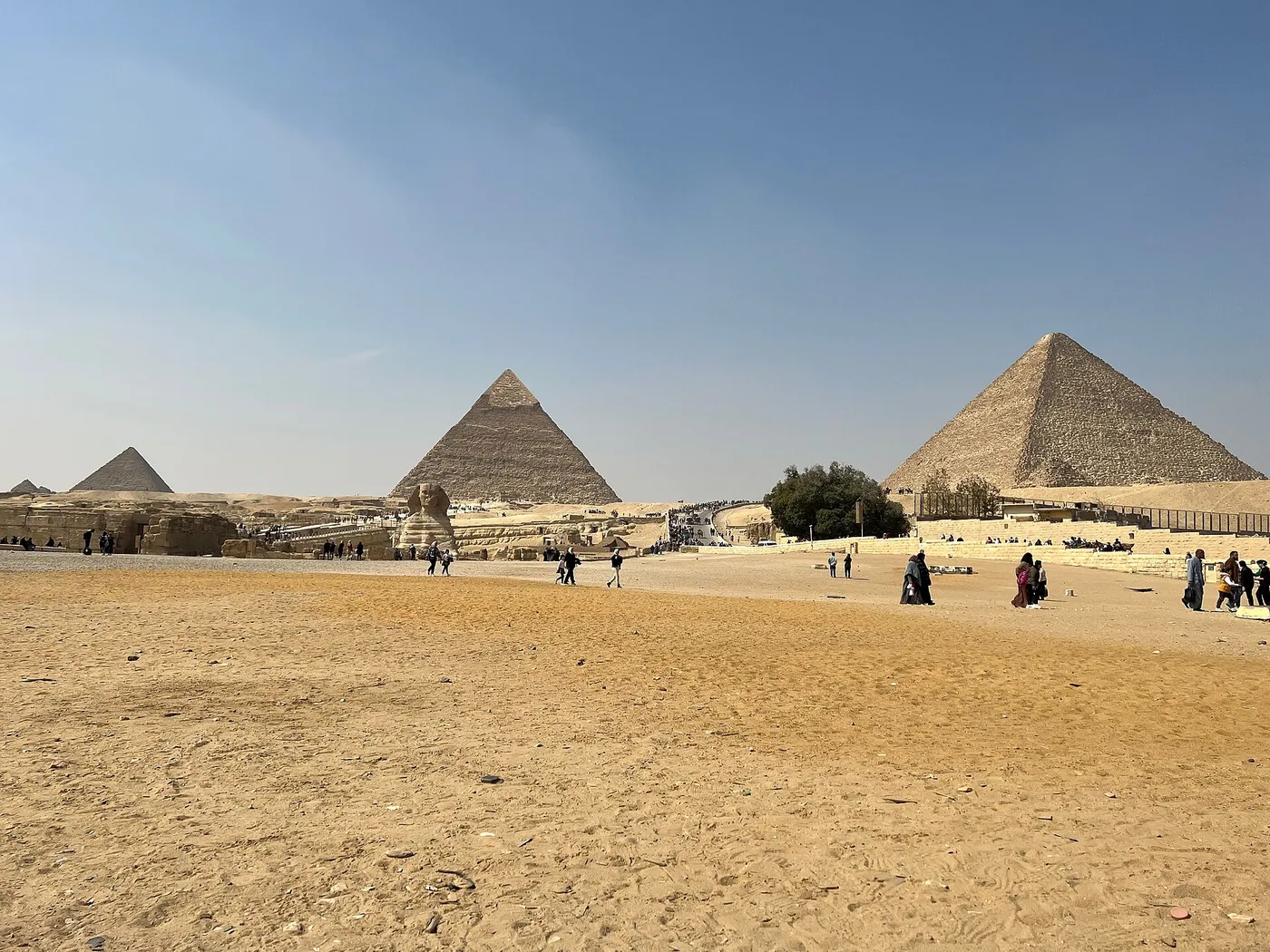 ThenNow
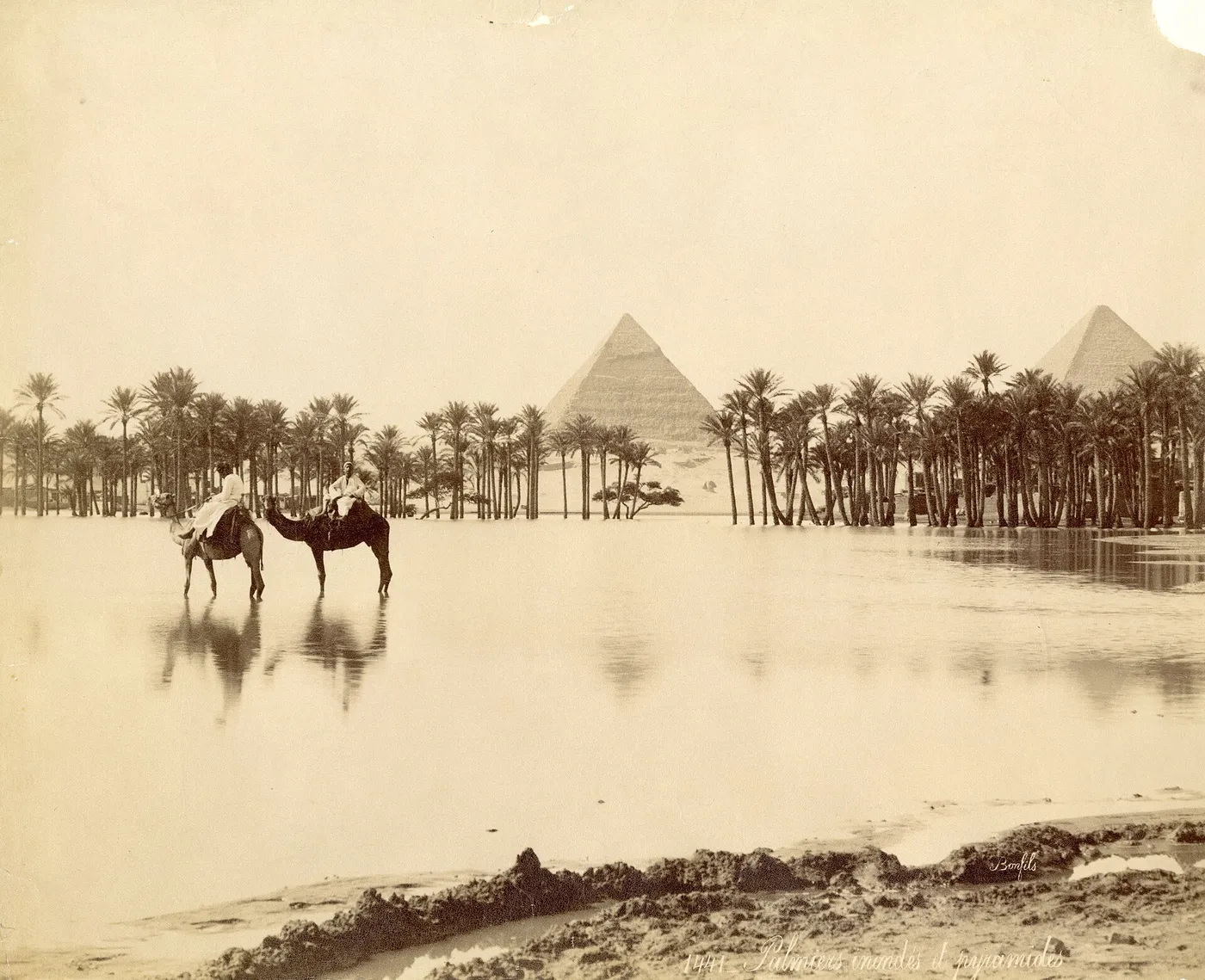
Then. The yearly flood reaching the Giza plateau, before the Aswan High Dam. This is a real historical image of the place.
Now. A real photograph of the place as it stands.
The land itself moved. A branch of the Nile once ran below the Giza plateau and carried the pyramids' stone. It silted away over the centuries, and the High Dam ended the flood that fed it; the plateau now stands over dry suburbs.
Did you know? A 2024 study in Nature identified a vanished Nile branch, the Ahramat branch, that ran past the pyramid fields and would have floated building stone to the plateau's edge. The branch is a finding still being tested, and it fits the ground.
Then and now
The pyramids of Giza rose at the edge of the floodplain about 2600 to 2500 BC, where a branch of the Nile let stone and supplies come almost to the building site, and the inundation each summer freed the farm labor that hauled it. South of them stood Memphis, capital of Egypt for most of three thousand years, on the river's bank.
The Aswan High Dam, finished in 1970, ended the yearly flood for good, and Cairo's growth swallowed the plain. The Giza photograph shows the complex above its suburb; Memphis is a village among palms with fallen colossi in a museum garden. The river that made both places now runs in a fixed channel, and the branch that served the pyramids is silt and farmland.
What changed. A Nile branch past the pyramids silted away; the dam ended the flood; Memphis is low ruins among palms.
The record, not the myth
The "Ahramat" branch is a 2024 finding still being tested. Paid and conscripted workers, not slaves, built the pyramids.