
October 6, 2026
The Berlin Wall
The story of totalitarian power is never purely about abstract political doctrine, it is a visceral, bloody tally of human lives sacrificed to an all consuming ideological idol.
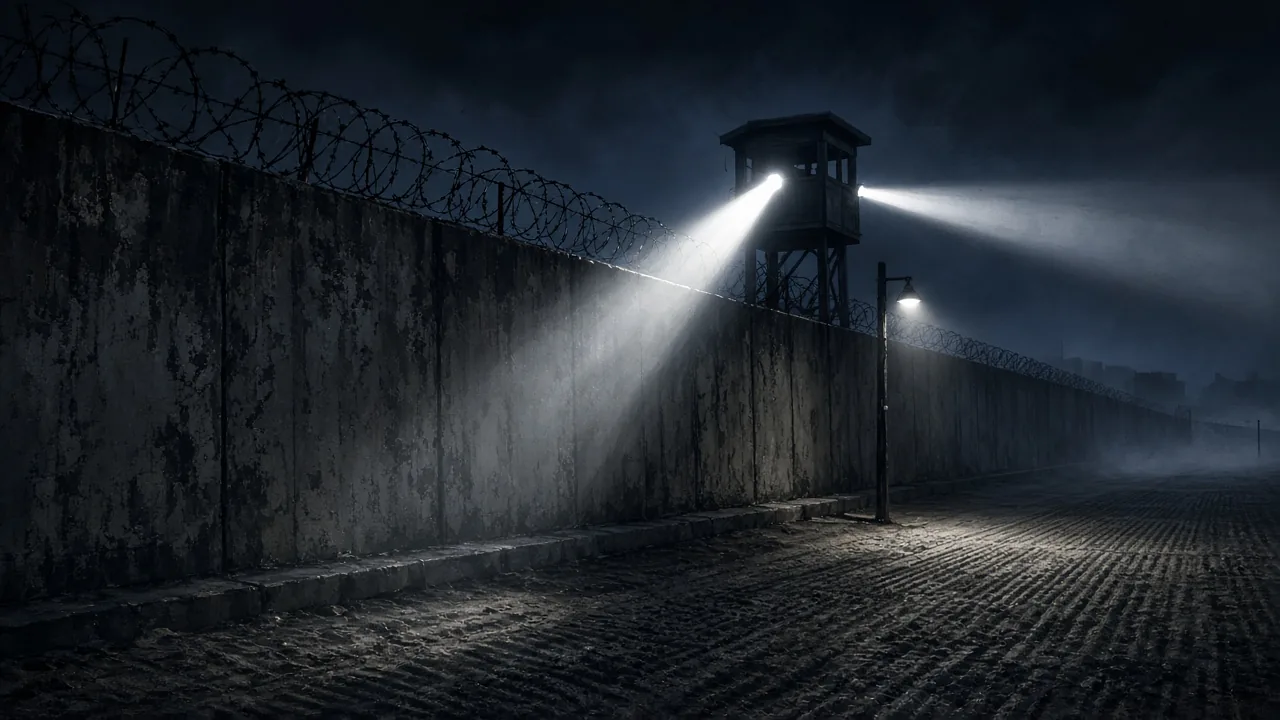
The story of totalitarian power is never purely about abstract political doctrine, it is a visceral, bloody tally of human lives sacrificed to an all consuming ideological idol. When total power is concentrated in the hands of a regime that views human beings not as individuals endowed with inherent dignity, but as mere raw material to be remolded by state force, the result is inevitably catastrophe. Across the twentieth century, the grand experiments of radical state planning continuously demonstrated that when government claims absolute ownership over the lives, property, and minds of its citizens, it produces not a paradise, but a sprawling, bureaucratized machine of coercion and slaughter.
The horrors of the Soviet system under Joseph Stalin laid bare the mechanics of this total administrative terror. The Great Terror was not merely a series of high profile show trials targeting party elites, but a terrifying system of quota politics enforced with a gun. The state applied the exact same bureaucratic planning mechanisms to human executions that it used for industrial production. On July 2, 1937, Stalin signed the secret Politburo Resolution P51/94, ordering regional party leaders and the NKVD to submit precise body counts of targeted citizens within five days. These directives established rigid execution and imprisonment quotas across the entire empire long before specific formal charges were ever brought against individual citizens. Under NKVD Order No. 00447, three person extrajudicial panels known as troikas reviewed cases without defense counsel, witnesses, or rights of appeal, systematically condemning hundreds of thousands to forced labor camps or immediate execution. Regional officials routinely competed to exceed these state quotas, treating human destruction as a metric of administrative efficiency. By the time these operations concluded, millions had been swept into the Gulag system, and hundreds of thousands of ordinary people were secretly executed and buried in mass graves across the country.
Yet, the radical impulse to reshape society by state command reached an even more lethal scale in Communist China under Mao Zedong. In 1958, Mao launched the Great Leap Forward, seeking to force an agrarian nation into an industrial superpower through pure political willpower and state coercion. Private property was abolished, family kitchens were confiscated, and the rural population was forcibly organized into thousands of collective communes. To meet impossible steel production mandates set by central planners, approximately 600,000 backyard furnaces were built across the countryside. Millions of peasants were pulled away from farming responsibilities during crucial harvest seasons to melt down their own essential tools, woks, door hinges, and farm equipment. The effort stripped the countryside of timber, destroyed household wealth, and produced millions of tons of completely useless, brittle pig iron.
Simultaneously, the agricultural sector descended into systematic falsehood. Local party cadres, competing frantically to prove their ideological devotion, fabricated agricultural yields to astronomical heights. State newspapers trumpeted impossible record harvests, leading the central regime to demand grain requisitions that stripped rural villages of their actual food supplies. Enforcing the rigid hukou system of household registration, the state bound peasants to their communes and forbade them from fleeing the starving countryside into the cities. While state granaries remained guarded and grain was exported abroad to pay off foreign debts, rural populations were left to consume tree bark, leather, and ultimately each other. When senior leaders like Minister of Defense Peng Dehuai attempted to speak truthfully about the unfolding disaster at the Lushan Conference in 1959, they were purged and branded as counter revolutionaries, ensuring that the lethal policies continued unchecked. Demographers and historians estimate that between 15 and 45 million people perished in the resulting man made famine, the largest starvation event in human history.
Rather than drawing back from the horror of the Great Leap Forward, the regime unleashed a second wave of terror less than a decade later to purge society of traditional culture, faith, and human connection. Launched in May 1966 under the guise of the Cultural Revolution, Mao called upon the nation's youth to tear down the Four Olds, old ideas, old culture, old customs, and old habits. Millions of students were organized into an ideological paramilitary force called the Red Guards, granted complete immunity from the law by state security organs, and instructed that violence against class enemies was entirely justified.
What followed was a terrifying descent into mob rule and state orchestrated sadism. In Beijing during Red August of 1966, Red Guards initiated a wave of beatings, torture, and house ransackings targeting teachers, writers, religious figures, and anyone associated with traditional values or non conforming thought. School administrators like Bian Zhongyun were beaten to death in schoolyards by their own students using nail studded clubs and brass buckled belts. Celebrated intellectuals like the author Lao She were dragged through the streets, publicly humiliated, forced to kneel before bonfires of burning heritage books, and tortured until they perished or took their own lives. The costs of cremating the victims were routinely billed to their surviving family members, who were forbidden under threat of death from mourning. Across the nation, thousands of ancient temples, historical landmarks, priceless art collections, and libraries were systematically smashed and burned by fanatical youths carrying the Little Red Book.
The standard mechanism for political suppression was the public struggle session. Citizens were forced to stand before screaming crowds wearing heavy wooden slates suspended from thin wires around their necks, forced into agonizing physical positions for hours while being spit upon, beaten, and denounced by their own neighbors, students, and children. As the movement fractured into competing revolutionary factions, urban areas descended into open warfare, with rival groups utilizing stolen military weaponry, tanks, and artillery to slaughter one another in the streets. When the military was eventually brought in to suppress the chaos, state led purges executed hundreds of thousands more. In provinces like Guangxi, the complete collapse of moral order led to horrifying atrocities, where local party militias publicly executed suspected class enemies and engaged in ideological cannibalism, consuming the organs of their victims to demonstrate revolutionary zeal.
Nowhere did the physical and moral bankruptcy of socialist state control reveal itself more starkly than in the heart of divided Europe, where the regime was forced to erect a giant concrete prison to keep its own citizens from fleeing. They called it the Anti Fascist Protection Rampart, but it was, in truth, an inescapable cage designed to trap a captive population. Two months before the first wire went up, East German leader Walter Ulbricht sat in front of the international press and blatantly lied, declaring that no one had any intention of building a wall. He repeated this falsehood for weeks while his planners quietly stockpiled barbed wire for 156 kilometers of perimeter, secretly spreading supply orders through firms in East Germany, West Germany, and Britain so nobody would notice the trap springing shut.
On the night of August 12, 1961, under the code name Operation Rose, soldiers, secret police, and construction workers sealed the sector border while the city slept. The purpose of this monstrosity was never defense against foreign aggression. By that summer, some 3.5 million East Germans, roughly a fifth of the total population, running at a rate of about a thousand people every single day, had fled west through the open sectors. It was a massive brain drain and labor drain of the young, the skilled, the doctors, and the engineers, all voting against state tyranny with their feet. The Wall was built for the sole purpose of keeping Germans locked inside. On its third day, a nineteen year old border guard named Conrad Schumann stamped down a coil of barbed wire on Bernauer Straße, dropped his rifle, and leaped across, producing the iconic image of a human spirit breaking free from captivity. Nine days in, fifty eight year old Ida Siekmann threw her quilt and belongings onto a West Berlin street and jumped from her third story window before the firemen below could get their rescue sheet fully open. She died on the way to the hospital, becoming the first known casualty of this totalitarian barrier.
Over the years, the border evolved into a sophisticated, multi layered death strip. It consisted of two massive concrete walls, raked sand that showed every single footprint, blinding floodlights, reinforced guard watchtowers, anti vehicle trenches, attack dog runs, and above all, the Schießbefehl, the explicit standing order to shoot to kill anyone attempting to escape. That lethal order kept changing shape for twenty eight years, governing the borders through fear, and was not formally abolished until February 1989. At least 140 people were killed directly at the Berlin Wall regime, including 101 would be escapees who were shot down, along with border soldiers and bystanders. Entire generations were raised in the shadow of this oppressive grey monument, watching their basic rights, freedom of movement, and economic prosperity sacrificed on the altar of state planning.
Yet, the ultimate collapse of the wall demonstrated that no amount of concrete, barbed wire, or armed coercion can forever suppress the fundamental human desire for liberty. The end came in November 1989, not through military conquest, but through the sheer absurdity and moral decay of a collapsing regime. On November 9, 1989, a badly briefed party spokesman, Günter Schabowski, read out new, hastily drafted travel regulations at a live press conference. When a journalist asked him when these relaxed travel rules would take effect, Schabowski shuffled his papers nervously and mumbled that they were to take effect immediately, without delay.
West German television broadcasts picked up the live footage and broadcast the news directly into East German living rooms. Within hours, tens of thousands of ordinary East Berliners streamed toward the border checkpoints, overwhelming the unprepared border guards. Stunned officials at the gates tried desperately to get orders from their superiors in Moscow and East Berlin, but the party hierarchy was paralyzed. No officer was willing to take the monstrous responsibility of ordering a mass slaughter of peaceful civilians. At 11:30 that night, the overwhelmed border commander at the Bornholmer Straße crossing, Harald Jäger, made the executive decision to yield to the immense crowd and opened the gates on his own authority.
The floodgates of freedom swung wide open. Thousands of ecstatic citizens poured across the border, weeping, embracing long lost friends and relatives, and dancing atop the very wall that had imprisoned them for nearly three decades. Ordinary people took sledgehammers and pickaxes to the concrete, chipping away the symbol of their oppression piece by piece. Within less than a year, formal national reunification followed on October 3, 1990, sweeping away the client state of the Soviet Union.
A wall built to shoot its own escaping citizens remains the simplest, most indisputable moral test in modern political history. Radical state socialism built that cage to trap a population, and the unquenchable human desire for freedom tore it down. The history of these totalizing regimes reveals a fundamental, unyielding truth about human liberty and state power. Whether manifested in the administrative execution ledgers of the Soviet NKVD, the rural starvation and Red Guard atrocities of Communist China, or the concrete walls and watchtowers of divided Berlin, radical state supremacy always demands the complete destruction of individual rights, traditional institutions, and moral boundaries. When the state assumes total control over the economic, cultural, and spiritual life of the individual, human beings are reduced to mere numbers on a ledger or obstacles to a political plan. The ultimate legacy of these state experiments is not the utopian paradise promised by their architects, but an undeniable paper trail of mass graves, ruined cultures, and shattered lives.
Comments
Loading comments…