
Then and Now · E24
Varanasi on the Ganges
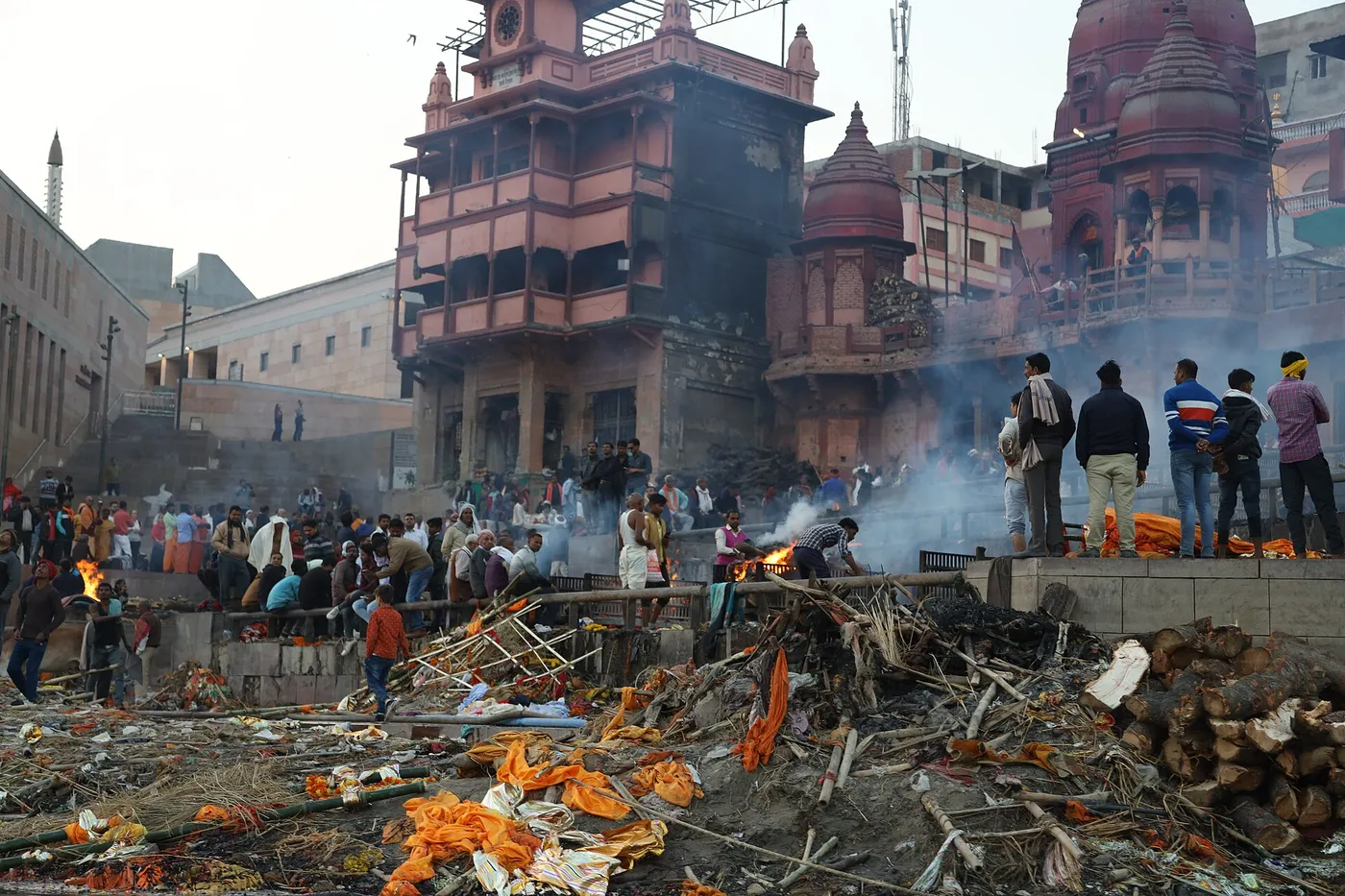
James Prinsep's 1834 lithograph shows Dashashwamedh Ghat from the river: the steps, the temples, the towers of the old city above. The 2022 photograph takes the ghat from the same water. The steps are the same steps, the crowds incomparably larger, the skyline behind them rebuilt many times over.
Then: Dashashwamedh Ghat, 1834Historical imageFamily viewing: Yes
 ThenNow
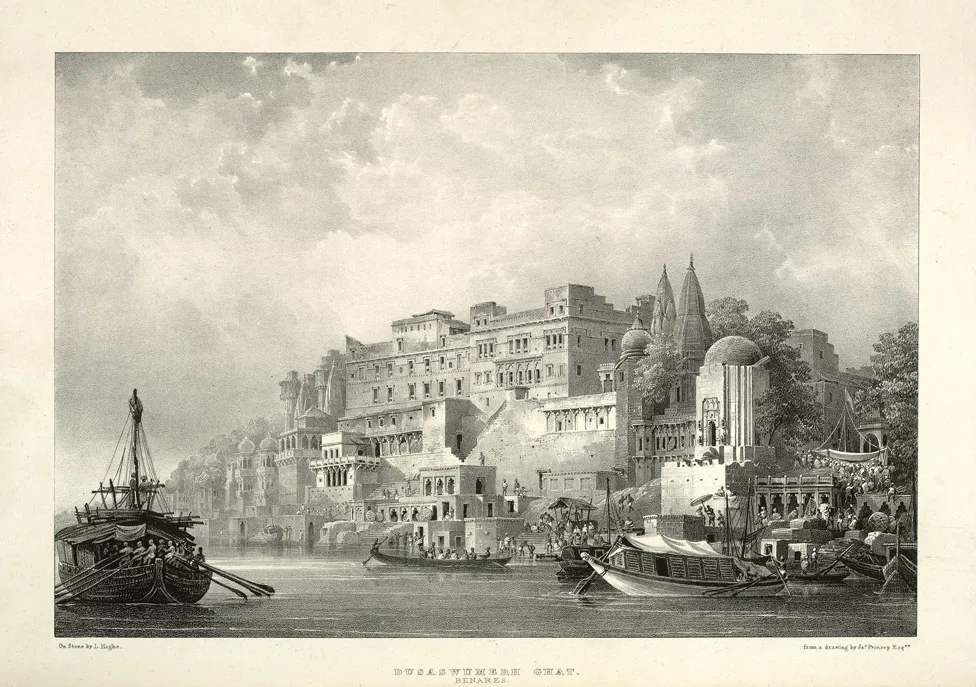
Then. Dashashwamedh Ghat, 1834. This is a real historical image of the place.
Now. A real photograph of the place as it stands.
Did you know? Prinsep, who drew this view, was the assay master of the Benares mint and the man who deciphered the Brahmi script in the 1830s, unlocking the edicts of Ashoka. The artist of the ghat gave India back its oldest readable history.
Then and now
Varanasi, the old Kashi, is among the world's oldest living cities, sacred to Shiva and to Hindus as the place where death brings liberation. Its riverfront is a chain of ghats, stone steps built by Maratha era patrons, where pilgrims bathe and the Ganga aarti fire ceremony is performed each evening at Dashashwamedh, the chief of them.
Prinsep drew the ghat in 1834, in the first years of British Benares. The photograph shows the same frontage in 2022: the ghats continuous, the temples behind them renewed generation by generation, the river traffic now motorboats of pilgrims and visitors, and the new temple corridor cutting from the ghats to the Kashi Vishwanath temple, opened in 2021. The claim that Varanasi is the oldest continuously inhabited city on earth is contested, and the page leaves it as a claim.
What changed. The same ghats, now crowded, with new temple corridor work.
The record, not the myth
Cremation pyre images are kept out of this page. "Oldest continuously inhabited city" is contested.