
Then and Now · E23
Nara, Heijō-kyō
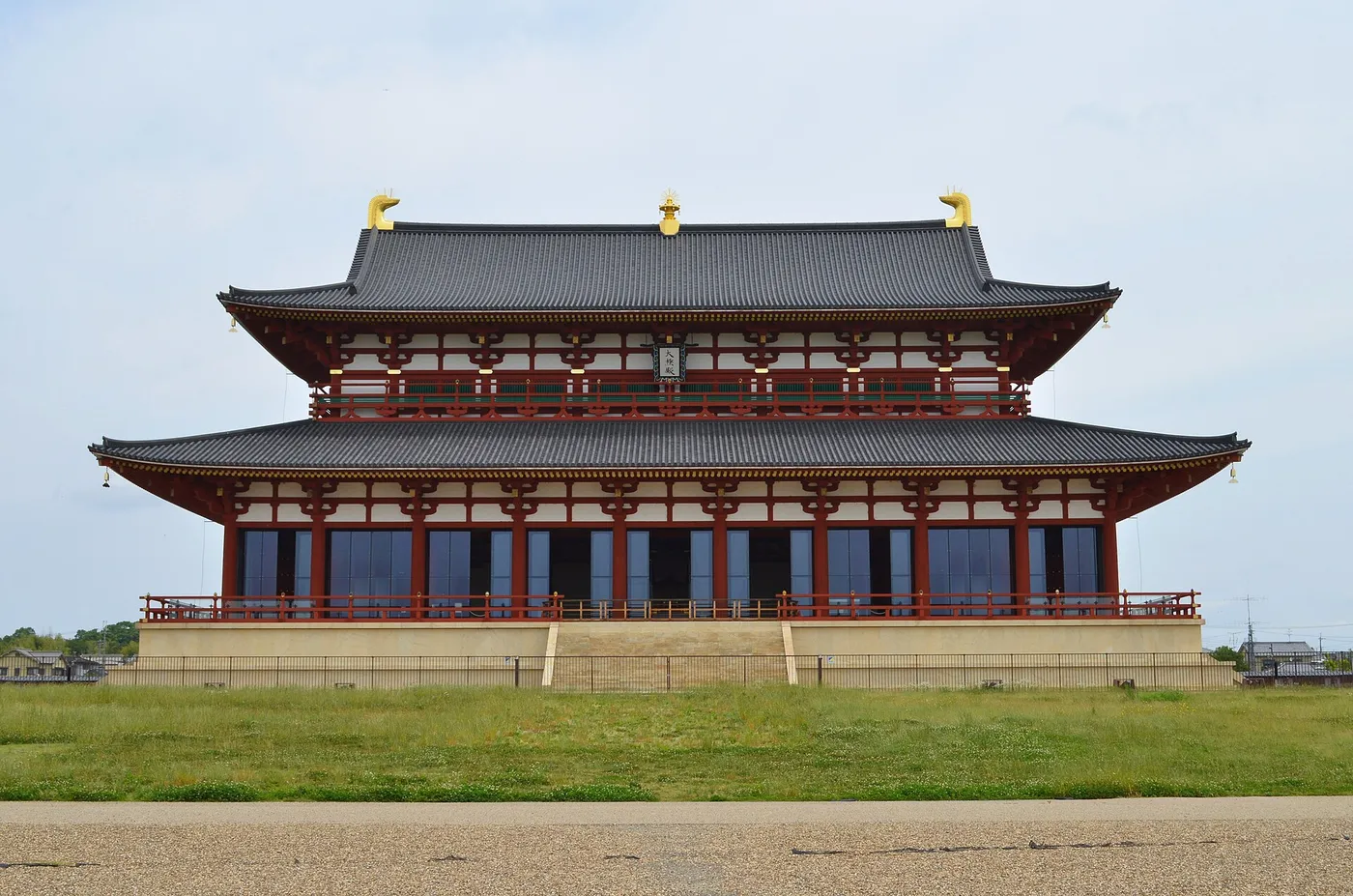
The reconstruction follows the Nara National Research Institute's excavations: Heijō-kyō, Japan's first permanent capital, a Chinese style grid with the palace at its northern center. The photograph shows the palace site today, a park of lawns where the Daigokuden audience hall stands rebuilt, on ground that was rice fields for a thousand years.
Then: The imperial capital, 710 to 784AI reconstructionFamily viewing: Yes
 ThenNow
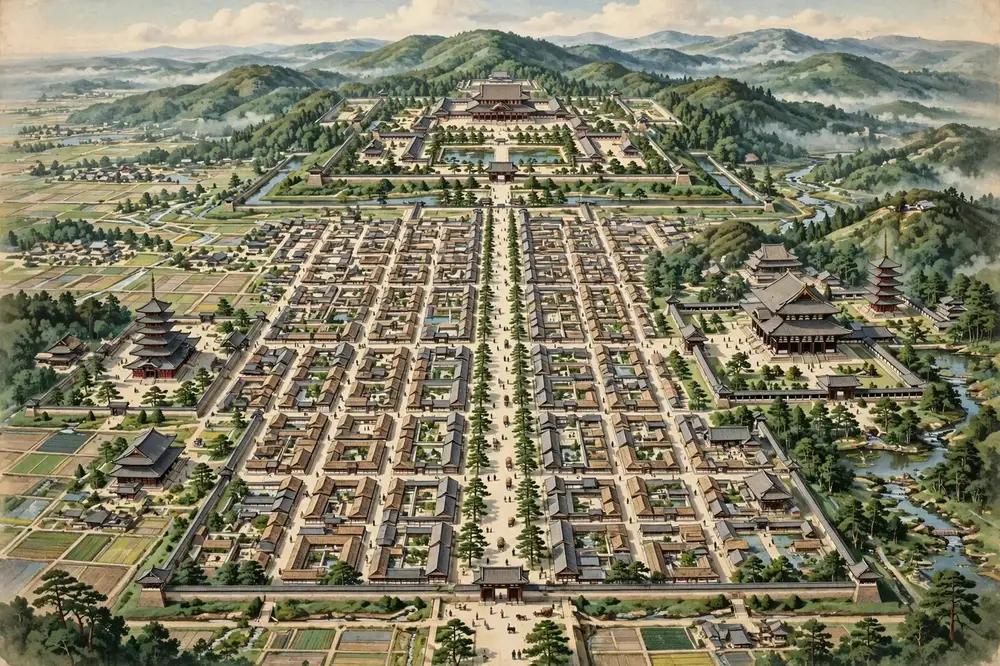
Then. The imperial capital, 710 to 784. This view is an AI reconstruction, built from the scholarship cited below. It is not a photograph.
Now. A real photograph of the place as it stands.
Did you know? The capital was abandoned in 784 and the palace ground went back to farms so completely that its site was debated into the 20th century. Postholes and roof tiles in the paddies settled it; the fields had kept the plan.
Then and now
In 710 the Japanese court founded Heijō-kyō at Nara, a capital on the Chang'an model: a gridded city of avenues and wards for perhaps 200,000 people, the imperial palace at the north with its great audience hall, and the state temples, Todai-ji with its Great Buddha among them, at the city's edge.
The court moved away in 784, first to Nagaoka and then to Kyoto, and the palace site reverted to rice fields, which preserved it. Excavation since 1959 has uncovered the palace ground in detail, and Japan has rebuilt the Suzaku gate (1998) and the former Daigokuden (2010) on their foundations, as the photograph shows: full size, bright painted, and openly modern reconstructions on an empty green field where a capital stood for seventy four years.
What changed. Abandoned to rice fields; now a park, with halls rebuilt in 1998 and 2010.
The record, not the myth
The rebuilt halls are informed guesses, labeled as reconstructions.