
Then and Now · E22
Angkor
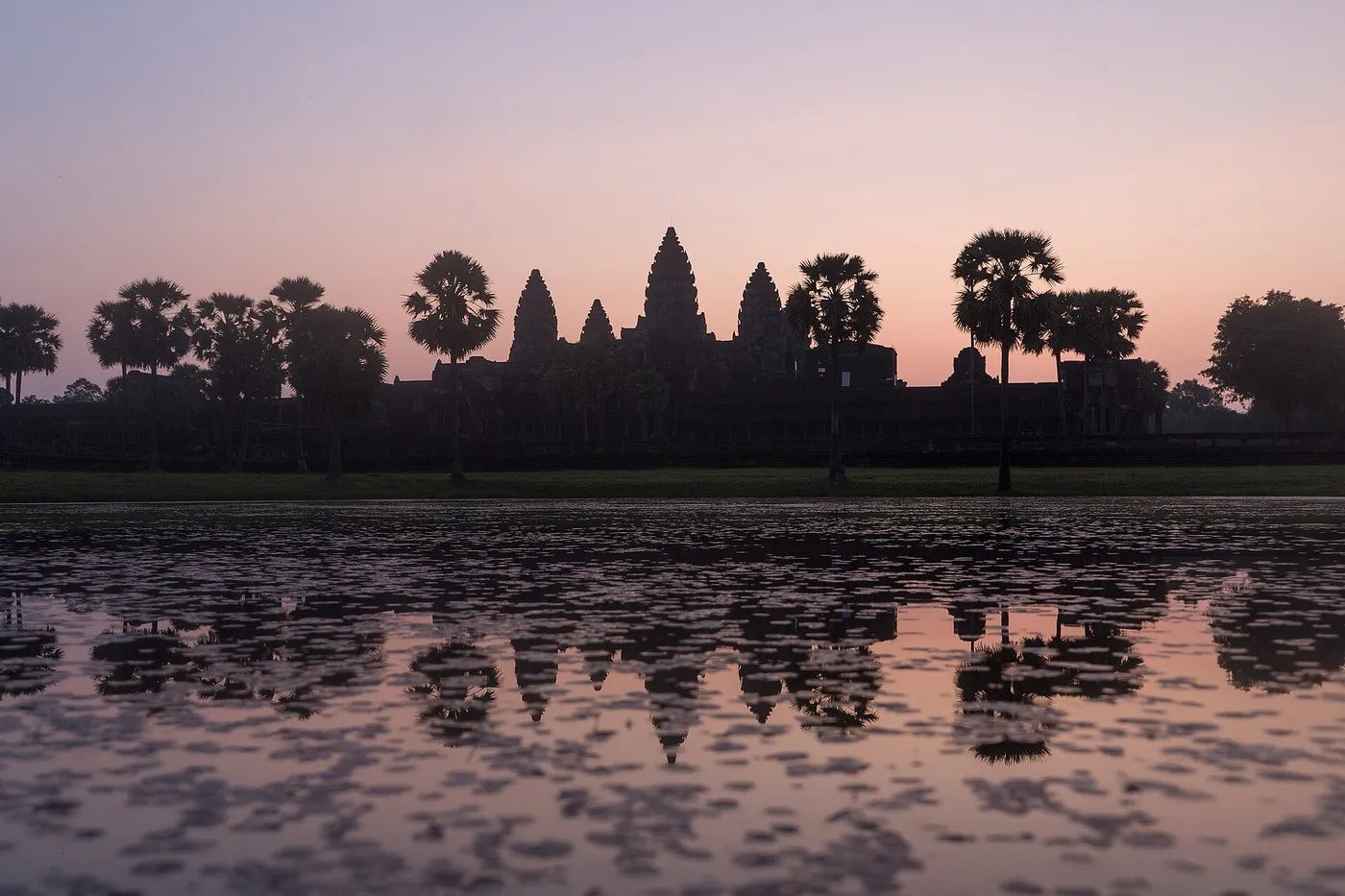
Louis Delaporte's 1873 view shows the west entrance of Angkor Wat as the French expeditions found it, the towers above the trees, the causeway over its moat. The sunrise photograph of 2023 shows the same west front, the jungle cleared back, the temple restored, and the causeway lined before dawn with the visitors of a mass tourism age.
Then: Angkor Wat in the 1860s to 1870sHistorical imageFamily viewing: Yes
 ThenNow
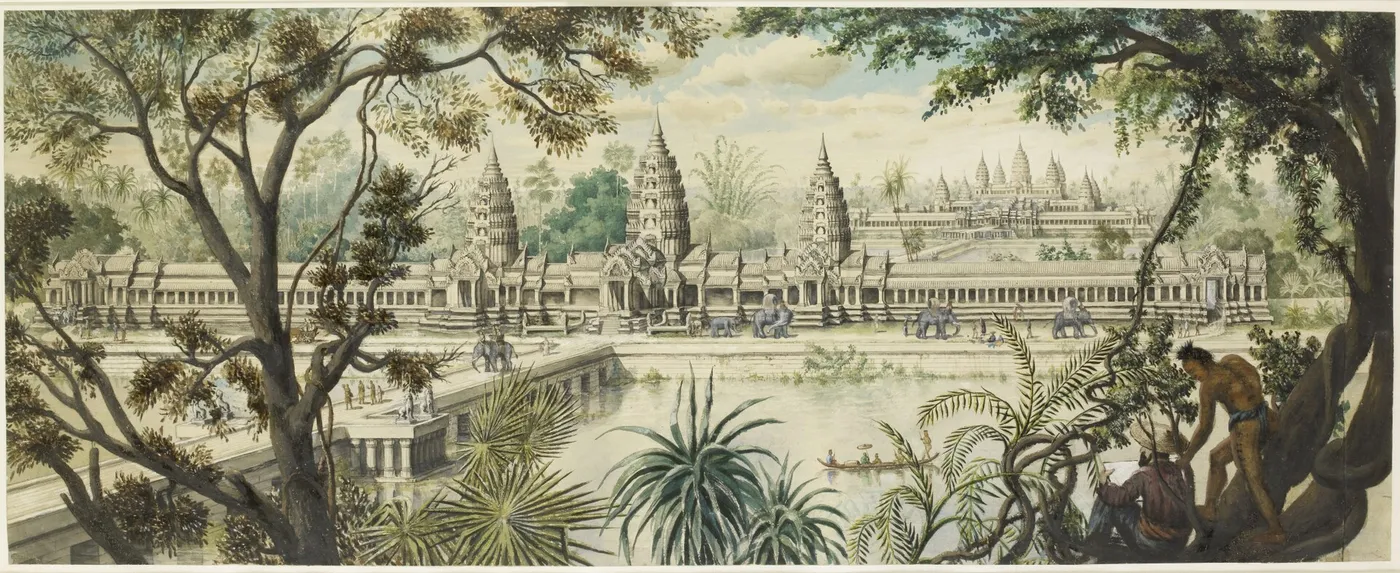
Then. Angkor Wat in the 1860s to 1870s. This is a real historical image of the place.
Now. A real photograph of the place as it stands.
Did you know? Angkor Wat was never abandoned to the jungle in the way the story runs. Theravada monks kept the temple in use through the centuries after Angkor's decline, and it appears, kept and visited, in accounts long before the French arrived.
Then and now
Angkor was the Khmer empire's capital region for six centuries, a spread of temple mountains and reservoirs across the plain north of the Tonle Sap. Angkor Wat, built under Suryavarman II in the early 1100s as his temple and tomb, is its largest monument, a representation of Mount Meru in sandstone inside a moat three and a half kilometres around.
The capital moved south in the 1400s and the city shrank to villages among the temples, but the Wat stayed a living monastery. French naturalists publicized it in the 1860s, and a century of clearing and restoration, interrupted by war and resumed after it, made it Cambodia's emblem, on its flag. The photograph shows the west front at the equinox sunrise, the towers reflected in the northern pool, as hundreds of thousands now see it each year.
What changed. The jungle was cleared, the temple restored, and mass tourism arrived.
The record, not the myth
Never a "lost city"; monks kept using the temple.