
Then and Now · E21
Karakorum and the Orkhon Valley
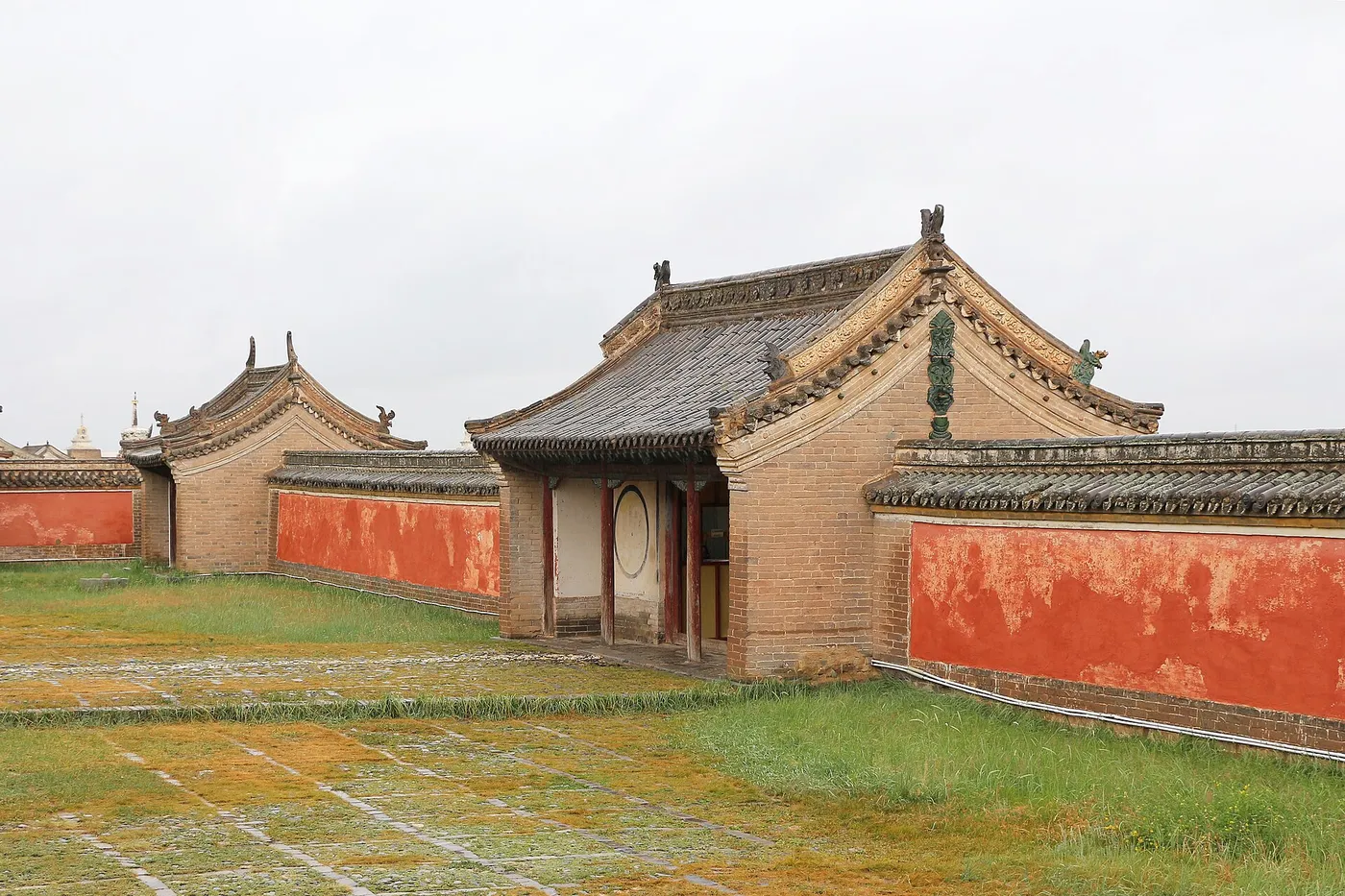
The reconstruction follows the Mongolian-German Karakorum Expedition's mapping: Ögedei's walled palace city on the Orkhon steppe, temples, mosques, workshops and the tents of an empire's court. The photograph shows Erdene Zuu monastery, built in 1585 beside the ruins, in a valley where the capital itself is grass and foundation lines.
Then: The Mongol capital, 1235 to the 1260sAI reconstructionFamily viewing: Yes
 ThenNow
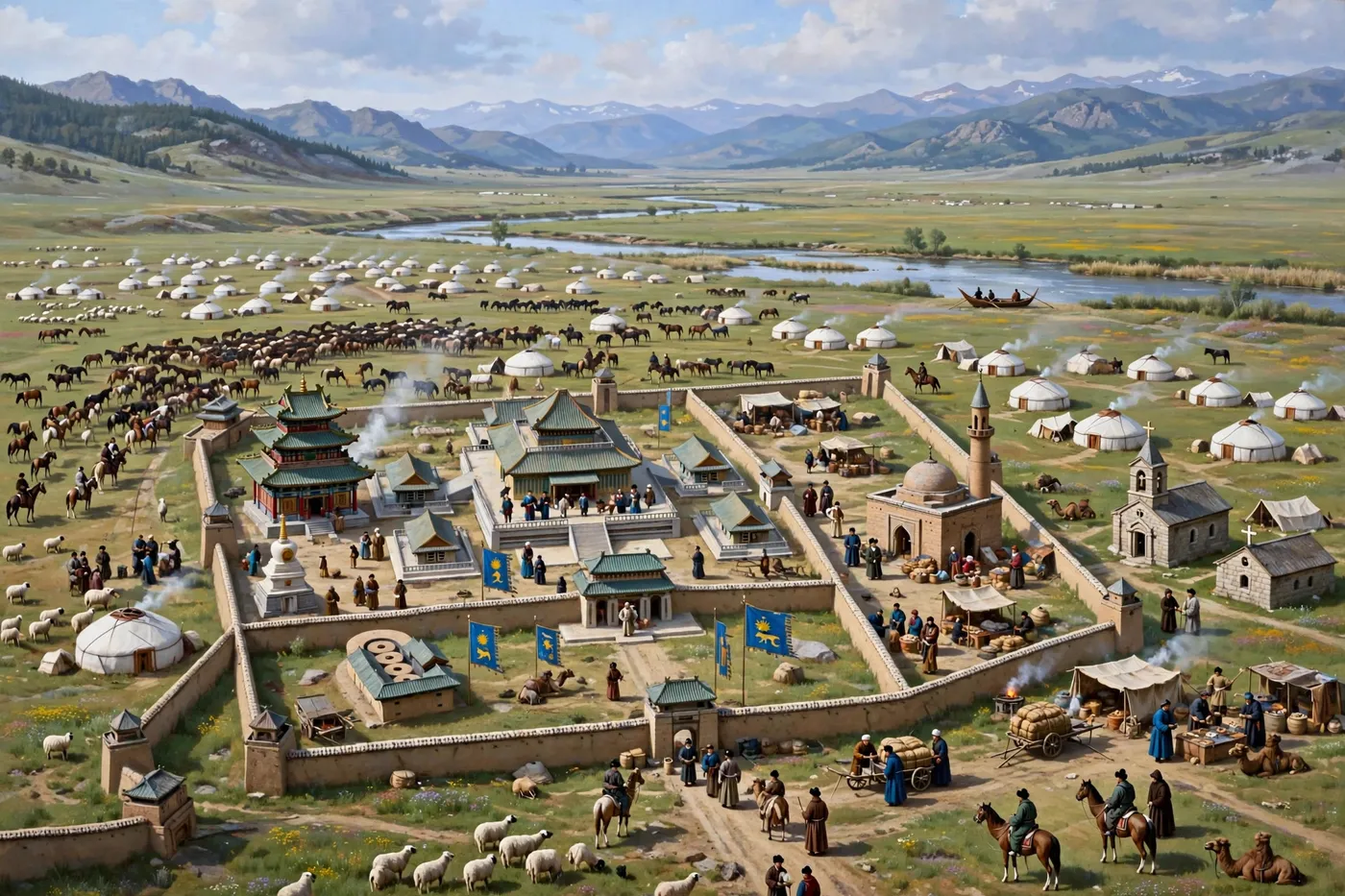
Then. The Mongol capital, 1235 to the 1260s. This view is an AI reconstruction, built from the scholarship cited below. It is not a photograph.
Now. A real photograph of the place as it stands.
Did you know? William of Rubruck, who reached Karakorum in 1253, counted twelve temples, two mosques and one church in the city, and found a Parisian goldsmith, Guillaume Boucher, working for the khan. The capital of the steppe was a world city in felt and timber.
Then and now
Genghis Khan chose the Orkhon valley as his people's seat, and his son Ögedei walled Karakorum in 1235 and built its palace. For a generation it was the capital of the largest land empire in history, drawing envoys from the Pope and the caliph, craftsmen from China and Persia, and merchants on the routes its peace protected.
Khubilai moved the capital to Beijing in the 1260s; Karakorum dwindled, was sacked in the Ming wars, and was quarried for the Erdene Zuu monastery built beside it in 1585, whose white walls fill the photograph. The expedition's geophysics has mapped the buried city street by street in the grass around the monastery: a capital you now read with instruments, in an empty green valley.
What changed. Sacked by the Ming and almost gone; Erdene Zuu monastery was built beside it in 1585.
The record, not the myth
The building long called the "Great Hall" was a Buddhist temple, not the khan's palace.