
Then and Now · W34
Stonehenge landscape
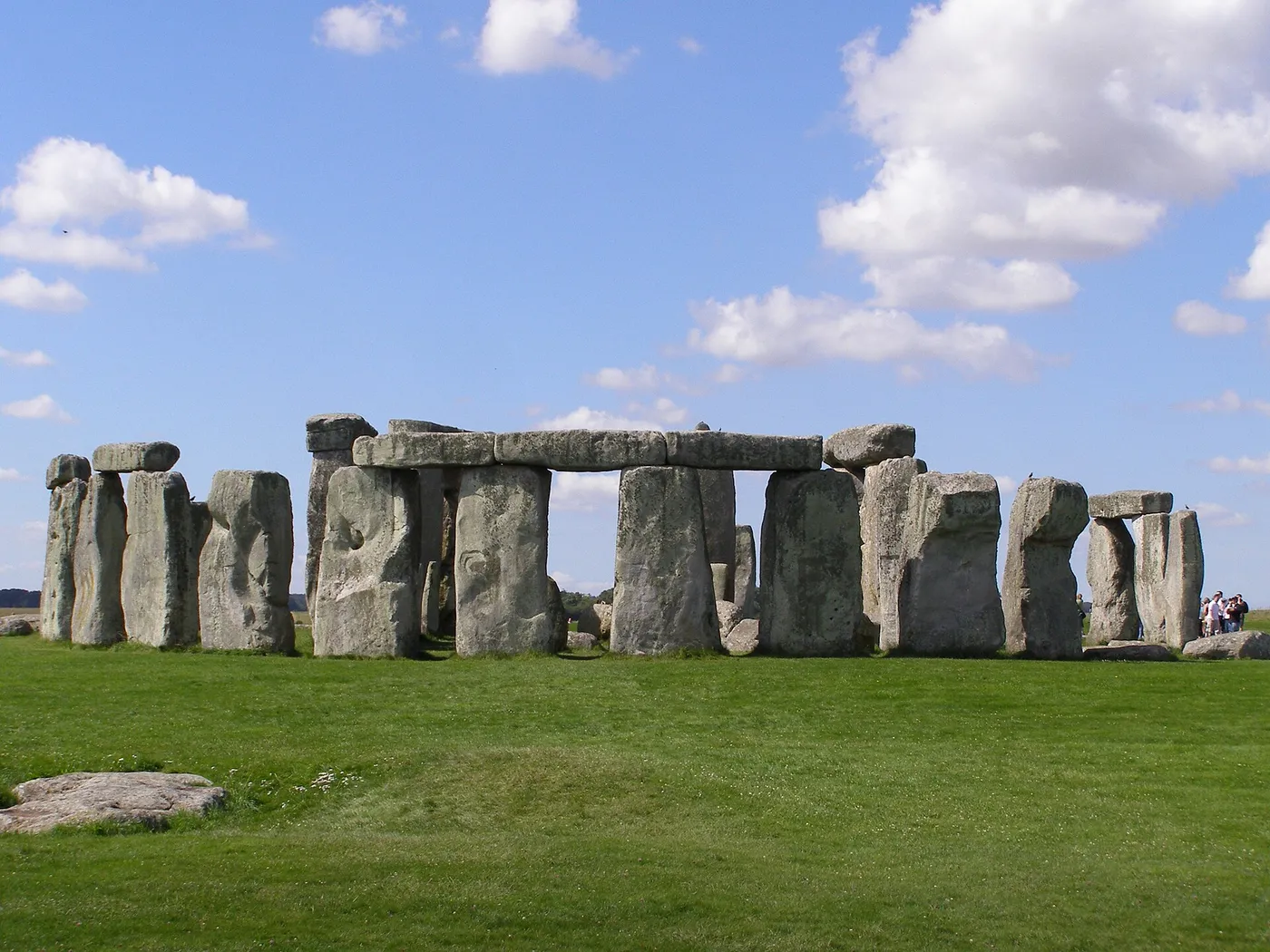
Constable painted Stonehenge in 1835 under a storm sky, the stones leaning and fallen as they had stood for centuries, sheep grazing between them. The photograph shows the circle tidied and guarded: between 1901 and 1964 the fallen stones were raised again and set in concrete.
Then: Stonehenge in 1835Historical imageFamily viewing: Yes
 ThenNow
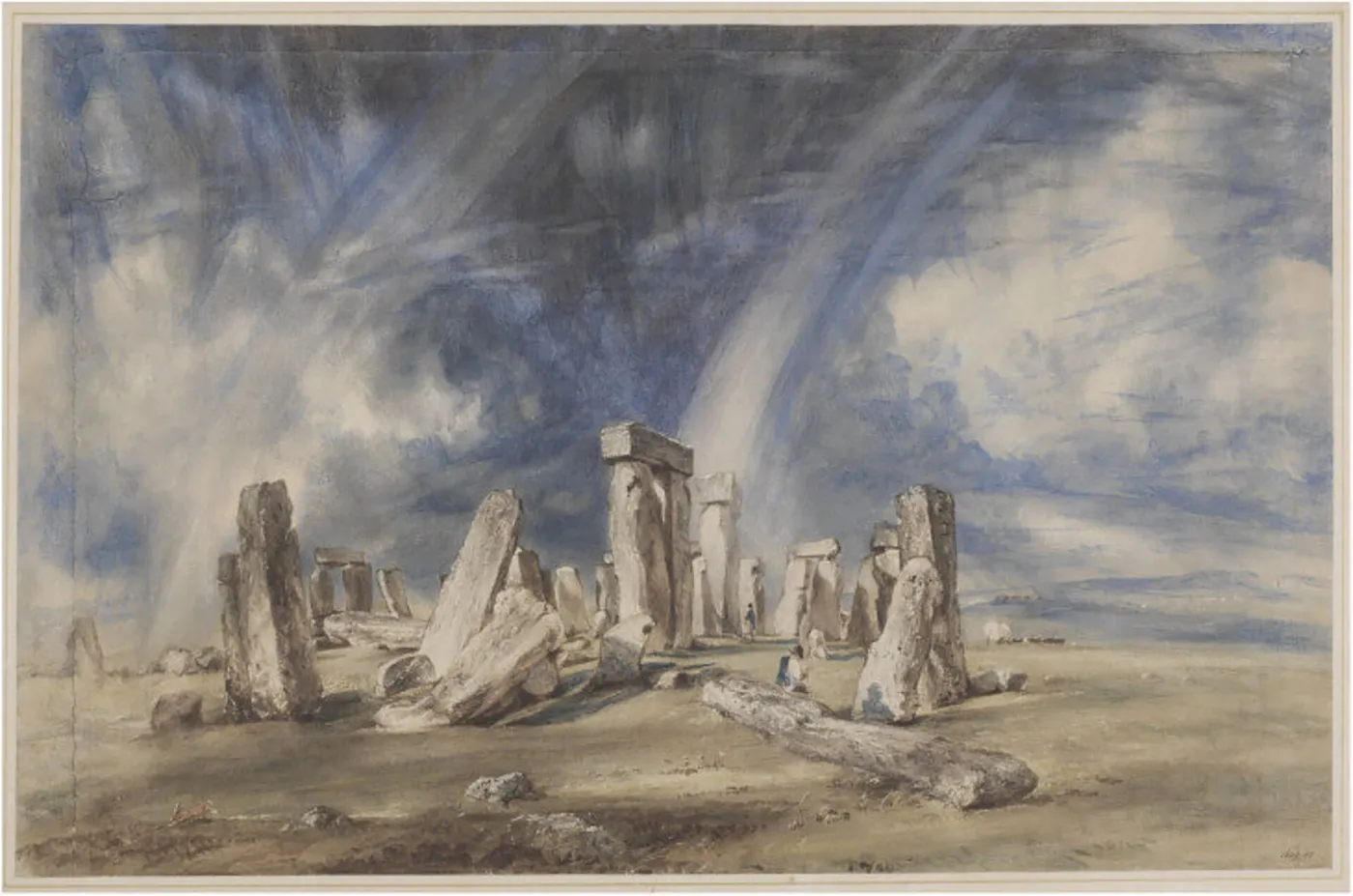
Then. Stonehenge in 1835. This is a real historical image of the place.
Now. A real photograph of the place as it stands.
Did you know? The circle Constable painted was a ruin in motion: stones had fallen within living memory, and one trilithon had gone down in 1797 after a thaw. The Stonehenge visitors see is partly a 20th century re-erection.
Then and now
Stonehenge was built in stages between about 3000 and 2000 BC on Salisbury Plain, the great sarsen trilithons raised inside a much older sacred landscape of avenues, barrows and cursus monuments. By Constable's day it was a romantic ruin on open sheep down, its stones weathered, leaning and fallen.
The 20th century stabilized it: from 1901, and in campaigns through 1964, fallen and leaning stones were straightened, re-erected and bedded in concrete. The landscape around it is now protected and the visitor road moved; a plan to bury the remaining road in a tunnel was scrapped in 2024. The photograph shows the restored circle on its managed grass, in the same wide plain.
What changed. Fallen stones were raised again and set in concrete from 1901 to 1964; the road tunnel plan was scrapped in 2024.
The record, not the myth
Druids did not build Stonehenge; it predates them by millennia.