
Then and Now · W35
Lindisfarne
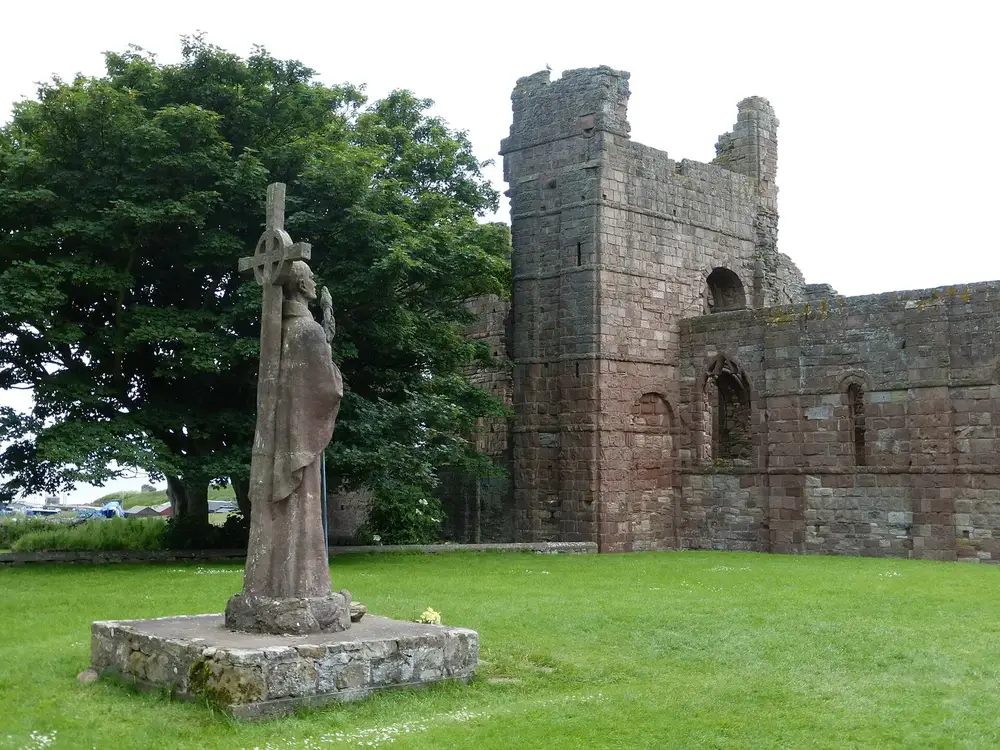
Girtin painted the ruined priory of Lindisfarne in 1798, its great west front and the rainbow arch of its crossing standing over the tidal island. The photograph shows the same ruins today, with the statue of Saint Aidan, founder of the first monastery here, the one the Vikings raided in 793.
Then: The priory in 1798; the Viking raid of 793Historical imageFamily viewing: Yes
 ThenNow
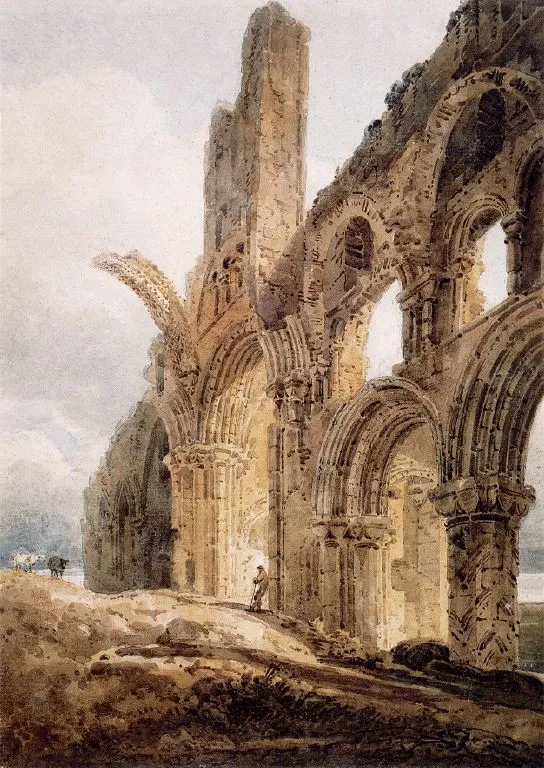
Then. The priory in 1798; the Viking raid of 793. This is a real historical image of the place.
Now. A real photograph of the place as it stands.
Did you know? The Lindisfarne Gospels, among the finest books made in early medieval Europe, were carried off by the monks when they fled the island in 875, along with Saint Cuthbert's coffin. The book is now in the British Library.
Then and now
Aidan founded a monastery on this tidal island in 635, and from it Northumbria was converted. On 8 June 793 Viking raiders struck it, the first recorded Viking attack in England, and the shock ran through the Christian world: Alcuin wrote that such terror had never been seen in Britain.
The standing ruins are not Aidan's monastery, which was wood, but the Norman priory built on the site in the 1100s, dissolved under Henry VIII and left to weather. Girtin's view and the modern photograph differ mainly in the tidiness of the grass and the statue of Aidan. The island is still cut off twice a day by the tide, now crossed by a causeway road.
What changed. The ruins are largely unchanged; a tidal causeway road and tourism were added.
The record, not the myth
The standing ruins are 12th century Norman, not the monastery raided in 793.