
Then and Now · W33
Granada and the Alhambra
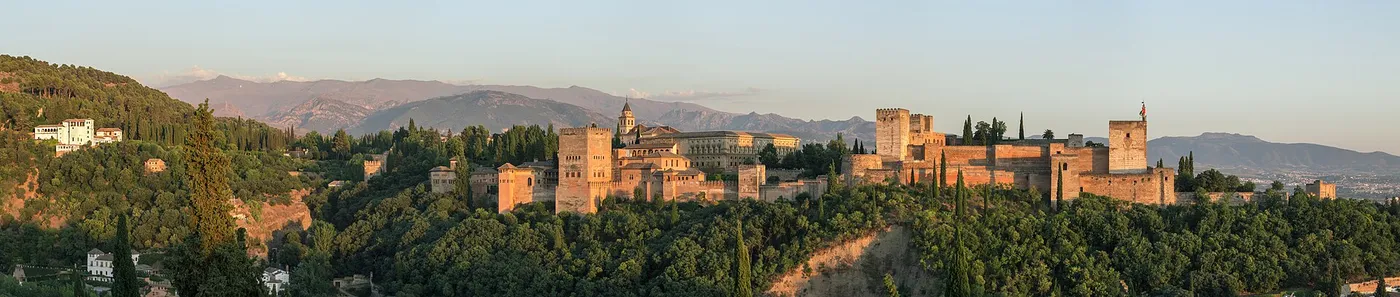
Pradilla's 1882 painting shows Boabdil surrendering the keys of Granada to Ferdinand and Isabella in 1492, the end of Muslim Spain. The photograph takes the view every visitor takes, from the Mirador de San Nicolás: the Alhambra on its hill, the Sierra Nevada behind.
Then: The surrender of 1492Historical imageFamily viewing: Yes
 ThenNow
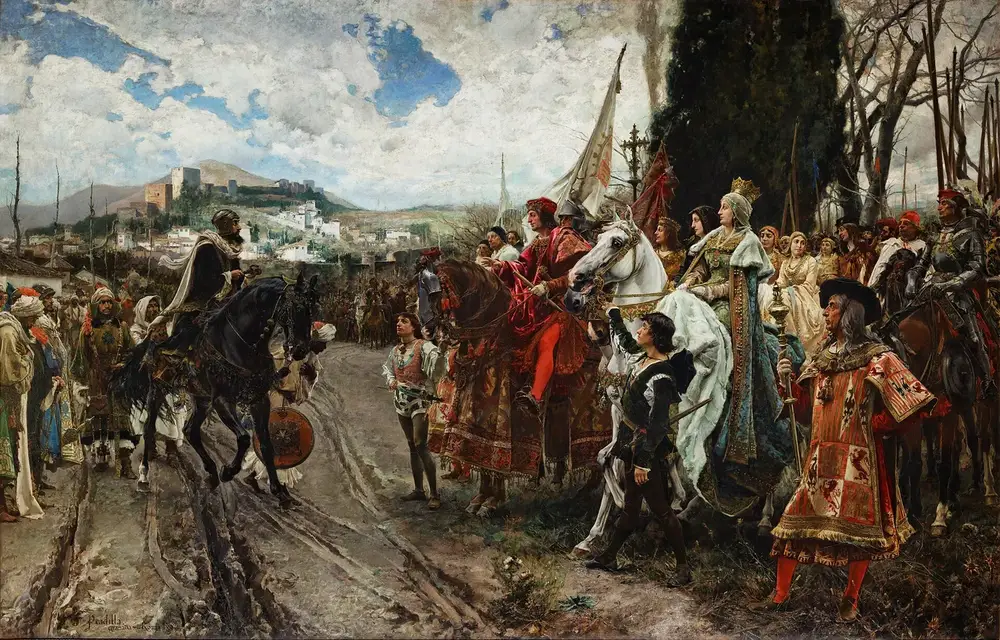
Then. The surrender of 1492. This is a real historical image of the place.
Now. A real photograph of the place as it stands.
Did you know? Charles V built his Renaissance palace inside the Alhambra, cutting into the Nasrid complex to do it. The round courtyard of an emperor who conquered an empire sits inside the palace of the kings he displaced.
Then and now
The Alhambra was the palace city of the Nasrid emirs of Granada, the last Muslim kingdom in Spain: courts, gardens and halls covered in carved plaster and tile, raised over the 1200s and 1300s above the city and its river plain.
Boabdil surrendered Granada on 2 January 1492. The Alhambra passed to the Catholic Monarchs, gained Charles V's palace, and slid into centuries of partial neglect and romantic rediscovery before serious restoration in the 1800s and 1900s. It is now among the most visited monuments in Spain, and the evening view from San Nicolás shows its walls and towers much as the surrender generation left them.
What changed. Charles V's palace was added; the complex was restored after 19th century neglect.
The record, not the myth
"The Moor's last sigh", Boabdil weeping as he looked back at Granada, is legend, not record.