
Then and Now · E16
Samarkand, the Registan
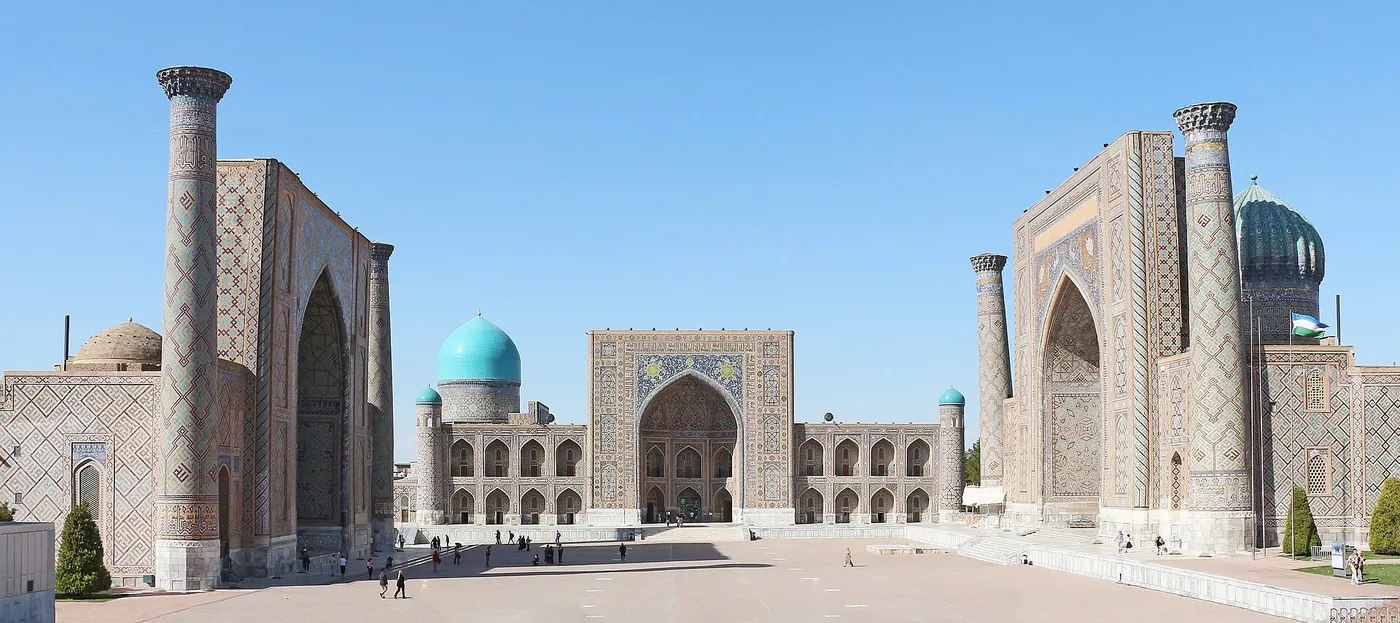
Prokudin-Gorsky's color photograph, taken from the Tilla-Kari madrasa about 1911, looks over the Registan as the Russian Empire found it: domes stripped, minarets leaning, tiles fallen into the square. The 2023 photograph shows the square after Soviet restoration, straightened, retiled and floodlit, the postcard view of Samarkand.
Then: The Ulugh Beg madrasa unrestored, about 1911Historical imageFamily viewing: Yes
 ThenNow
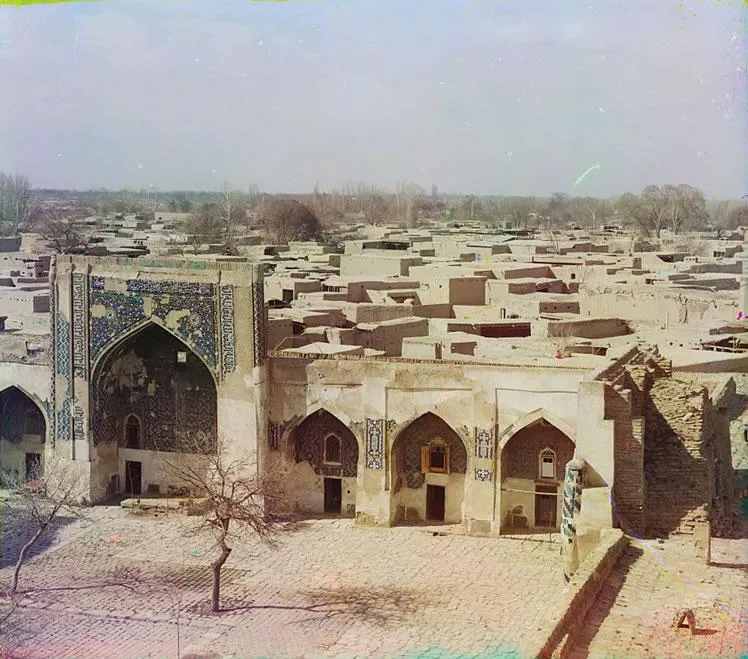
Then. The Ulugh Beg madrasa unrestored, about 1911. This is a real historical image of the place.
Now. A real photograph of the place as it stands.
Did you know? One minaret of the Ulugh Beg madrasa leaned so far that engineers straightened it in 1932 by jacking the whole tower, a famous rescue in Soviet conservation. Much of the blue surface in the modern photograph is 20th century work.
Then and now
The Registan was the ceremonial heart of Timur's Samarkand and its successors: the Ulugh Beg madrasa of 1417 to 1420 facing the square, joined in the 1600s by the Sher-Dor and Tilla-Kari madrasas, their facades a wall of blue tile over the public plaza where proclamations were read and executions carried out.
Earthquakes and neglect left the square ruinous by 1900, as Prokudin-Gorsky's imperial survey recorded it in color. Soviet restorers spent decades straightening minarets, rebuilding domes and remaking tilework, and Uzbekistan keeps the work going. The modern photograph shows the result: magnificent, and in large part a 20th century reconstruction of the Timurid surface, which the record states rather than hides.
What changed. Soviet restorers straightened the minarets and rebuilt domes and tiles.
The record, not the myth
Much of today's surface is 20th century reconstruction.