
Then and Now · E17
The Indus at Mohenjo-daro
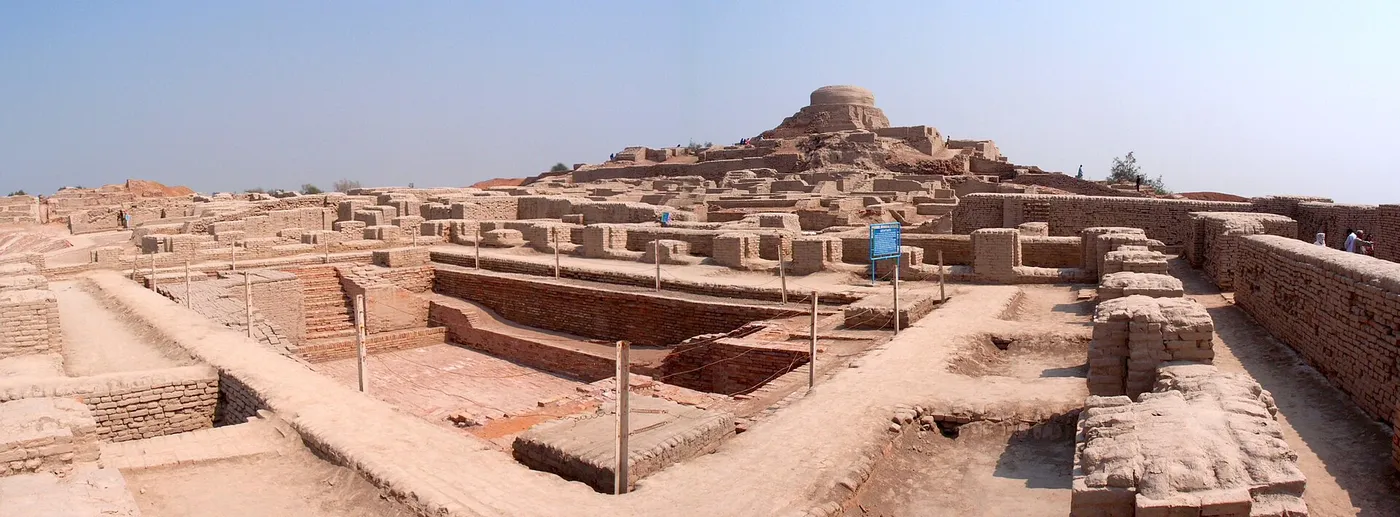
The reconstruction follows Marshall's 1931 volumes and the digging since: a baked brick city on a grid, with the Great Bath and the granary platform on its citadel mound. The photograph shows the excavated mounds today, the stupa that later crowned the citadel, and the Indus plain that keeps flooding toward it.
Then: The Harappan city at its peak, about 2500 to 1900 BCAI reconstructionFamily viewing: Yes
 ThenNow
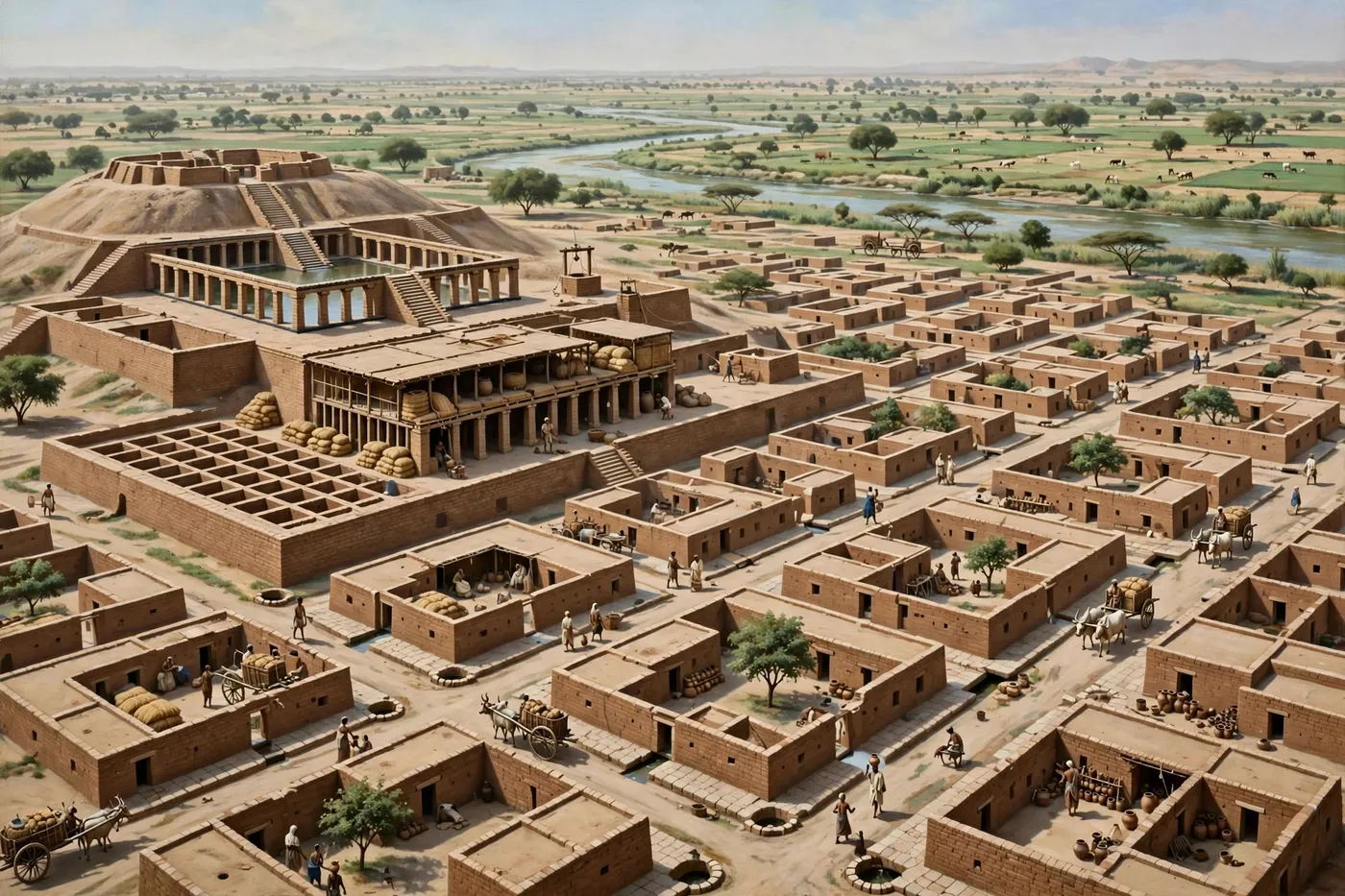
Then. The Harappan city at its peak, about 2500 to 1900 BC. This view is an AI reconstruction, built from the scholarship cited below. It is not a photograph.
Now. A real photograph of the place as it stands.
Did you know? Mohenjo-daro had covered drains, wells in most houses and a street grid four thousand years before most of the world. Its script is still undeciphered, so everything on this page comes from the ground, not from a single written word of its people.
Then and now
Mohenjo-daro was one of the largest cities of the Indus civilization, perhaps 40,000 people in baked brick houses on planned streets, with the watertight Great Bath on its raised citadel and a drainage system no contemporary city matched. It flourished from about 2500 BC and faded by 1900 BC as rivers shifted and trade failed.
Excavation from 1922 uncovered the brick city street by street; only a fraction is dug, and digging deeper meets the water table. The photograph shows the stupa mound and the Bath quarter as conserved. The Indus still threatens the site it once served: flood defenses are a standing concern, and the rains of 2022 damaged walls across the ruins. The old story that invading Aryans destroyed the city is discredited, and labels like "Priest-King" and "Great Bath" are modern names, kept here with that stated.
What changed. An excavated brick ruin; the Indus keeps shifting; the 2022 rains damaged walls.
The record, not the myth
"Priest-King" and "Great Bath" are modern labels. Aryan invasion destruction is discredited.