
Then and Now · E18
Anyang, Yinxu, on the Huan River
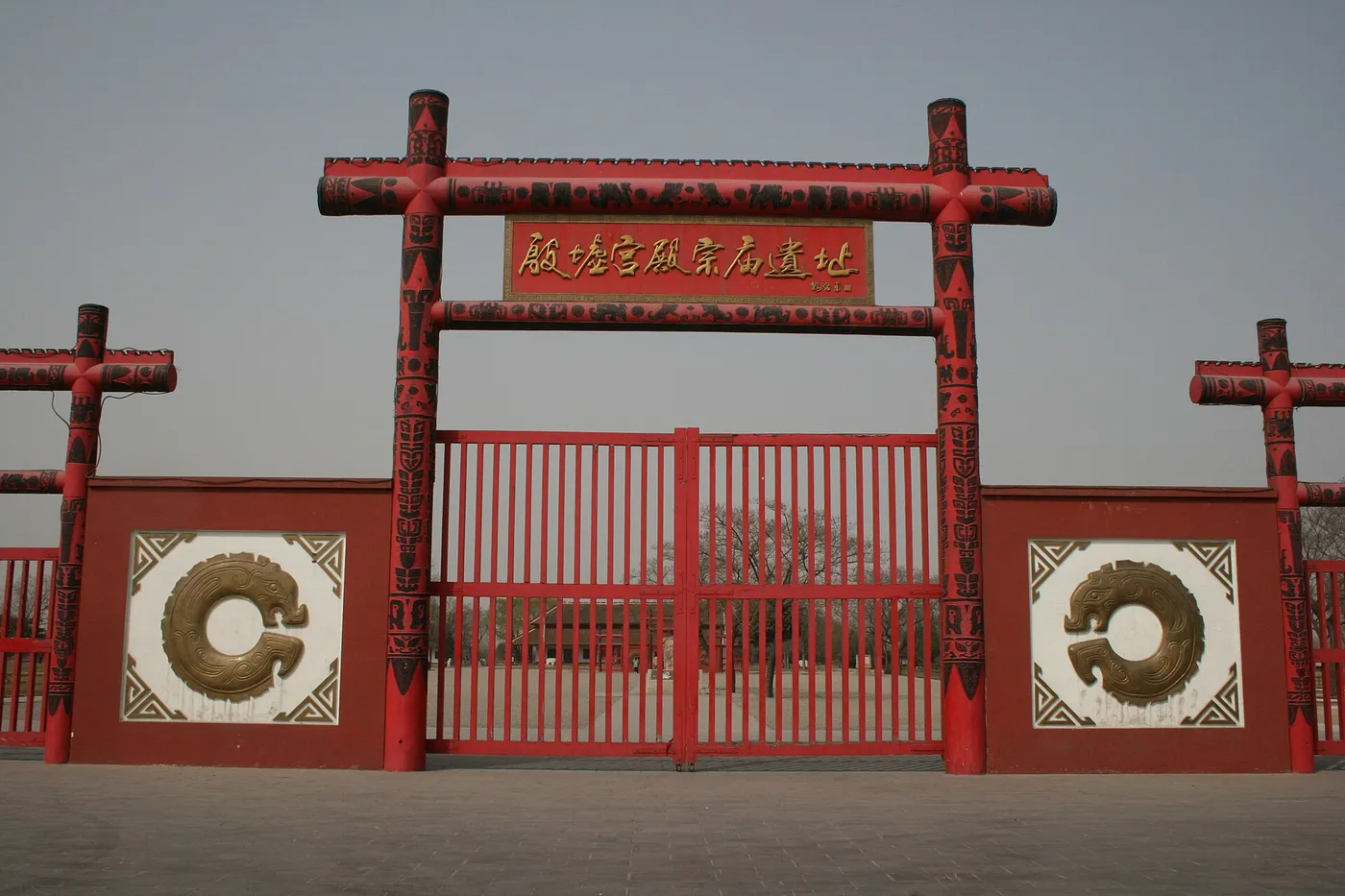
The reconstruction follows the Chinese Academy of Social Sciences' excavation reports: the palace temple compound of the late Shang kings on the Huan River, rammed earth foundations, timber halls, bronze workshops. The photograph shows Yinxu today, an open air site museum over the buried capital.
Then: The late Shang capital, about 1250 to 1046 BCAI reconstructionFamily viewing: Mild
 ThenNow
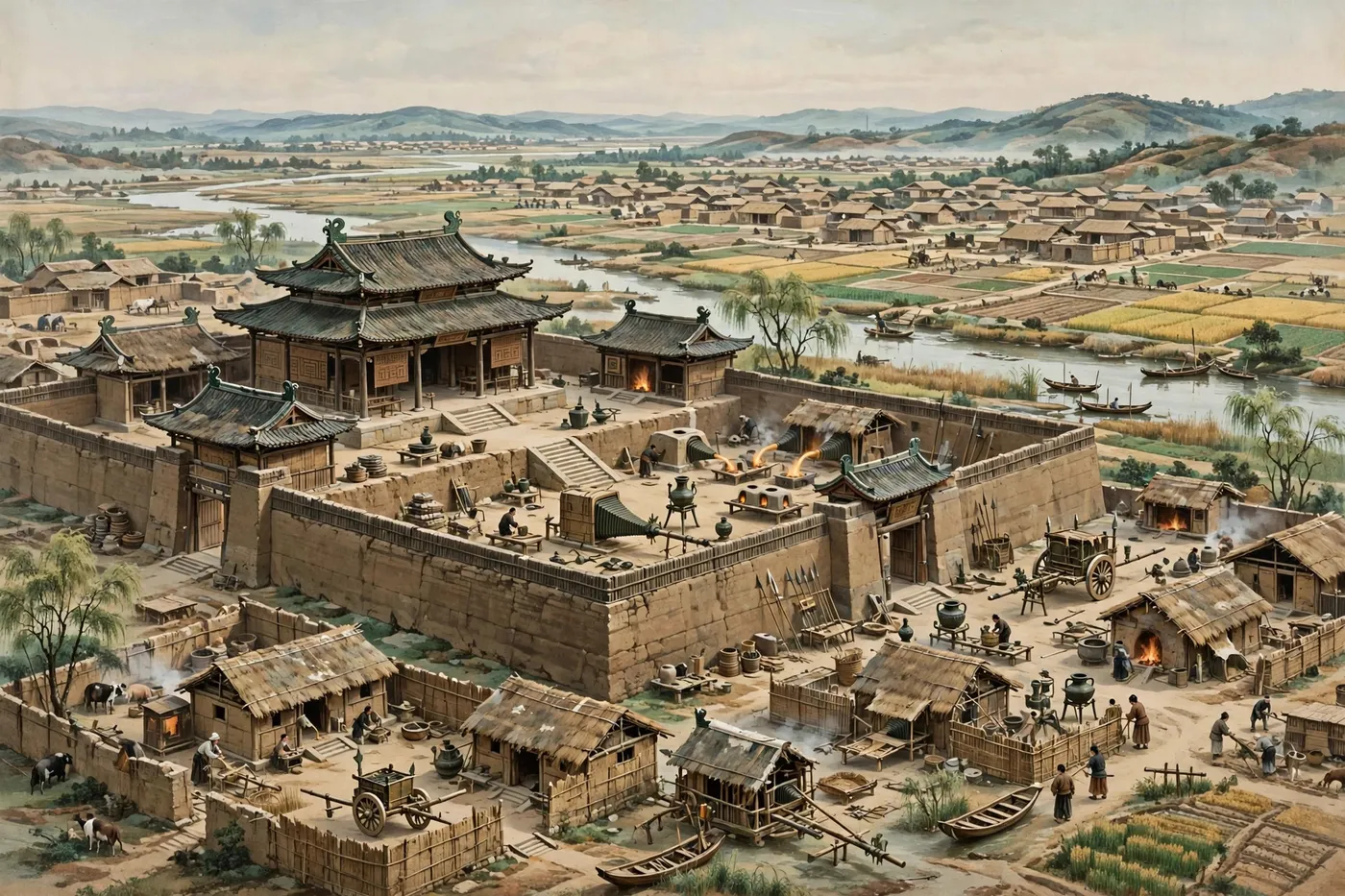
Then. The late Shang capital, about 1250 to 1046 BC. This view is an AI reconstruction, built from the scholarship cited below. It is not a photograph.
Now. A real photograph of the place as it stands.
Did you know? Yinxu is where oracle bones came from: tens of thousands of inscribed ox bones and turtle shells, the earliest large body of Chinese writing, dug up and recognized from 1899 onward. The kings' questions to their ancestors are the archive of the dynasty.
Then and now
Yinxu, near Anyang, was the last capital of the Shang dynasty, ruled by kings whose names the oracle bones confirm against the traditional histories. Its palace temple district stood on the south bank of the Huan River, with royal tombs across the water, chariot burials, bronze foundries and sacrificial grounds worked on a royal scale.
The site was excavated from 1928, in the first great campaign of Chinese archaeology, and work continues. Most of the capital is still underground by design: foundations are traced, marked and covered, and the museum displays the finds, including the tomb of the royal consort Fu Hao, found intact in 1976. The photograph shows the protected palace area, quiet fields over the busiest ground in Bronze Age China.
What changed. Buried palaces and royal tombs, now an open air site museum.
The record, not the myth
Yinxu is on the Huan River, not the Yellow River, as often stated. Sacrifice pit images are kept out of the kids material for this place.