
Then and Now · E19
Chang'an (Xi'an)
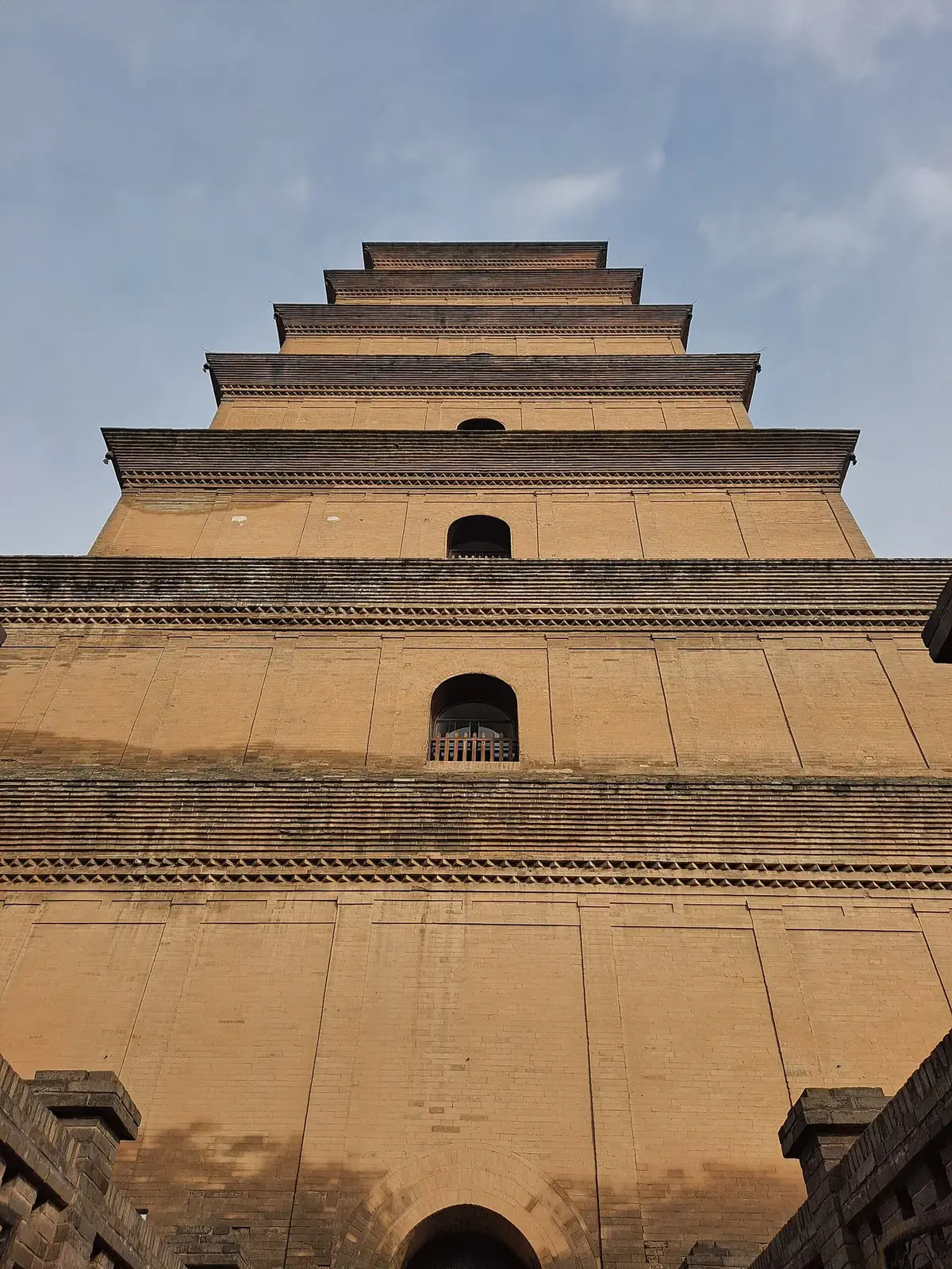
The reconstruction follows Xiong's study of Sui-Tang Chang'an: the largest walled city of its age, a perfect grid of wards under the palace city at its north, drawn here from above. The photograph shows the Giant Wild Goose Pagoda, raised in 652 inside that grid and still standing in modern Xi'an, the one great Tang building the city kept.
Then: The Tang capital, 700s ADAI reconstructionFamily viewing: Yes
 ThenNow
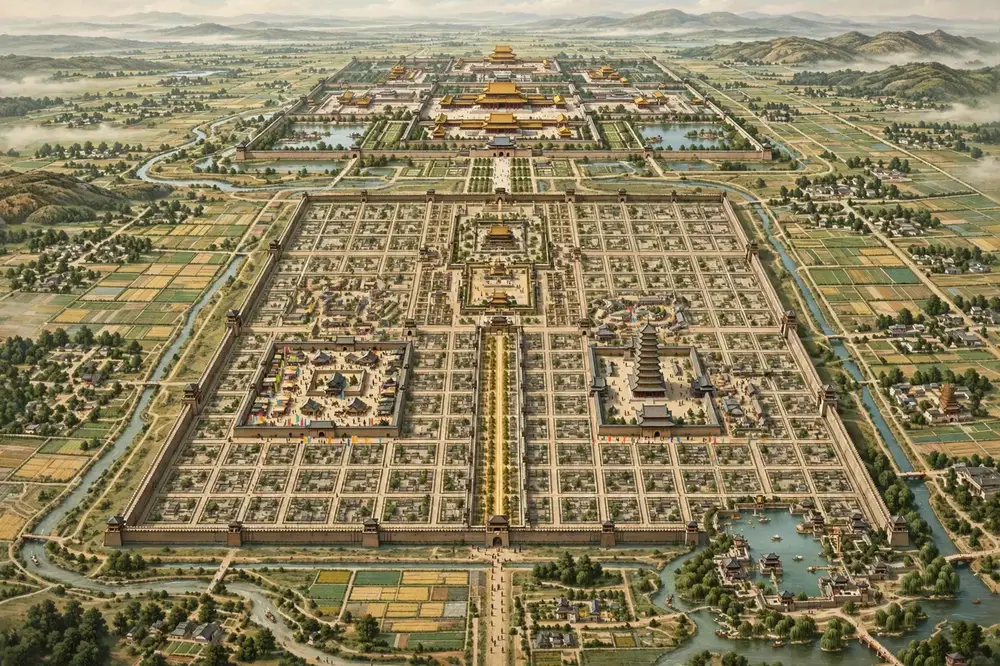
Then. The Tang capital, 700s AD. This view is an AI reconstruction, built from the scholarship cited below. It is not a photograph.
Now. A real photograph of the place as it stands.
Did you know? Tang Chang'an's grid covered about 84 square kilometres, several times the area inside Xi'an's Ming walls today. The modern city sits on its southeast corner, which is why the pagoda, once deep inside the Tang city, stands near the modern center.
Then and now
Chang'an was the capital of Sui and then Tang China and, in the 700s, probably the largest city in the world: a walled grid of avenues and gated wards, two great markets, the imperial palace city at the northern center, and suburbs of temples, among them the Giant Wild Goose Pagoda, built for the monk Xuanzang's scriptures in 652.
The Tang city was destroyed in the wars that ended the dynasty, its timbers carted off in 904, and the reduced town shrank into its northwest corner. Ming Xi'an's walls, built in the 1370s and complete today, enclose a seventh of the Tang plan. The pagoda in the photograph, rebuilt in brick under the Tang and refaced under the Ming, anchors the south of the modern city, surrounded by plazas where the Tang wards stood.
What changed. The Tang city was razed in 904; today's wall is Ming, 1370s, and much smaller; the Tang pagoda survives.
The record, not the myth
"A million people, largest city on earth" is a debated estimate, not a count.