
Then and Now · E15
Isfahan, Naqsh-e Jahan Square
Pascal Coste drew Shah Abbas' great square in 1839 to 1841, the royal plaza of Safavid Isfahan with its mosques, palace gate and two kilometres of arcades. The 2019 panorama shows the square intact and kept as Coste found it. The photograph predates March 2026, when strikes shattered the Ali Qapu palace's windows and doors and damaged the Shah Mosque's tiles.
Then: The Safavid royal square, about 1840Historical imageFamily viewing: Yes
 ThenNow
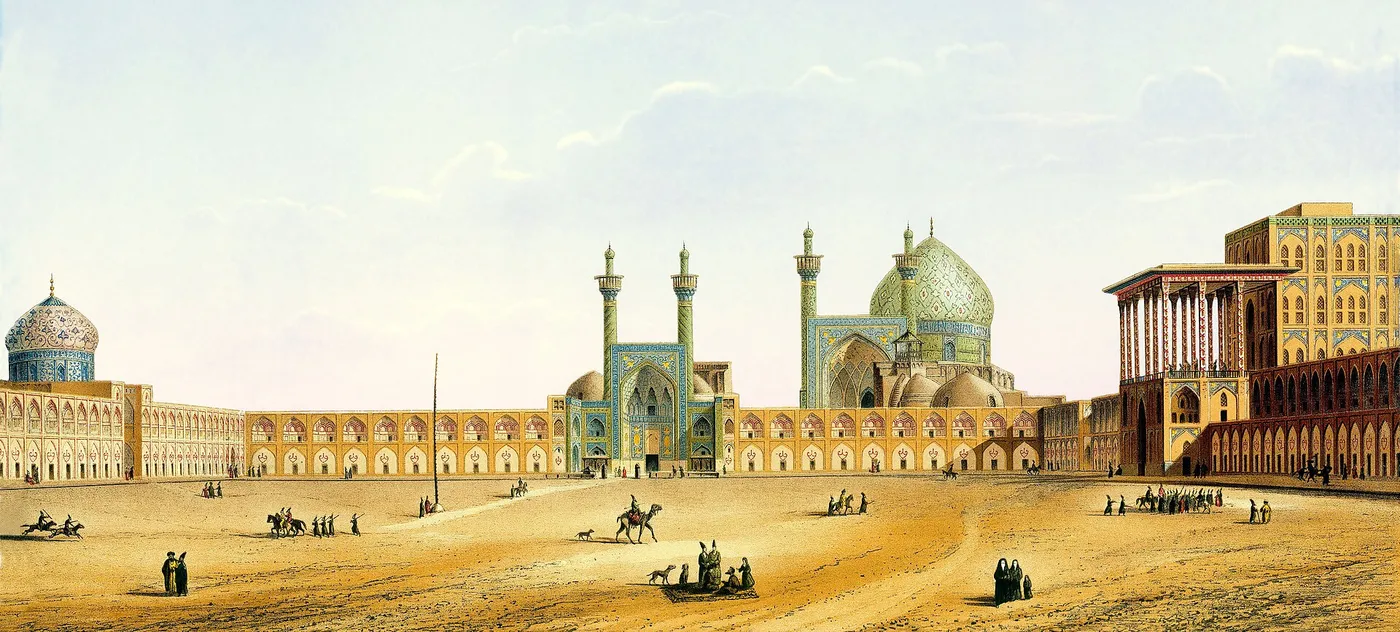
Then. The Safavid royal square, about 1840. This is a real historical image of the place.
Now. A real photograph of the place as it stands.
Did you know? The square was a polo field as well as a plaza: the marble goal posts of Shah Abbas' games still stand at either end, and the palace balcony was the royal box.
Then and now
Shah Abbas I rebuilt Isfahan as his capital from 1598 and laid out Naqsh-e Jahan, the Image of the World, as its center: a rectangle about 560 metres long ringed with shops, the Shah Mosque turned at its angle to Mecca, the Sheikh Lotfollah chapel, and the Ali Qapu palace gate from which the court watched polo and parades.
Coste's drawings are the square's best early record. It survived the centuries in use, as market, parade ground and park, and the panorama shows it in 2019 whole. On 9 March 2026 strikes in the war on Iran shattered windows and doors in the Ali Qapu and damaged tiles at the Shah Mosque, and the Chehel Sotoun palace west of the square was also damaged, as The Art Newspaper reported. The now photograph is dated 2019 on this page because it is: it does not show that damage.
What changed. The square is intact; strikes on 9 March 2026 shattered Ali Qapu's windows and doors and damaged Shah Mosque tiles; nearby Chehel Sotoun was also damaged.
The record, not the myth
The now photo predates the 2026 damage; it is labeled with its year on this page.