
Then and Now · E14
Ctesiphon, Taq Kasra
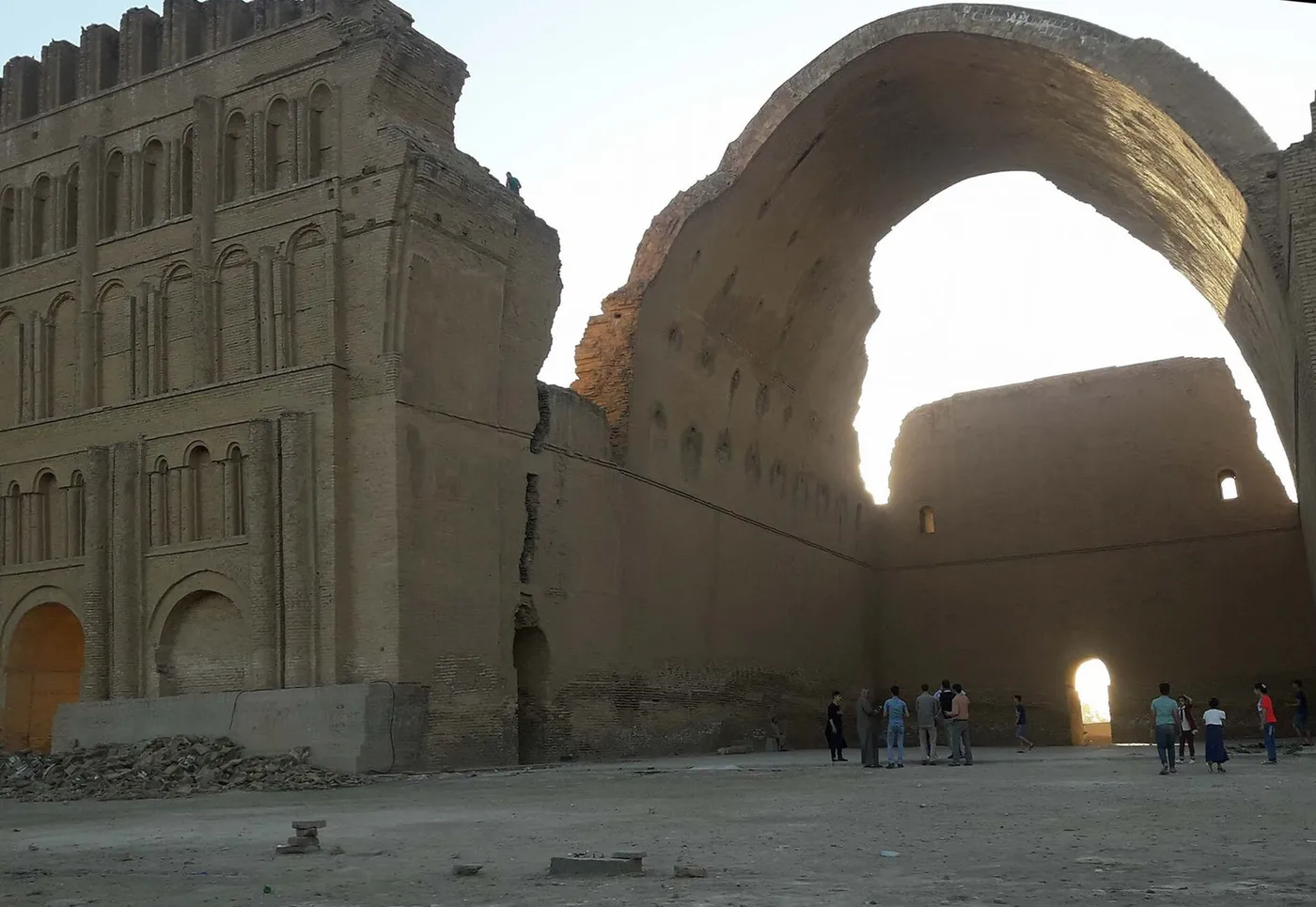
The Matson Collection photographed the great arch of Ctesiphon in 1932, the largest single span brick vault of the ancient world, standing alone in the plain where a capital city had been. The 2018 photograph shows the same arch after flood, collapse and repair, still alone, still standing.
Then: The Sasanian capital; the arch in 1932Historical imageFamily viewing: Yes
 ThenNow
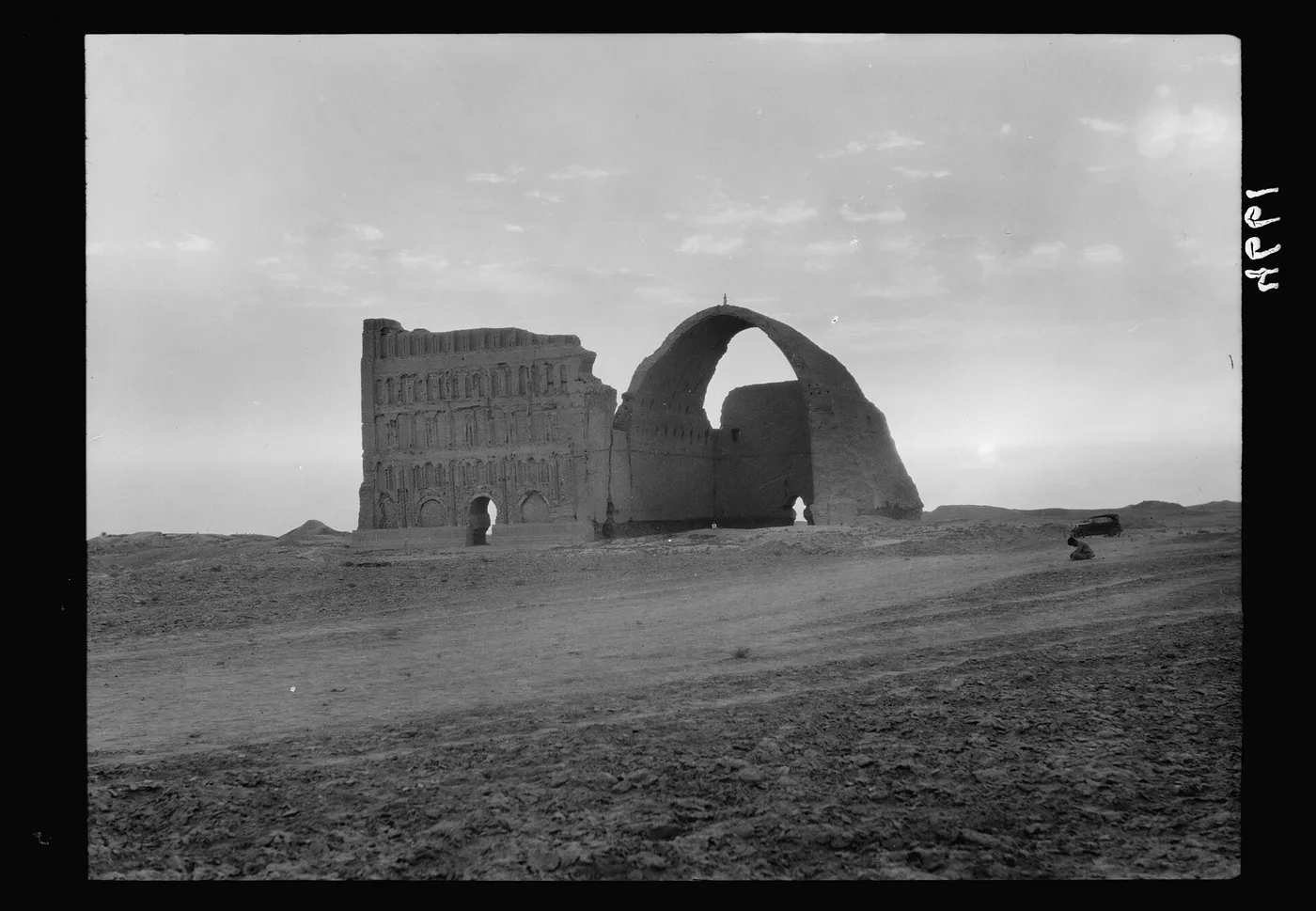
Then. The Sasanian capital; the arch in 1932. This is a real historical image of the place.
Now. A real photograph of the place as it stands.
Did you know? The arch spans about 25 metres and rises about 37, built by Sasanian engineers in brick laid so fast on its curve that the vault was raised without full centering, a technique builders still study.
Then and now
Ctesiphon, across the Tigris from Greek Seleucia, was the Parthian and then Sasanian winter capital, and the Taq Kasra was its palace's great open audience hall, built under Shapur I or Khosrow I, the sources and the brickwork argued both ways. Its facade and vault were the empire's signature, copied in memory long after the Arab conquest emptied the city.
A flood in 1888 tore away most of the facade's south wing; parts of the vault fell in 2012 and 2019, and Iraqi and international teams have been repairing and monitoring the arch since 2021. The two photographs, eighty six years apart, show how little the plain has filled in: one monument, one river, and the outline of a capital that exists now mostly under the fields.
What changed. The 1888 flood destroyed most of it; collapses in 2012 and 2019; repairs since 2021.
The record, not the myth
The builder is uncertain: Shapur I or Khosrow I.