
Then and Now · E13
Pasargadae
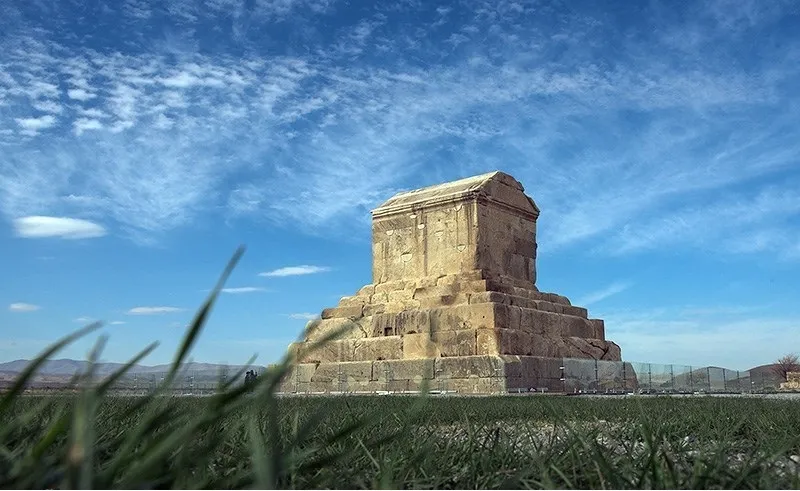
Eugène Flandin drew the tomb of Cyrus in 1840, a small stone house on a stepped pyramid in an open plain, then serving local people as the tomb of Solomon's mother. The 2017 photograph shows it cleared of its medieval additions, alone on its plain at Pasargadae, Cyrus' capital.
Then: The tomb of Cyrus the Great, about 530 BCHistorical imageFamily viewing: Yes
 ThenNow
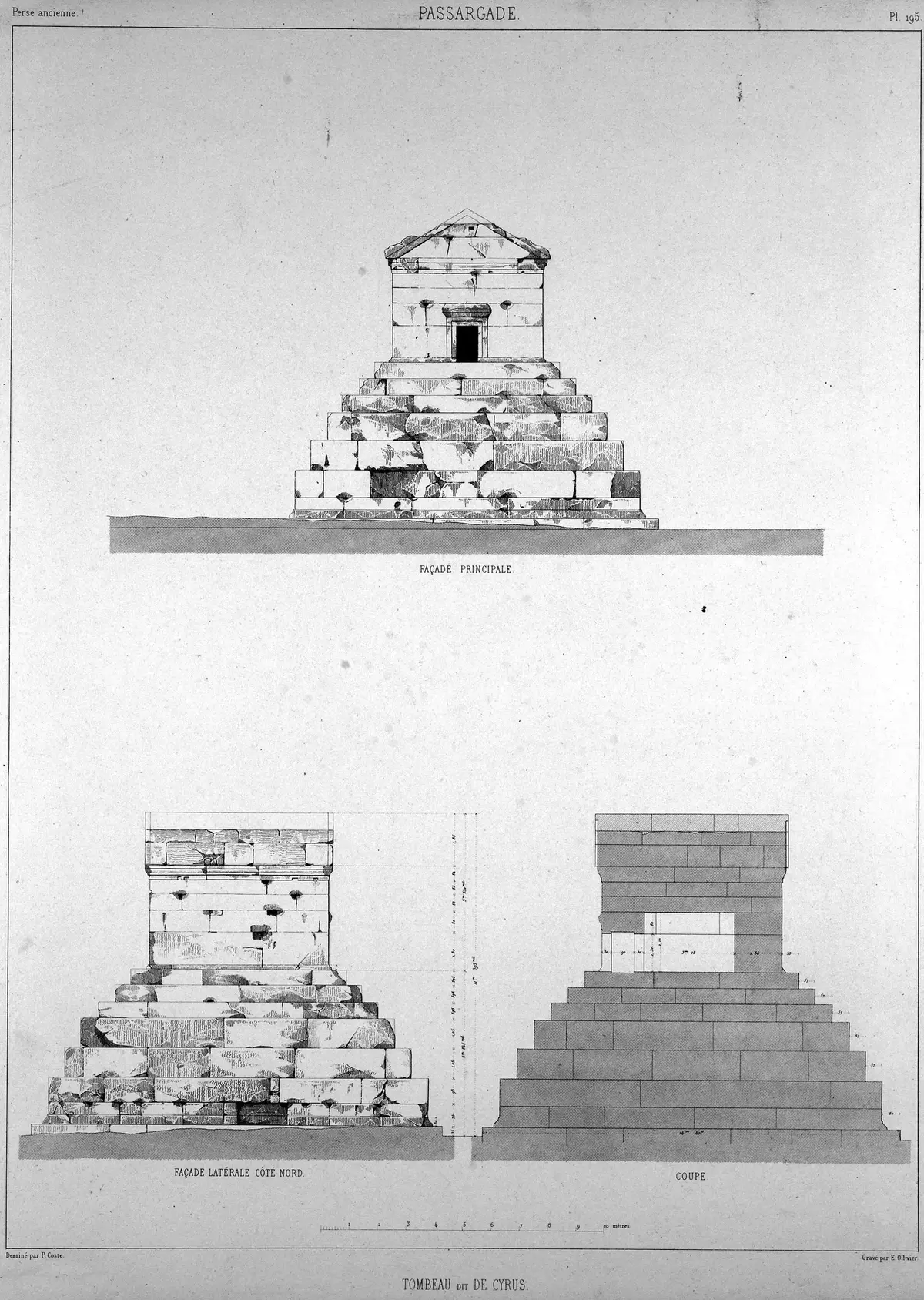
Then. The tomb of Cyrus the Great, about 530 BC. This is a real historical image of the place.
Now. A real photograph of the place as it stands.
Did you know? Alexander visited the tomb and found it robbed, the king's body thrown from its golden coffin. He had the grave restored and its Magian guardians tortured for the theft; the inscription he read, in Plutarch's version, asked the passerby not to grudge the little earth that covered him.
Then and now
Pasargadae was the first capital of the Persian empire, founded by Cyrus the Great, who died in 530 BC and was buried here in a limestone chamber on six steps, built in his lifetime. The city of palaces and gardens around it, the earliest Persian royal park, was laid out in the plain of the Polvar river.
The palaces fell to column bases and a single standing doorway; the tomb endured, guarded by its sanctity under a new name through the Islamic centuries, which added a prayer hall in its attic and mihrab in its chamber. Those additions were cleared in the 1900s. The photograph shows the tomb as Cyrus' builders left it, the plain emptier than Flandin found it.
What changed. The tomb stands; its medieval additions were cleared; the palaces are reduced to bases.
The record, not the myth
The same war access caveat applies as at Persepolis: reports are dated, not assumed.