
Then and Now · E12
Persepolis
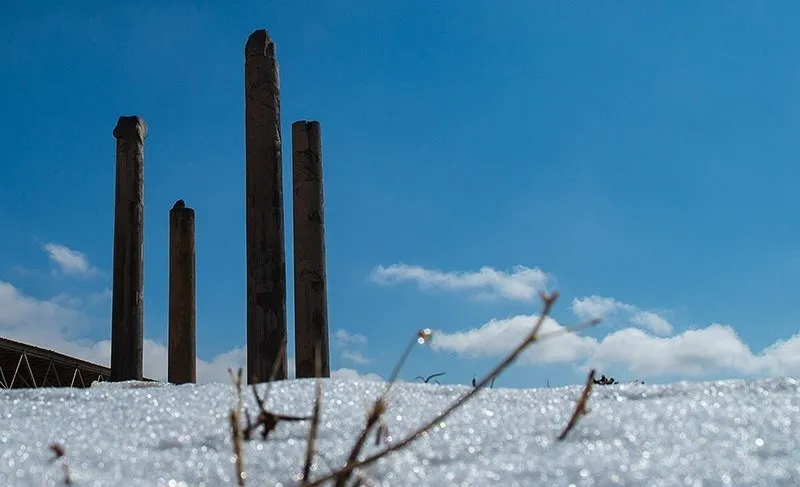
Flandin and Coste drew Persepolis for France in the 1840s and 1850s, the platform of columns and doorways Alexander's fire left. The 2020 photograph shows the same platform after the excavations of the 1930s, its reliefs cleaned and its fallen columns raised or laid in order.
Then: Burned by Alexander, 330 BCHistorical imageFamily viewing: Yes
 ThenNow
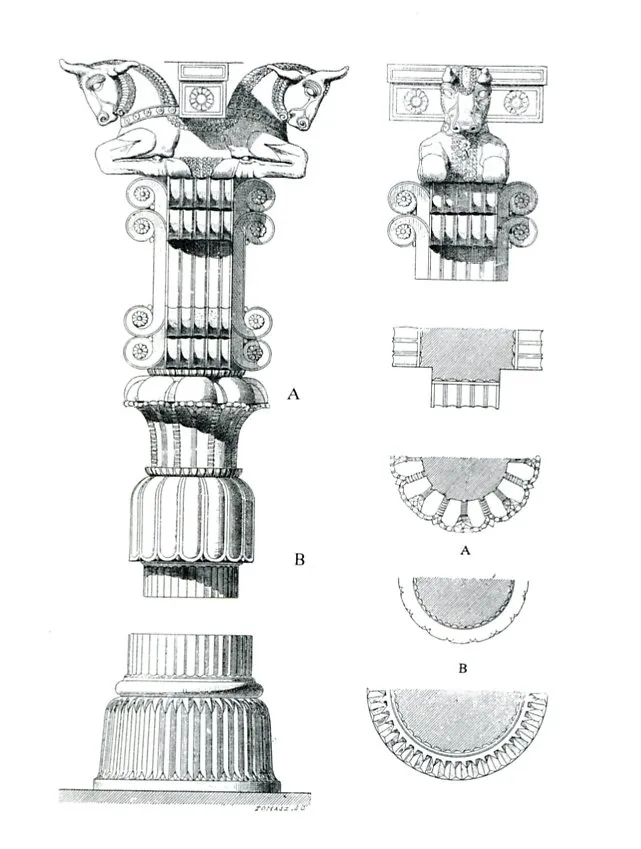
Then. Burned by Alexander, 330 BC. This is a real historical image of the place.
Now. A real photograph of the place as it stands.
Did you know? The burning of Persepolis in 330 BC is one act of Alexander's career his own historians split over: revenge for Athens, policy against a rallying point, or a drunken revel that got out of hand, as the version with the courtesan Thais tells it.
Then and now
Persepolis was the ceremonial capital Darius I began about 515 BC: a great platform against the mountain, palaces and audience halls, and the Apadana staircases carved with the peoples of the empire bringing tribute. It was a stage for kingship more than a working city, staffed seasonally and stuffed with treasure.
Alexander took it in 330 BC and it burned, whether by policy or in a drunken revel the sources argue. The fire baked its mudbrick and felled its cedar roofs, and the stone skeleton stood in the open for two thousand years. Excavation in the 1930s cleared the platform in the photograph. As of April 2026, no war damage at Persepolis had been reported, a point this page dates rather than assumes.
What changed. Burned to a platform of columns, doorways and reliefs; excavated in the 1930s.
The record, not the myth
Drunken revenge or policy: the burning is debated. No war damage reported as of April 2026.