
Then and Now · E11
Alexandria and the Pharos
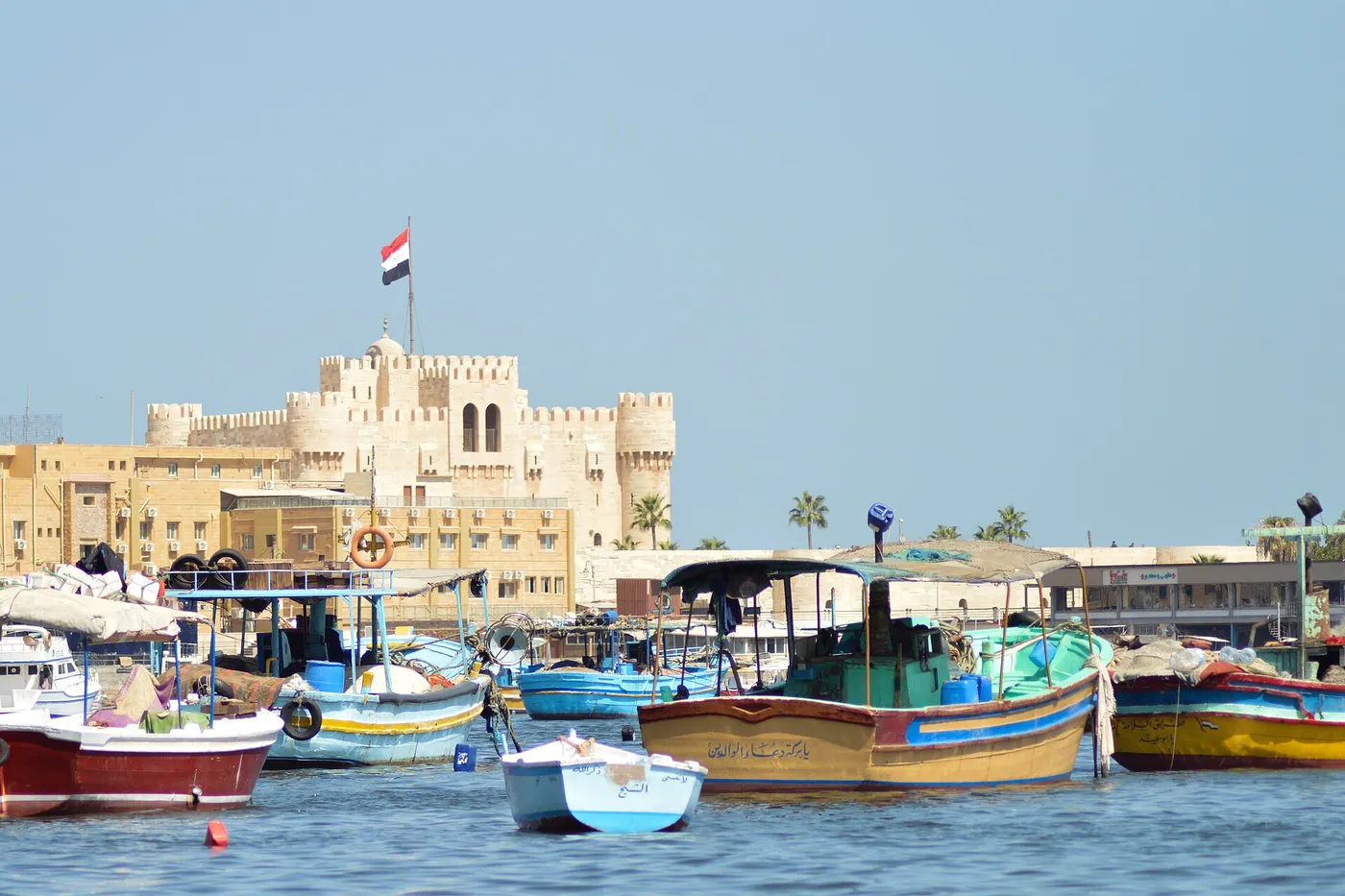
No ancient image of the Pharos survives, so the reconstruction follows Hermann Thiersch's scholarly study of 1909: the three tiered tower on Pharos island, among the tallest buildings in the ancient world. The photograph shows the Citadel of Qaitbay, built in the 1470s on the lighthouse's exact site, partly from its stone.
Then: The lighthouse standing, about 280 BC to the 1300sAI reconstructionFamily viewing: Yes
 ThenNow
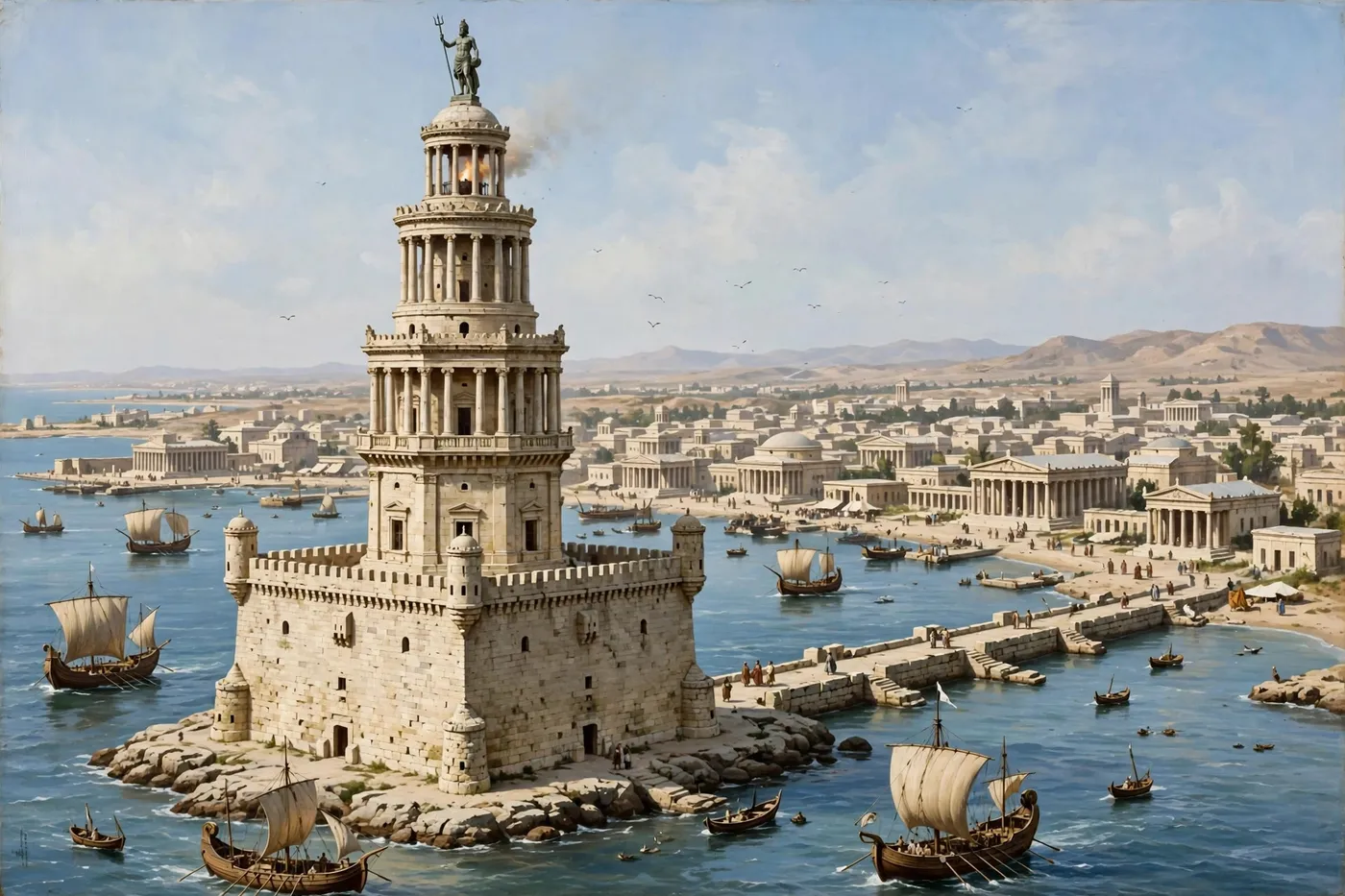
Then. The lighthouse standing, about 280 BC to the 1300s. This view is an AI reconstruction, built from the scholarship cited below. It is not a photograph.
Now. A real photograph of the place as it stands.
Did you know? The Pharos gave its name to lighthouses in language after language: phare in French, faro in Italian and Spanish. The word outlasted the tower by six centuries and counting.
Then and now
The Pharos of Alexandria, built under Ptolemy II about 280 BC, stood perhaps a hundred metres tall in three stages, square, octagonal and round, with a fire and a mirror assembly at its top guiding ships into the Great Harbor. It worked for some sixteen centuries and was copied across the Mediterranean world.
Earthquakes in 956, 1303 and 1323 broke it down by stages, and in 1477 Sultan Qaitbay built his fortress on the platform at the harbor mouth, reusing its stone, some of which divers have since found in the water around it. The citadel photograph shows the fort on the point today, the harbor behind it, on the ground where the wonder stood.
What changed. Earthquakes toppled the Pharos; the Qaitbay Citadel was built on its site in the 1470s, partly from its stone.
The record, not the myth
The ship burning mirror is a legend.