
Then and Now · E9
Petra
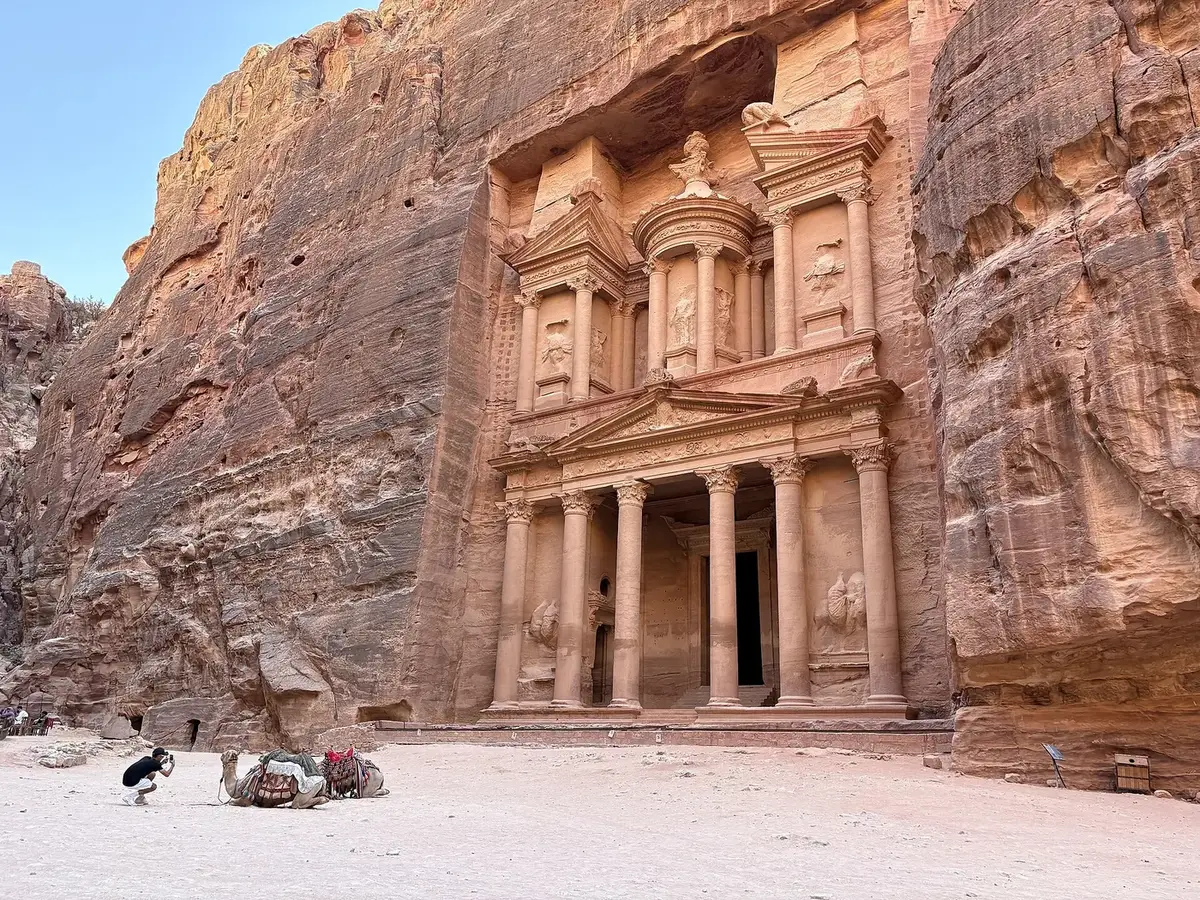
David Roberts drew the Treasury, al-Khazneh, on 7 March 1839, and Haghe's lithograph carried the image around the world: the great facade in its canyon, Bedouin at its door. The 2025 photograph shows the same facade, its ground level lowered by excavation, its stone weathered a little more, and nothing else about it changed.
Then: Al-Khazneh, 7 March 1839Historical imageFamily viewing: Yes
 ThenNow
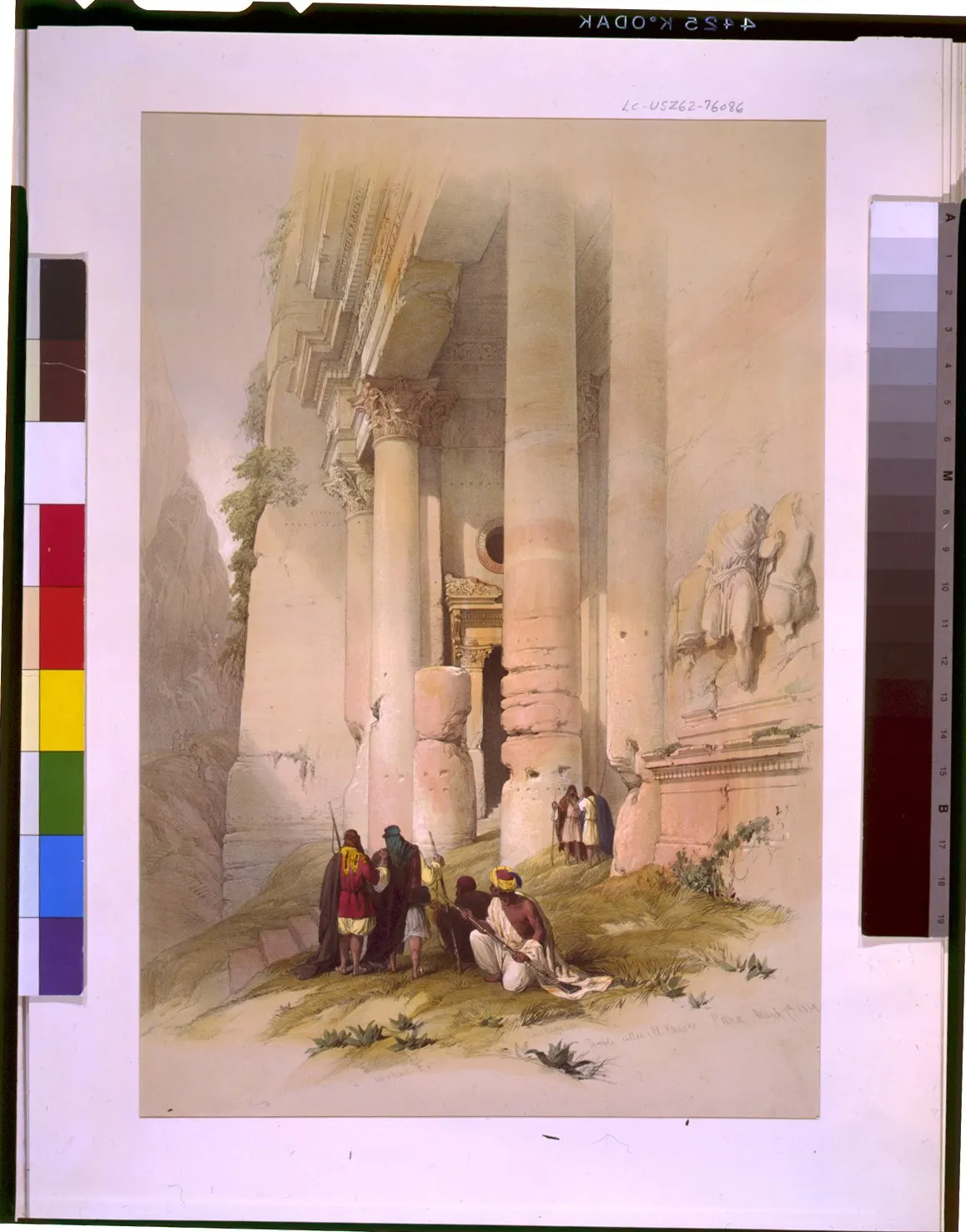
Then. Al-Khazneh, 7 March 1839. This is a real historical image of the place.
Now. A real photograph of the place as it stands.
Did you know? It was never a treasury. The facade is most likely the tomb of the Nabataean king Aretas IV, cut in the first century BC. The treasure story hangs on the urn at its top, which local guides said held a pharaoh's gold; it is solid stone, scarred by rifle shots aimed at it.
Then and now
Petra was the Nabataean Arabs' capital, rich on the incense trade, its water engineered through dams and channels into a city in the desert rock. Al-Khazneh stands where the Siq canyon opens, the first great facade a traveler met, and Roberts' party were among the early Europeans to draw it.
The facade survives almost as Roberts drew it, which is the point of the pairing: excavation cleared the plaza before it and lowered the ground, uncovering a tomb level below the one he saw. Petra is Jordan's defining site now, emptied of the families who lived in its caves, who were moved to a village in the 1980s.
What changed. The facade is largely unchanged; excavation lowered the ground in front of it.
The record, not the myth
Never a treasury; most likely a royal tomb.