
Then and Now · W24
Ravenna and Classe
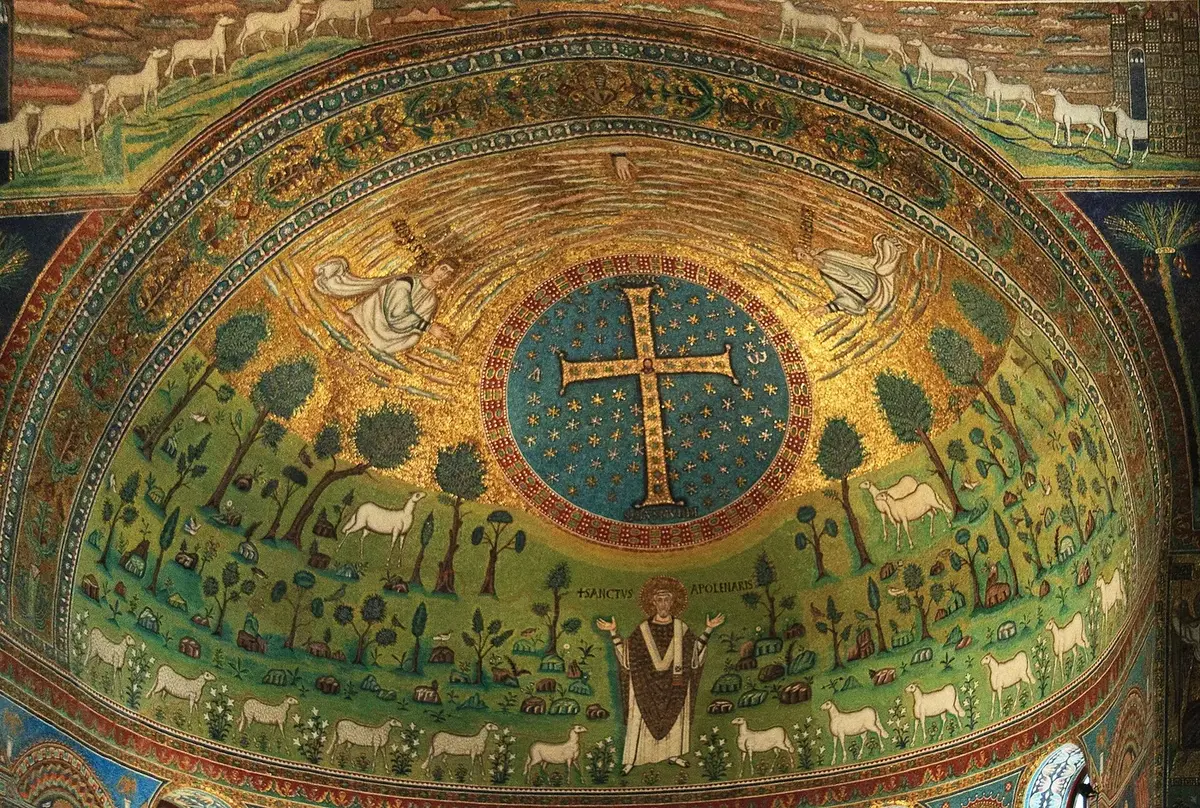
The mosaic in Sant'Apollinare Nuovo shows Classis as its own citizens pictured it about the year 500: the walled port, its lighthouse, ships in the harbor. The photograph shows the great church of Sant'Apollinare in Classe, which stood by the port, now alone in farmland about nine kilometres from the sea.
Then: The port of Classis, 6th centuryHistorical imageFamily viewing: Yes
 ThenNow
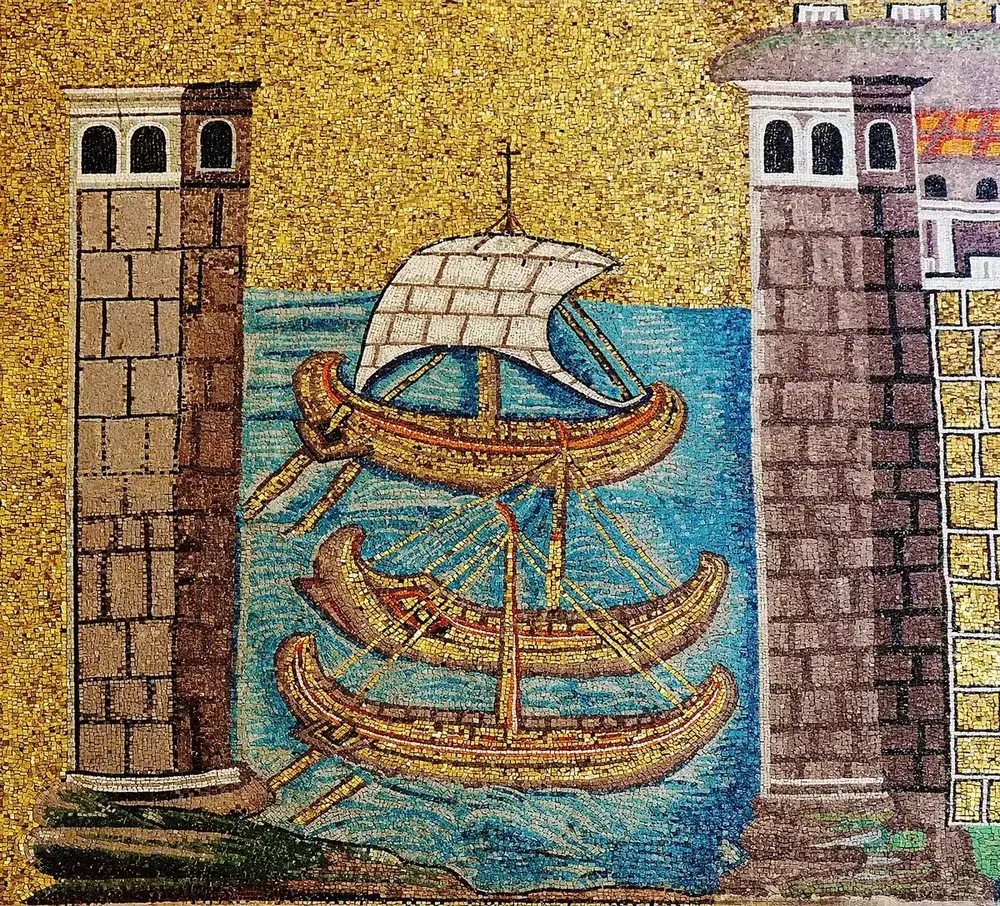
Then. The port of Classis, 6th century. This is a real historical image of the place.
Now. A real photograph of the place as it stands.
The land itself moved. Po delta silt carried the shoreline about nine kilometres east. The fleet base of Classis is now farmland, its great church standing alone in the fields.
Did you know? Classis was the base of one of Rome's two standing fleets. Augustus stationed the Adriatic fleet here, and the port town took its name from the Latin for fleet, classis.
Then and now
Ravenna became the capital of the western Roman empire in 402 because its port and marshes made it defensible, and Classis was its harbor: quays, warehouses and the Adriatic fleet. The mosaic, made for the palace church of Theoderic, is a portrait of the port by the men who used it.
The Po delta's silt pushed the coast east through late antiquity and after, and the port died with its harbor. The basilica of Sant'Apollinare in Classe, consecrated in 549, survived as the port's monument, standing now in flat farmland where the fleet anchored, the sea about nine kilometres away.
What changed. The harbor silted gradually through late antiquity; the coast moved about 9 km east.
The record, not the myth
The mosaic portrait of Classis shows the port as its own city wished it seen about the year 500; it is evidence of the port's pride and outline, not a survey, and the harbor's detail comes from excavation.