
Then and Now · W23
Ephesus and its harbor
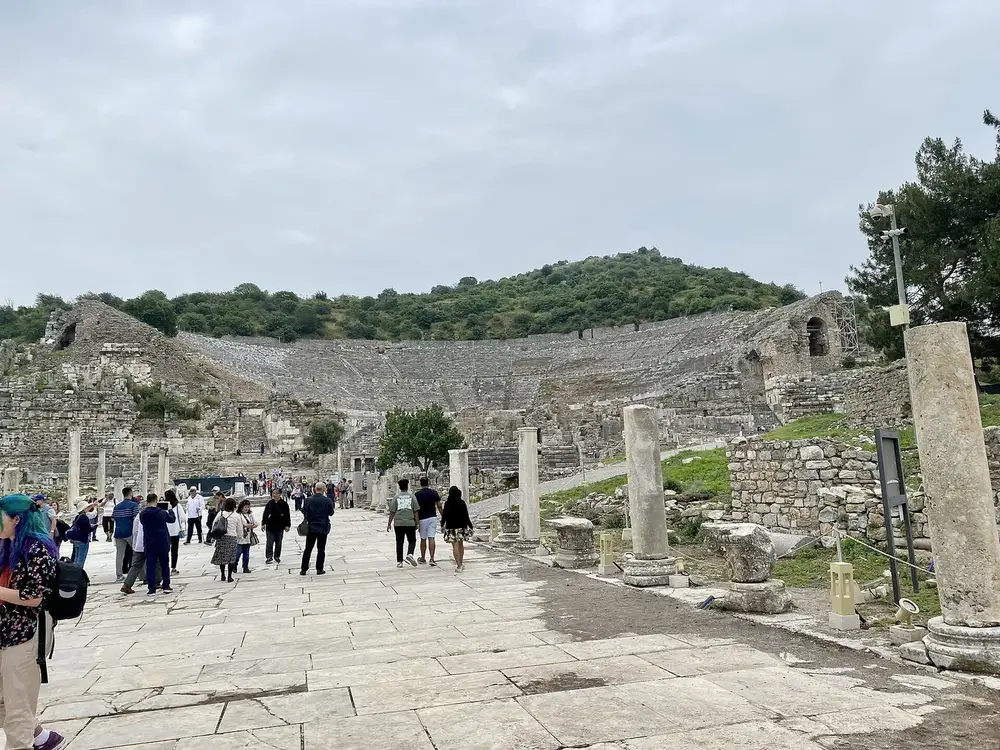
The reconstruction follows the harbor studies of Stock and his colleagues: the Arcadian Street running from a working harbor to the great theatre, the sea at the street's end. The photograph stands on that same street. The harbor is silt, and the sea is about five kilometres away.
Then: The Roman harbor cityAI reconstructionFamily viewing: Yes
 ThenNow
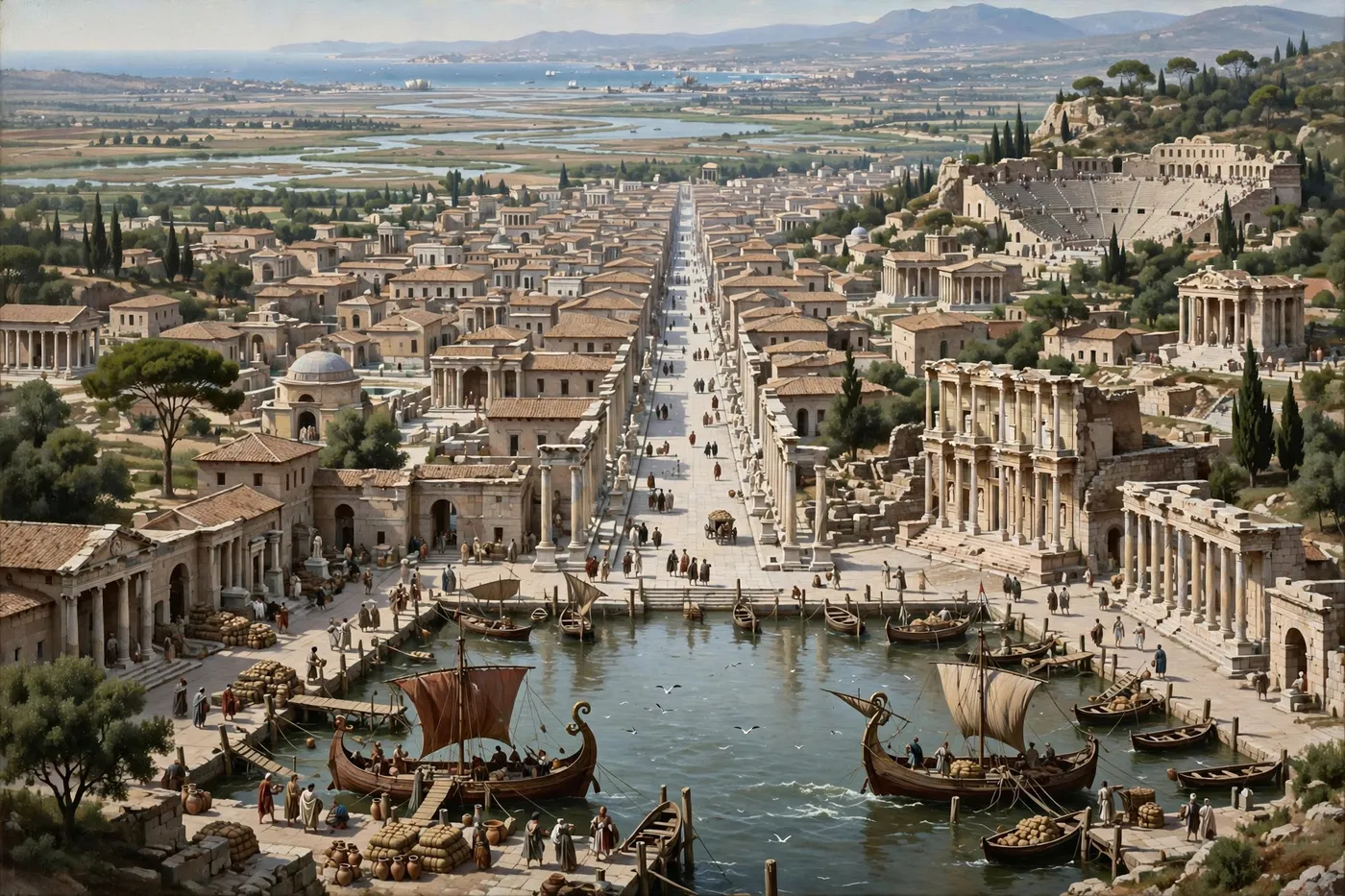
Then. The Roman harbor city. This view is an AI reconstruction, built from the scholarship cited below. It is not a photograph.
Now. A real photograph of the place as it stands.
The land itself moved. The Cayster river's silt filled the harbor basin and built the coast westward. Ephesus, a seaport, now stands about five kilometres from the sea.
Did you know? Ephesus fought its own harbor's silting for centuries, dredging and cutting channels, and the emperors issued decrees about it. The river won anyway.
Then and now
Ephesus was one of the great cities of the Roman east, a port of perhaps 200,000 people, with the temple of Artemis, one of the wonders of the world, in its marshes and the Arcadian Street paved in marble from harbor to theatre. Paul preached here; the silversmiths rioted against him in that theatre.
The Cayster river filled the harbor with silt despite dredging, and by the middle ages the port was a marsh and the city moved away. Excavation since the 1860s has cleared the marble streets. The Arcadian Street in the photograph runs toward a green plain where the harbor basin lay, the Aegean now about five kilometres west.
What changed. The river silted the harbor; the site now lies about 5 km inland.
The record, not the myth
The Artemision, the temple of Artemis that was one of the wonders of the world, is a single re-erected column in a marshy field outside the main excavated area; the site a visitor walks is the city, not the wonder.