
Then and Now · W22
Lutetia, Île de la Cité
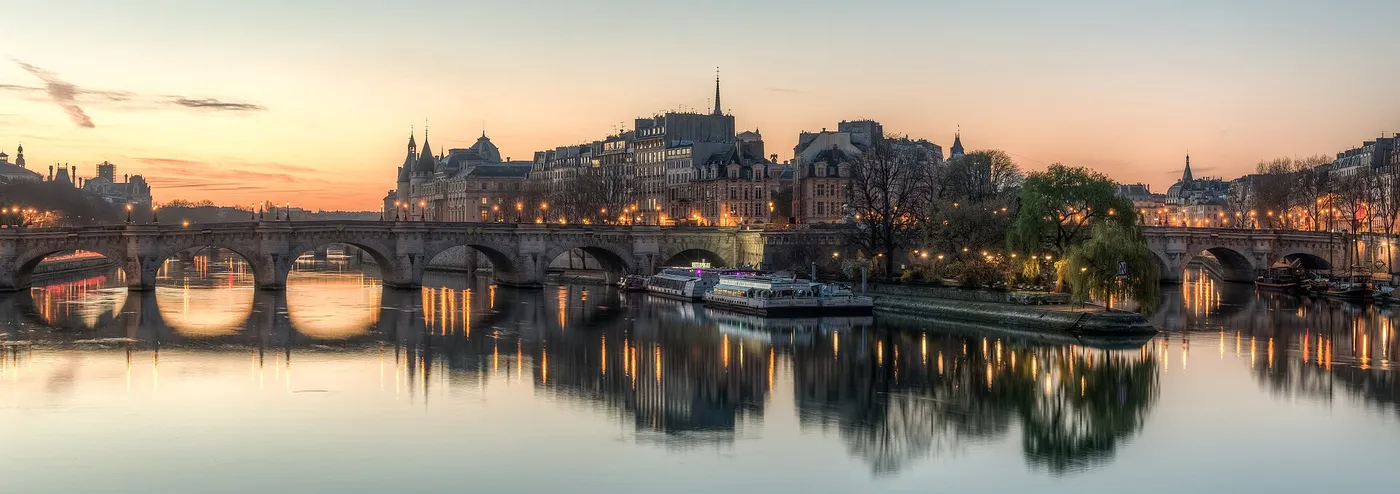
The reconstruction follows the Carnavalet museum's model of Lutetia's forum. Roman Paris stood mainly on the Left Bank; the island in the Seine, in the photograph, carried the later royal palace and Notre Dame, and Haussmann swept its medieval streets away in the 1860s.
Then: Roman Lutetia; the medieval Palais de la CitéAI reconstructionFamily viewing: Yes
 ThenNow
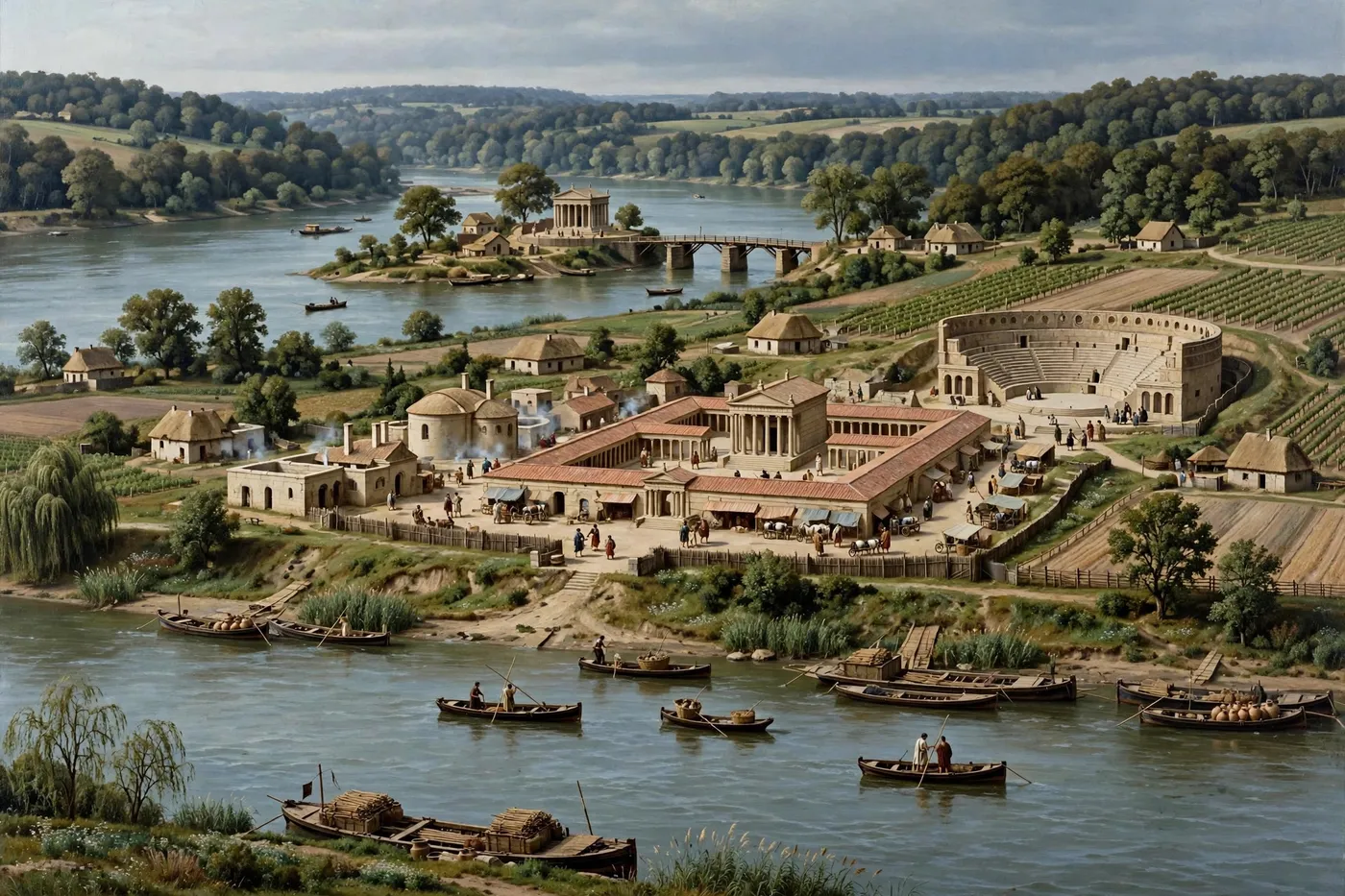
Then. Roman Lutetia; the medieval Palais de la Cité. This view is an AI reconstruction, built from the scholarship cited below. It is not a photograph.
Now. A real photograph of the place as it stands.
Did you know? Notre Dame burned on 15 April 2019 and reopened in December 2024. The photograph on this page predates the fire; the cathedral in it still wears its 19th century spire, which the restoration rebuilt as it was.
Then and now
Lutetia was a modest Roman town of the Parisii, with its forum, baths and arena on the Left Bank hill, and a smaller settlement on the island. In the later empire the island was walled, and it became the seat of kings: the Palais de la Cité, Sainte-Chapelle, and from 1163 the cathedral of Notre Dame at its eastern end.
Baron Haussmann demolished the island's dense medieval housing in the 1860s for the law courts, the hospital and the great square before the cathedral. The dawn photograph shows the cleared island as he left it: Notre Dame at the point, the spire of Sainte-Chapelle behind, the Seine bridges where Lutetia's wooden bridges crossed.
What changed. Haussmann cleared the medieval houses; Notre Dame burned in 2019 and reopened in December 2024.
The record, not the myth
The Roman town was centered on the Left Bank, not on the island.