
Then and Now · W2
Piraeus and the Long Walls
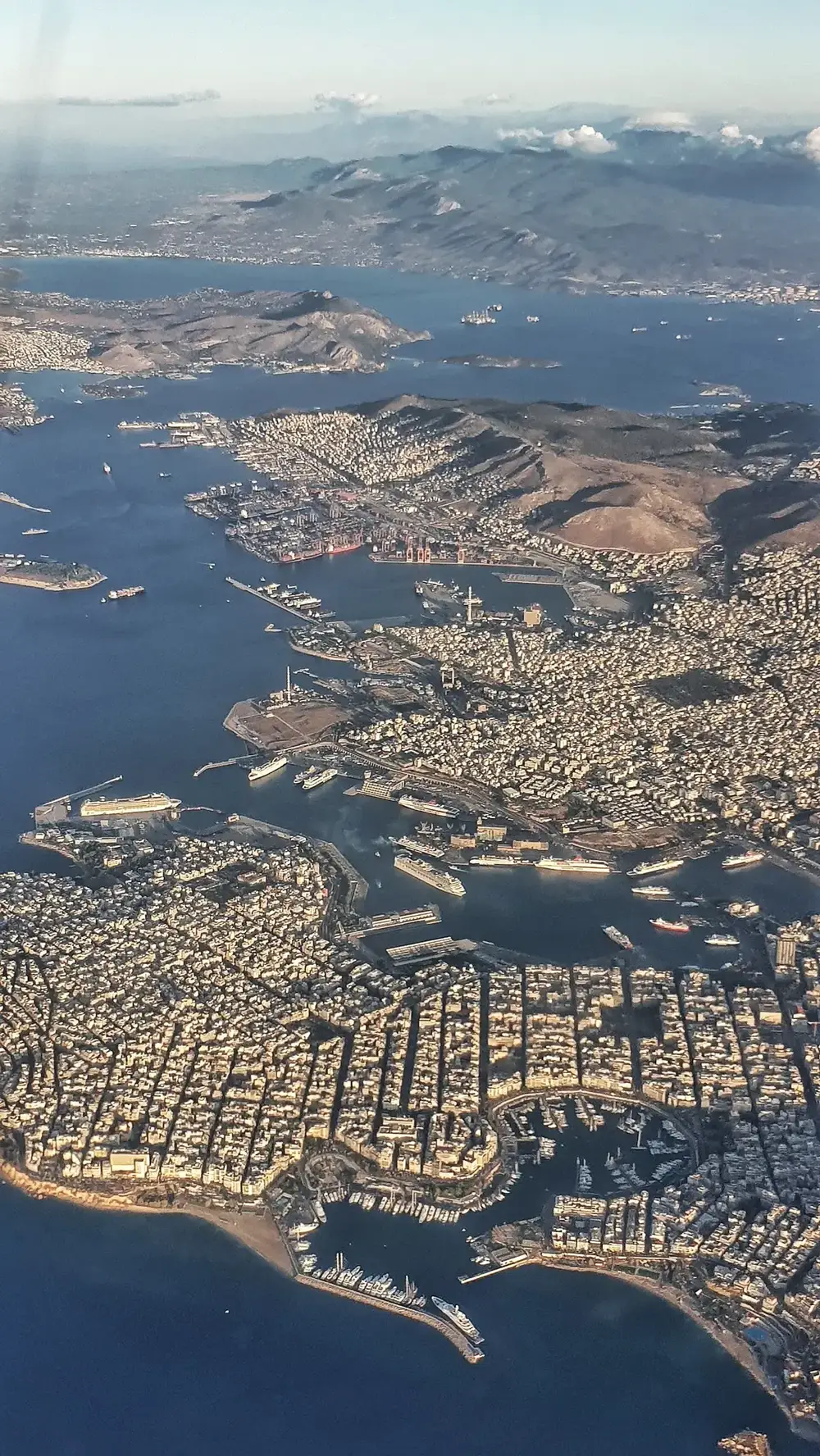
Mahaffy's 1890 restoration shows Athens joined to its port by the Long Walls, two walls running about six kilometres to the sea. The walls are fragments now, and Piraeus is one of the great commercial ports of Europe.
Then: The walled port, 5th century BCHistorical imageFamily viewing: Yes
 ThenNow
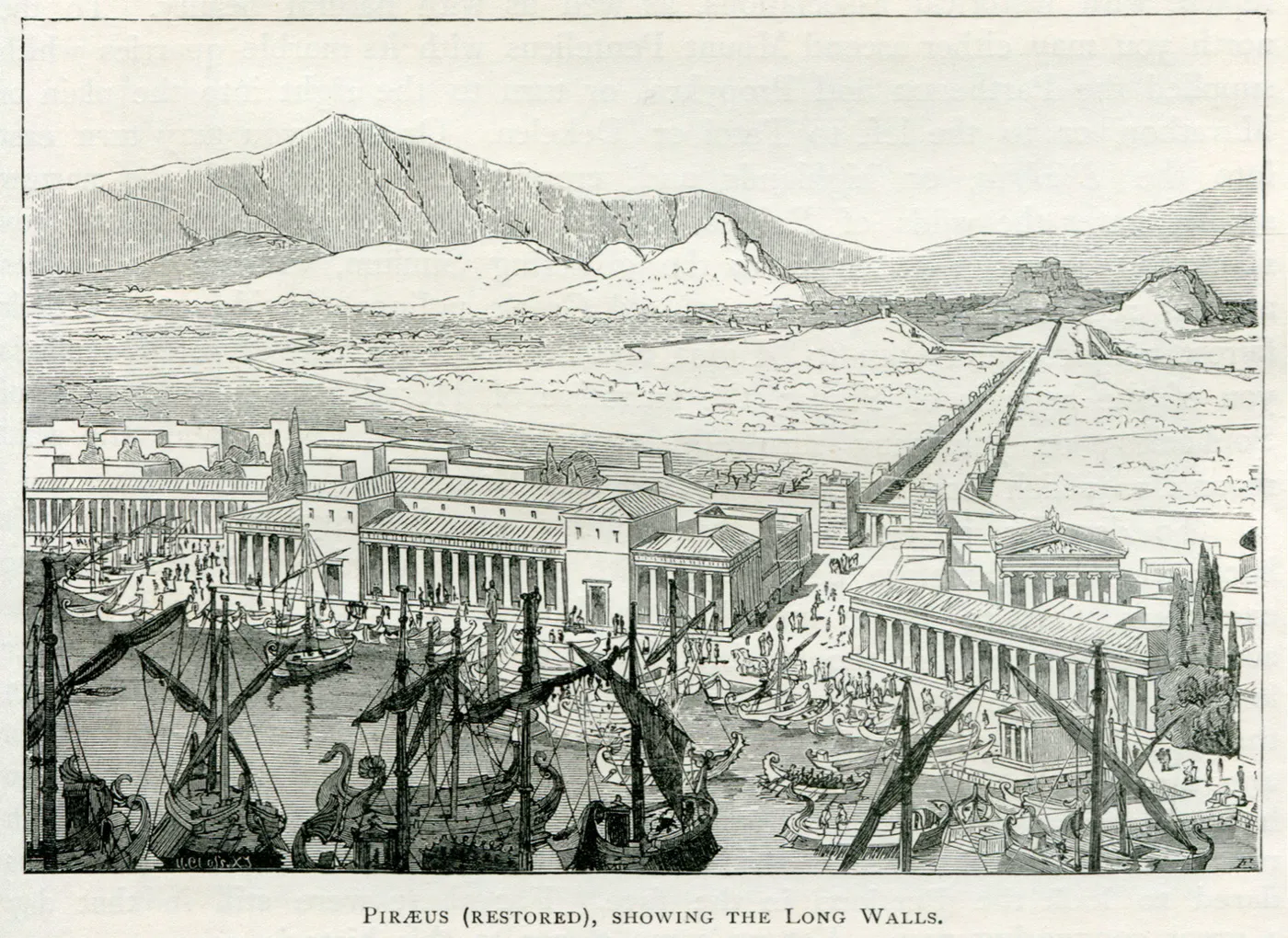
Then. The walled port, 5th century BC. This is a real historical image of the place.
Now. A real photograph of the place as it stands.
Did you know? The Long Walls made Athens an island on land: with the walls held and the fleet supreme, the city could be fed by sea through any siege.
Then and now
In the fifth century BC Athens tied itself to its harbor at Piraeus with two parallel walls, the Long Walls, so that men, food and money could move between city and port under protection. Inside the corridor the whole population could shelter, and Athens could defy a stronger land power as long as its navy ruled the sea.
Sparta demolished the walls in 404 BC to the music of flute girls, and Athens rebuilt them in the 390s BC. What survives is fragments in streets and plots. Piraeus today is a dense modern city and Greece's great port, its ancient harbors still in use as marinas and ferry quays.
What changed. Walls demolished 404 BC, rebuilt in the 390s BC, now fragments only; a huge commercial port; the land is built over.
The record, not the myth
Restorations of the walls and the port, Mahaffy's included, are conjectural in their detail.