
Then and Now · W4
Marathon plain
Edward Dodwell drew the great burial mound on the plain of Marathon in 1819, when it stood in open country. The mound still stands; the marsh around it has been drained into farms and a town.
Then: The battle of 490 BCHistorical imageFamily viewing: Yes
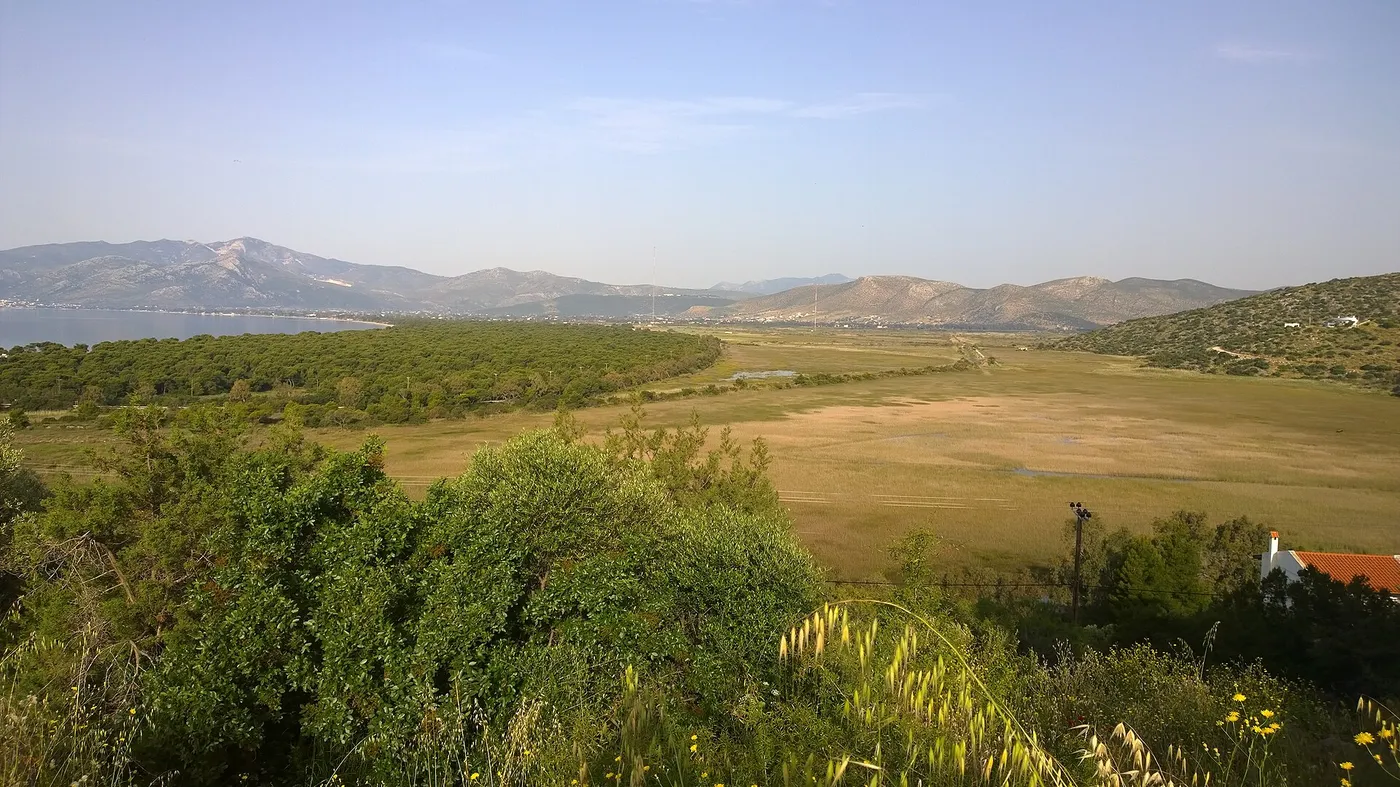 ThenNow
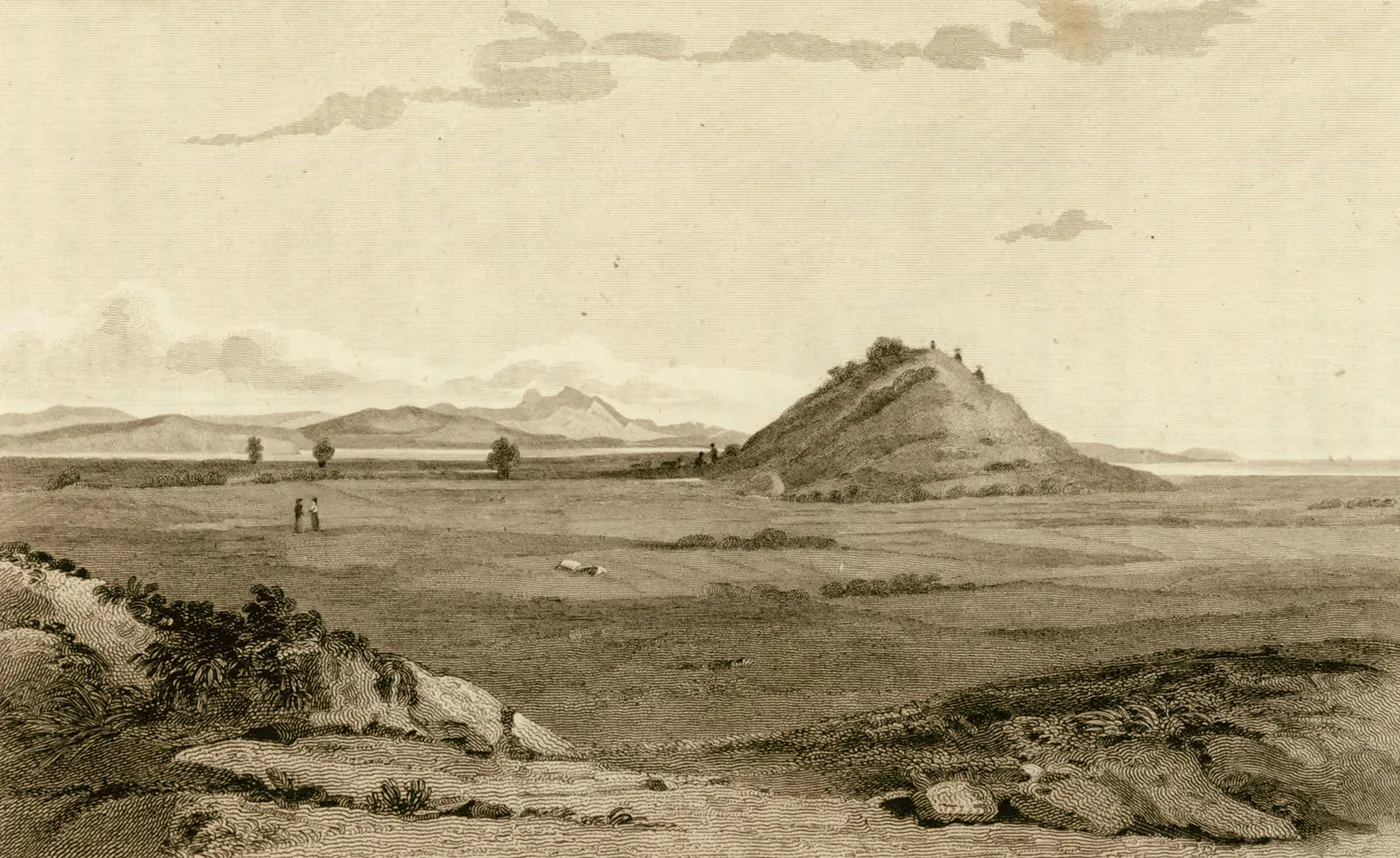
Then. The battle of 490 BC. This is a real historical image of the place.
Now. A real photograph of the place as it stands.
Did you know? The 192 Athenian dead were buried on the field under the mound, an honor Athens gave almost no other battle dead, who were usually brought home.
Then and now
On this plain in 490 BC the Athenians and Plataeans charged the Persian landing force and drove it to its ships. Dodwell's 1819 view shows the soros, the burial mound of the Athenian dead, standing in the open plain much as the Persians left the field.
The marsh that anchored the Greek flank has been largely drained to farms, and the modern town of Marathon and the 2004 Olympic rowing course share the plain. The mound survives, fenced and planted, and the plain gives its name to the long distance race, though the famous run belongs to a later story.
What changed. The marsh is largely drained to farms and a town; the Athenian burial mound survives.
The record, not the myth
In Herodotus, Pheidippides ran to Sparta before the battle. The run from Marathon to Athens with news of victory is a later legend.