
Then and Now · W1
Athens and the Acropolis
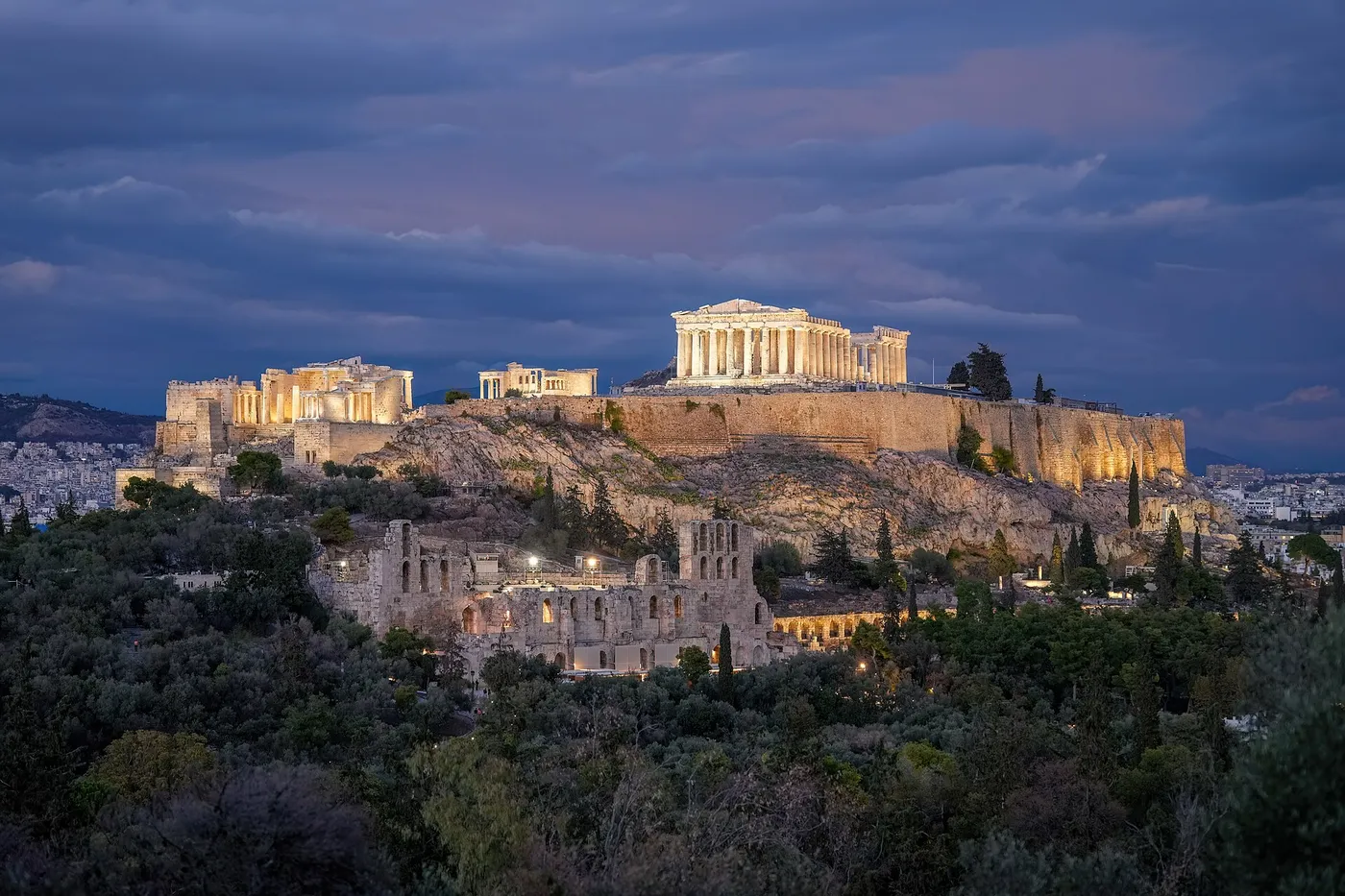
The Acropolis as Leo von Klenze imagined it in 1846, temples standing over the city, against the same rock photographed at night in 2025.
Then: Classical Athens, 5th century BCHistorical imageFamily viewing: Yes
 ThenNow
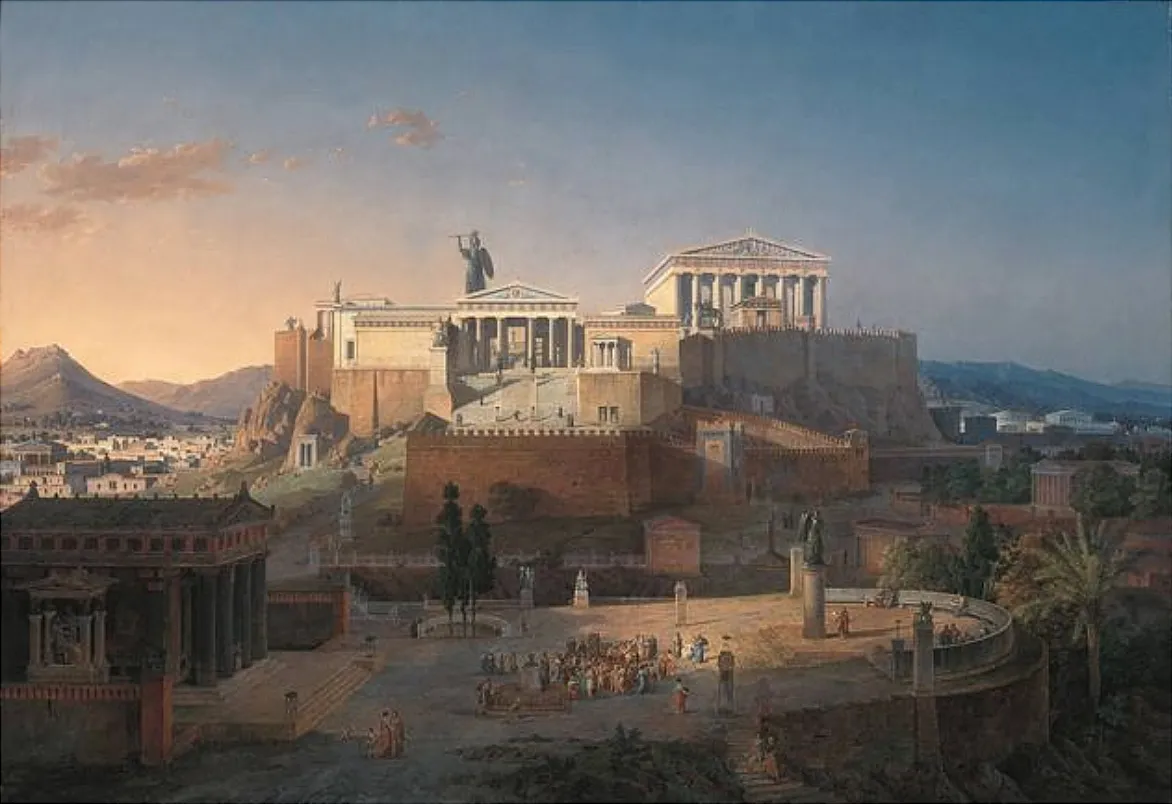
Then. Classical Athens, 5th century BC. This is a real historical image of the place.
Now. A real photograph of the place as it stands.
Did you know? The Parthenon survived largely intact until 1687, when a Venetian shell hit the gunpowder stored inside it and blew the roof off.
Then and now
In the fifth century BC the Acropolis was the religious heart of Athens, crowned by the Parthenon, the Propylaea gateway and the Erechtheion, paid for at the height of Athenian power. The temples were not the bare white marble of modern imagination; they carried paint, bronze fittings and gilded detail.
The rock today is a cleared archaeological site above a modern capital. The Parthenon was blown up in 1687 during the Venetian siege, and the sculptures removed in the early 1800s are still argued over. What stands now is a ruin under permanent conservation, visited by millions a year.
What changed. Temples ruined (the Parthenon was blown up in 1687); a cleared archaeological site inside a modern city.
The record, not the myth
The temples were brightly painted, not white. Klenze's 1846 view is an idealized reconstruction, not a record of what stood in his day.