
Then and Now · W9
Knossos
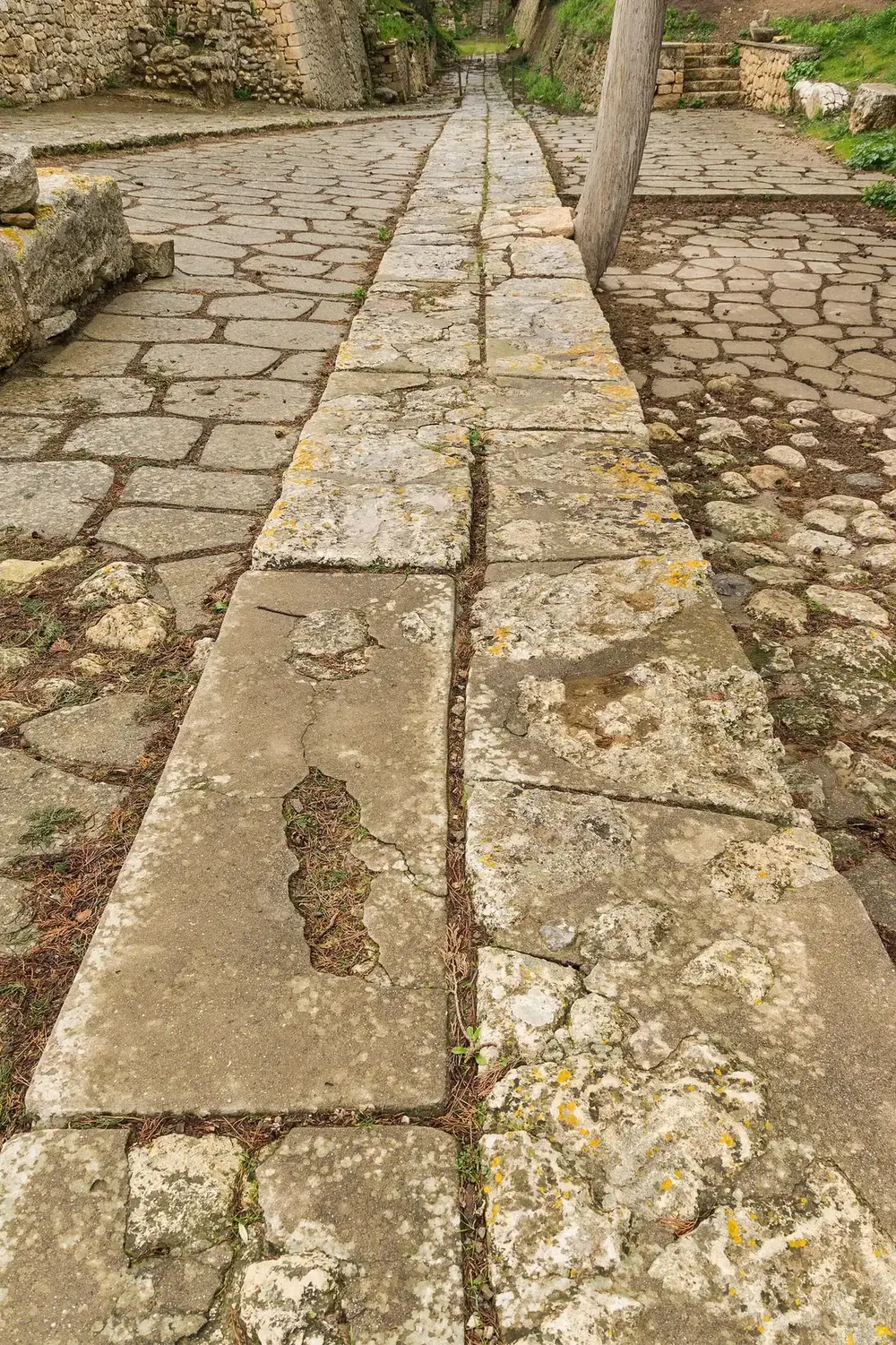
The Throne Room as Arthur Evans' workmen uncovered it in 1900, photographed in the first season. The palace today is the same excavation, partly rebuilt in concrete, which is why this page pairs an excavation photograph with the Royal Road as it stands.
Then: The moment of excavation, 1900Historical imageFamily viewing: Yes
 ThenNow
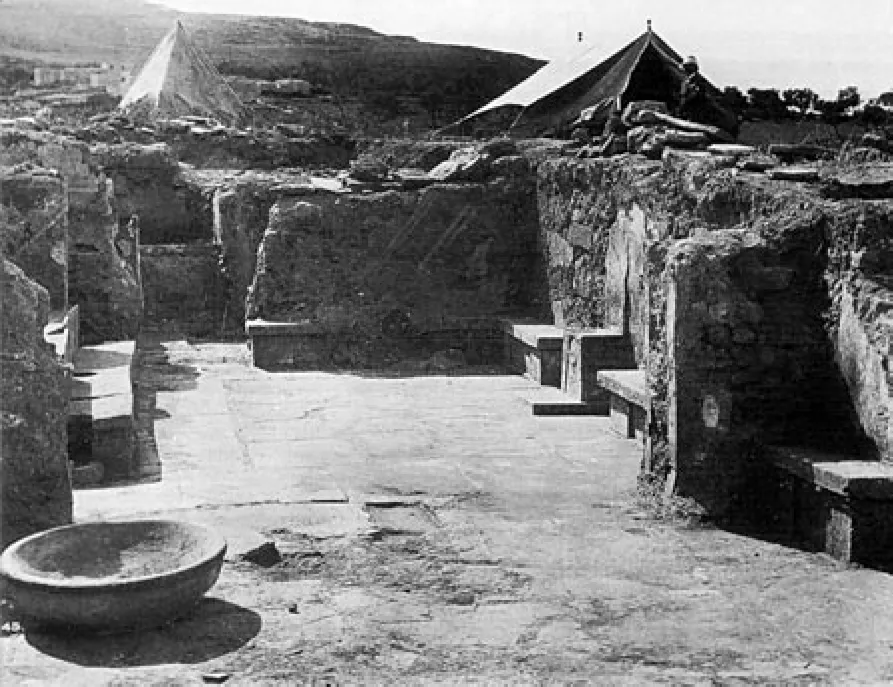
Then. The moment of excavation, 1900. This is a real historical image of the place.
Now. A real photograph of the place as it stands.
Did you know? Evans rebuilt parts of the palace in reinforced concrete, the wonder material of his day. His rebuilding is now itself a protected monument, and a problem: the concrete is failing.
Then and now
Knossos was the largest Bronze Age center on Crete, a sprawling complex of courts, storerooms and staircases built and rebuilt over centuries. Evans bought the hill and began digging in 1900; the Throne Room photograph shows the gypsum throne in place as it came out of the earth.
Evans did not only dig. He rebuilt, roofing rooms and re-erecting columns in concrete, painted in the colors he believed they had worn. The site today is that mixture of Bronze Age wall and Edwardian reconstruction, and scholars still argue over where one ends and the other begins.
What changed. Excavated by Evans and partly rebuilt in concrete.
The record, not the myth
Evans' reconstructions, and the word "palace" itself, are criticized as speculative; much of what a visitor sees is his interpretation.