
Then and Now · W10
Mycenae
The citadel of Mycenae photographed in 1887, eleven years after Schliemann dug its shaft graves. The Lion Gate still guards the same path; what has been added is conservation, paths and a century of careful digging.
Then: The citadel in 1887Historical imageFamily viewing: Yes
 ThenNow
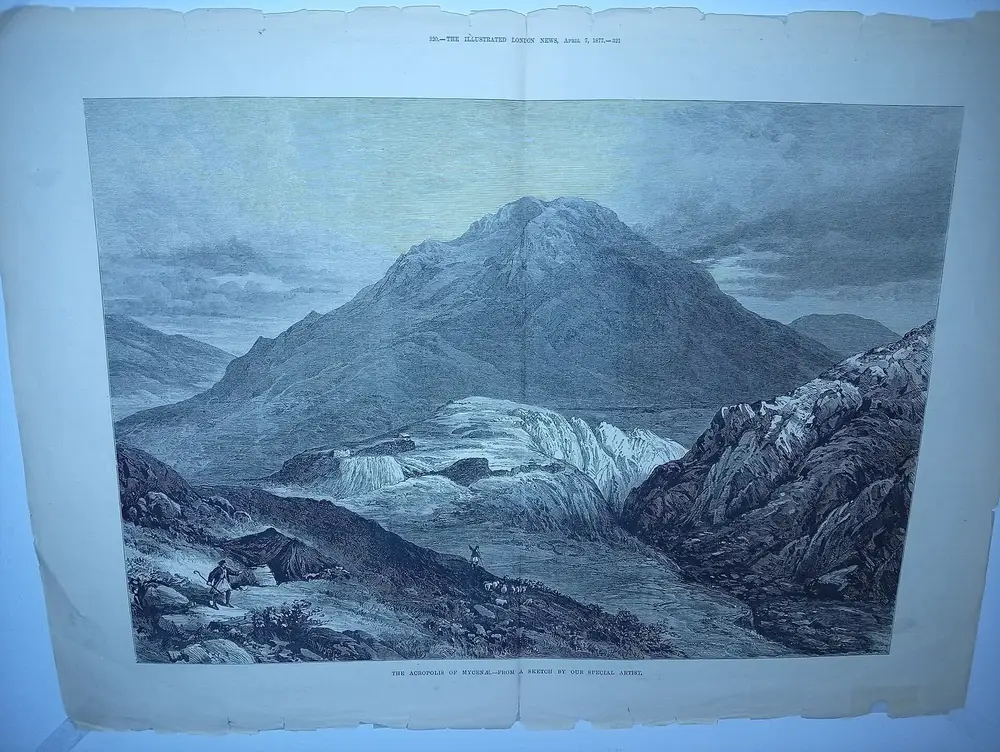
Then. The citadel in 1887. This is a real historical image of the place.
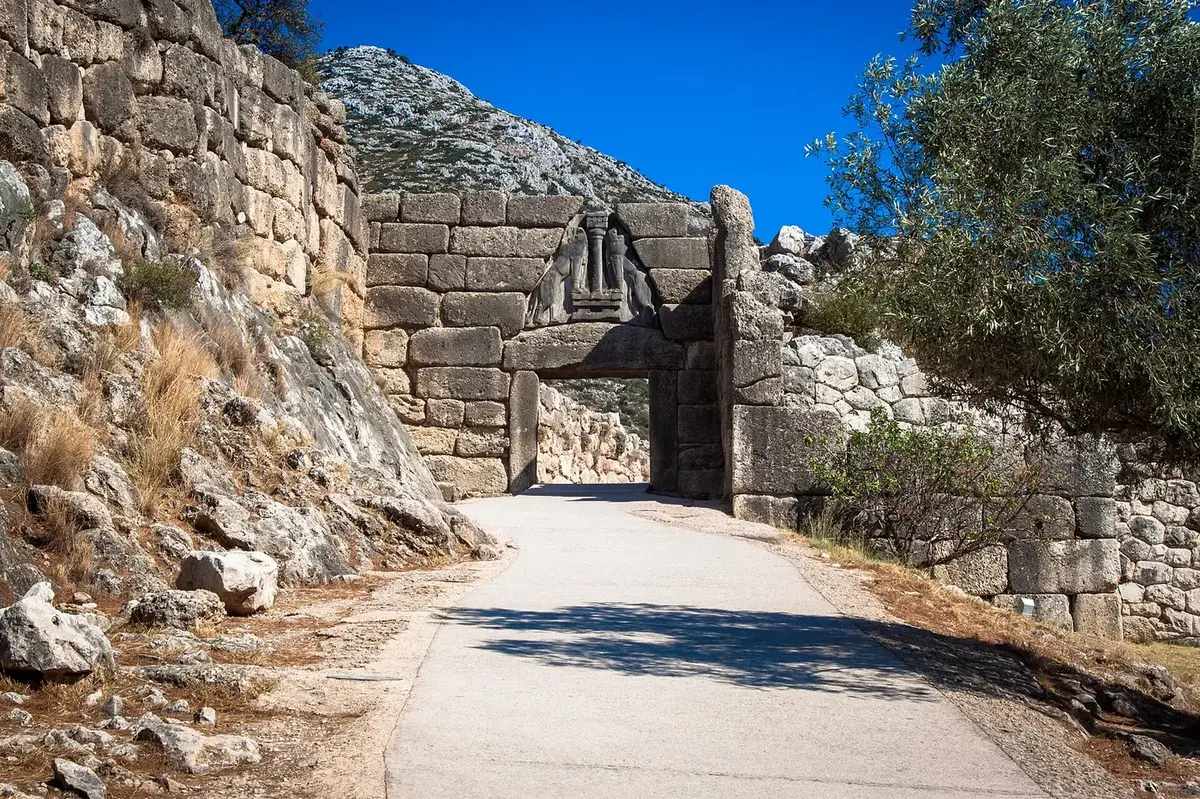
Now. A real photograph of the place as it stands.
Did you know? The gold mask Schliemann wired home about, claiming he had gazed on the face of Agamemnon, is centuries older than any king who could have fought at Troy.
Then and now
Mycenae was the stronghold that gave its name to a civilization: a walled citadel on a ridge, entered through the Lion Gate, ringed by the beehive tombs of its kings. Schliemann excavated the shaft graves inside the walls in 1876 and found gold beyond expectation.
The 1887 photograph shows the citadel raw, soon after the first digging. Excavation has continued in campaigns ever since, uncovering the palace, the granary and the great walls in full. The modern photograph looks up the same path to the Lion Gate, conserved and fenced, above the Argive plain.
What changed. Excavated since 1876; paths and conservation added.
The record, not the myth
The Mask of Agamemnon predates any Agamemnon of the Trojan War by centuries; the name is Schliemann's, not evidence.