
Then and Now · W38
Hastings, Battle Abbey
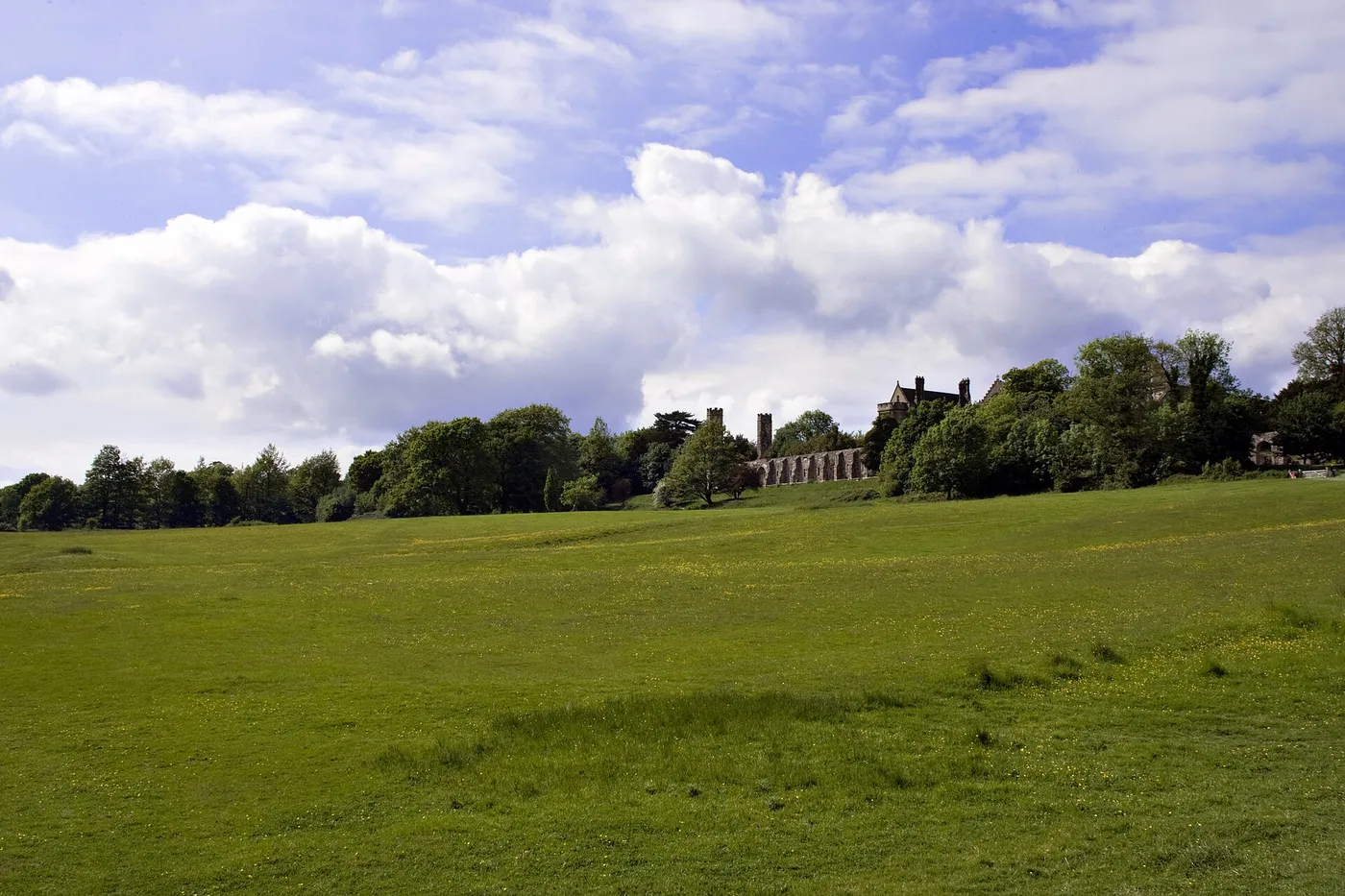
The Bayeux Tapestry's scene 51 shows the Norman knights and archers in the fight of 14 October 1066. The photograph looks over the field at Battle today: the ridge terraced for the abbey William built on the field, the slope where the English shield wall stood now grass.
Then: The battle of 1066Historical imageFamily viewing: Mild
 ThenNow
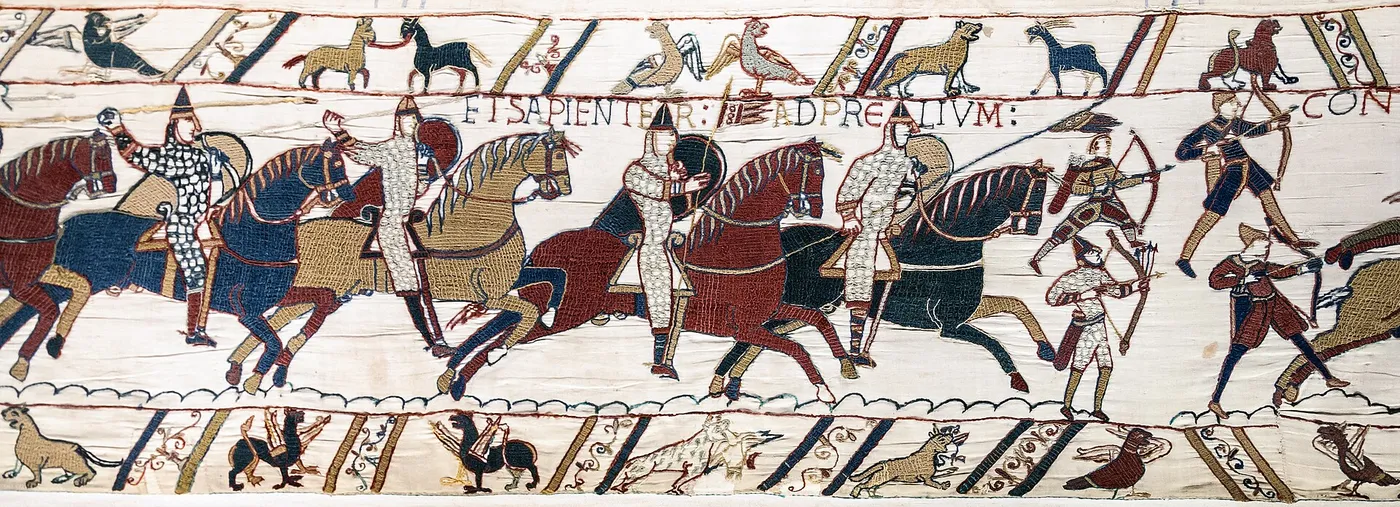
Then. The battle of 1066. This is a real historical image of the place.
Now. A real photograph of the place as it stands.
Did you know? William vowed an abbey on the field if God gave him victory, and its high altar was set, by tradition, on the spot where Harold fell. The town that grew around the abbey is simply called Battle.
Then and now
Harold of England placed his army across the ridge road at Senlac, and for a full day the Norman attacks broke on the shield wall before feigned retreats and archery wore it down. Harold was killed, with his brothers, and William's victory opened England to the Norman conquest.
The abbey William founded was built into the ridge itself, its church terrace cut into the slope the English held, which changed the ground more than the battle did. The battlefield below is preserved grassland under English Heritage, with the abbey ruins above. Rival sites for the battle are proposed from time to time; English Heritage defends this one, where the abbey has stood as the battle's marker since the 1070s.
What changed. The ridge was terraced for the abbey; the field is now grassland.
The record, not the myth
Rival sites are proposed; English Heritage defends this one. Harold's death by an arrow in the eye is disputed.