
Then and Now · W39
Venice lagoon
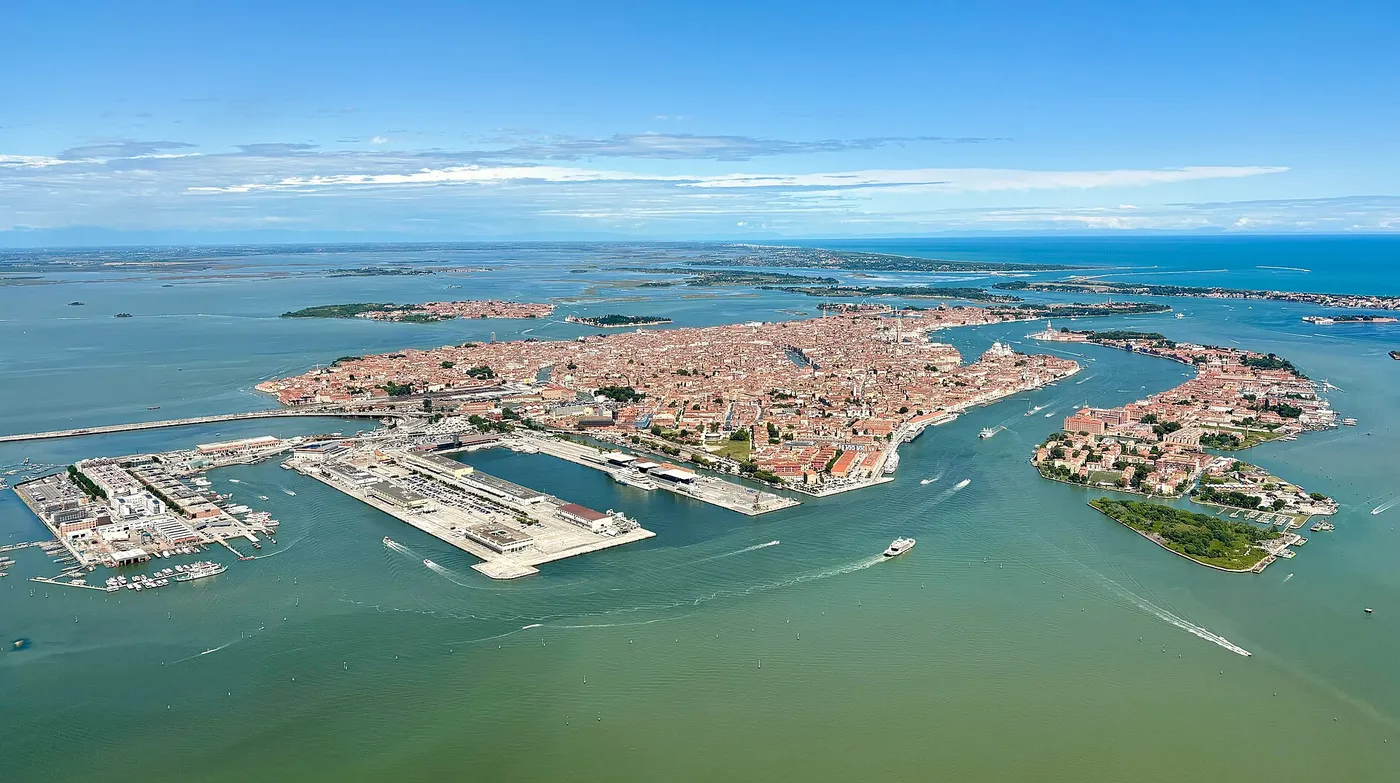
Jacopo de' Barbari's woodcut of 1500 is a portrait of Venice at its height, every church and canal of the island city laid out as if seen from the air. The aerial photograph of 2025 shows a startling fact: the outline is almost the same city.
Then: Venice in 1500Historical imageFamily viewing: Yes
 ThenNow
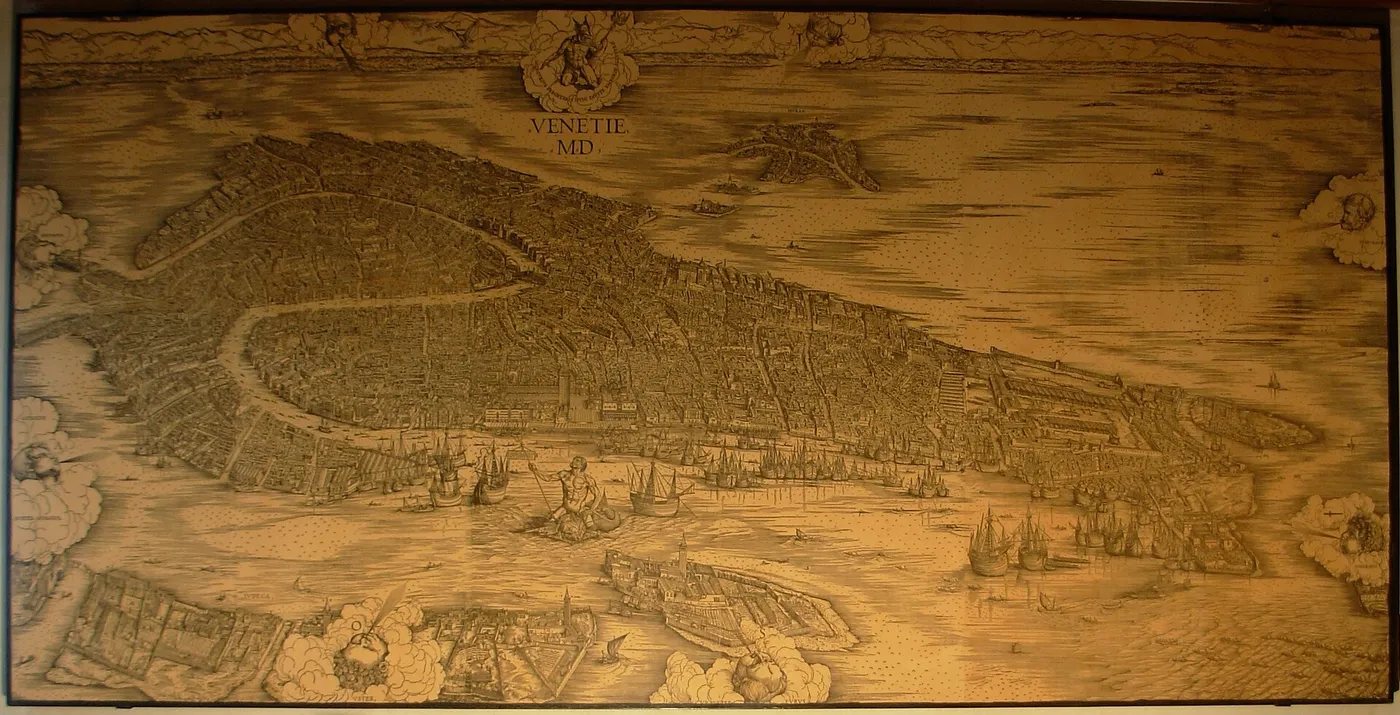
Then. Venice in 1500. This is a real historical image of the place.
Now. A real photograph of the place as it stands.
Did you know? The de' Barbari view was long attributed to Albrecht Dürer, who was in Venice in the 1490s. It is the work of Jacopo de' Barbari, printed from six huge woodblocks, and copies hang in museums worldwide.
Then and now
In 1500 Venice was a great power: mistress of an eastern trading empire, rich on spices and shipping, and building the Renaissance city of palaces along the Grand Canal that the woodcut records house by house. The view is propaganda as much as map, Mercury and Neptune blessing the city's trade and sea power.
Venice declined as an empire and was preserved by it: too poor in the 1800s to rebuild itself, it kept its Renaissance fabric. What the aerial photograph adds to 1500 is the railway and road causeways, the industrial port at Marghera on the mainland shore, and since 2020 the MOSE flood barriers at the lagoon inlets, raised against the acqua alta that worsens as the city slowly sinks.
What changed. The outline is much as in 1500, plus bridges and the port; MOSE flood gates operate since 2020.
The record, not the myth
The great view was once attributed to Dürer; it is Jacopo de' Barbari's.