
Then and Now · W37
Aachen
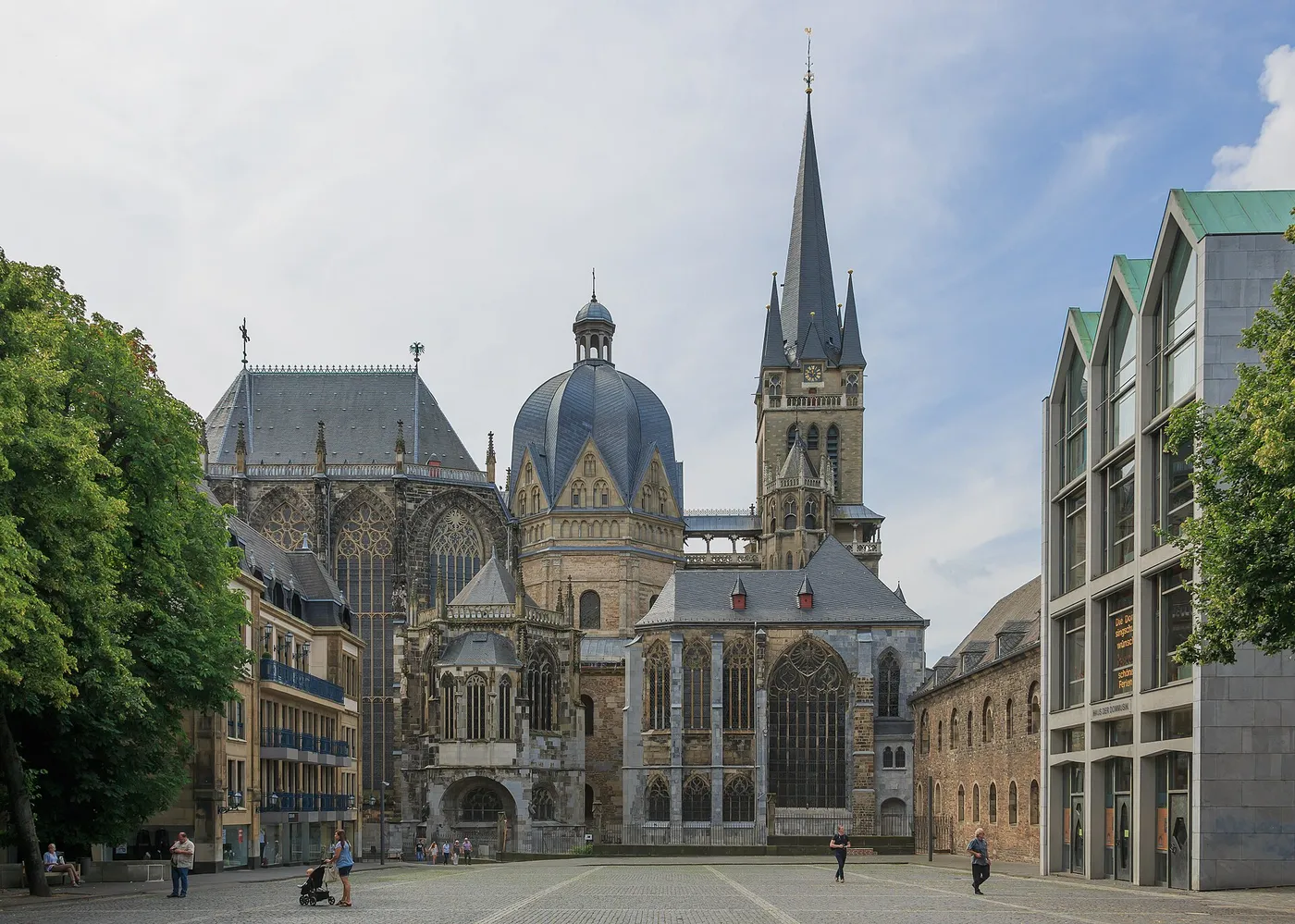
Dürer drew Aachen's minster in 1520, on the road to his Netherlands journey: Charlemagne's octagonal chapel with its later Gothic choir just finished. The photograph shows the same building today, the chapel at the heart of the cathedral, the palace beside it long replaced by the town hall.
Then: Aachen Minster in 1520Historical imageFamily viewing: Yes
 ThenNow
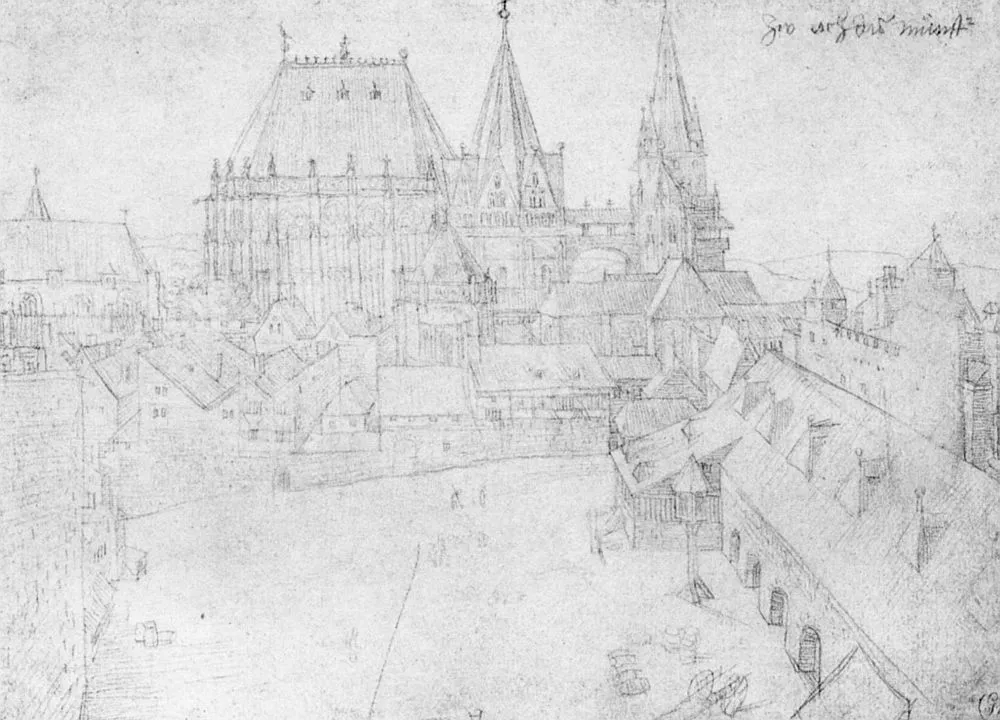
Then. Aachen Minster in 1520. This is a real historical image of the place.
Now. A real photograph of the place as it stands.
Did you know? Thirty one German kings were crowned in Charlemagne's chapel at Aachen, from Otto I in 936 to Ferdinand I in 1531, seated on Charlemagne's own marble throne, which is still in the gallery.
Then and now
Charlemagne made Aachen his capital and built its palace chapel about 796 to 805, an octagon modeled on the great churches of Ravenna and Constantinople, the finest building raised in northern Europe since Rome. He was buried in it in 814, and his shrine and throne made the chapel a coronation church for five centuries.
Dürer's drawing catches the minster as the Gothic choir, a glass hall for the relics, was new. The palace around it decayed and the town hall rose on its hall's foundations in the 1300s. The modern photograph shows the cathedral as it stands: the Carolingian octagon at the center, Gothic choir east, later chapels and the 19th century west tower around it.
What changed. Charlemagne's chapel survives inside Gothic additions; the palace was replaced by the town hall.
The record, not the myth
Charlemagne's burial inside the chapel is traditional and probable, but the tomb was opened and the remains translated into shrines; no grave survives in place to check against the accounts.