

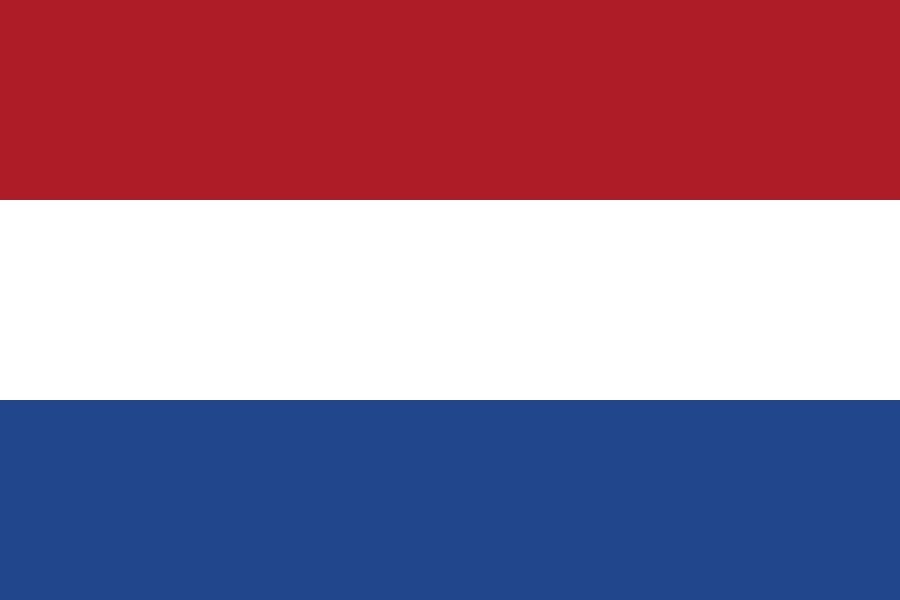
Country · Netherlands
Netherlands
1581–
The Netherlands is a low lying country in western Europe, much of it below sea level. It declared independence from Spain in 1581 and became a great trading empire in the seventeenth century. It is a parliamentary constitutional monarchy.
The Netherlands is a low lying country in western Europe, and Amsterdam is its capital, while the government and parliament sit in The Hague. The population is about 18 million (2024 estimate). Dutch is the official language, and Frisian holds official status in the province of Friesland. The Netherlands is a parliamentary constitutional monarchy, with the king as head of state and a prime minister leading the government.
The Dutch provinces belonged to Habsburg Spain in the sixteenth century. Their revolt, the Eighty Years' War, began in 1568, and in 1581 the northern provinces renounced the Spanish king Philip II by the Act of Abjuration. The Republic of the Seven United Netherlands became a leading trading power. The Dutch East India Company, founded in 1602, traded across Asia, and the republic held colonies in Indonesia, southern Africa, and the Americas. Spain recognized Dutch independence in 1648.
French armies overthrew the republic in 1795. After Napoleon's defeat, the Congress of Vienna created the Kingdom of the Netherlands in 1815. The southern provinces broke away as Belgium in 1830. The Netherlands stayed neutral in the First World War. Germany invaded and occupied the country from 1940 to 1945. The Netherlands recognized Indonesian independence in 1949. After the war the country became a founding member of Benelux, NATO, and the European Communities, and it adopted the euro in 1999.
Facts
- Founded
- 1581, by the Act of Abjuration against Spain; independence recognized in 1648.
- Source: CIA World Factbook
- Capital
- Amsterdam; the seat of government is The Hague.
- Source: CIA World Factbook
- Major rulers
- William of Orange, leader of the revolt against Spain; Johan de Witt, statesman of the Dutch Golden Age.
- Source: Encyclopaedia Britannica, Netherlands
- Government
- Parliamentary constitutional monarchy.
- Source: CIA World Factbook
Sources
Source links accessed 22 November 2026.
Images
Related
- Baruch SpinozaSame country
What happened elsewhere
Pairings are by recorded year, not exact simultaneity.
- Thomas HobbesWhile Netherlands (1588)
- Abbas IWhile Netherlands (1571)
Meanwhile
Meanwhile, around the world — drag to spin, click a pulsing marker.
Keep reading
Test yourself
What was the capital?
- Amsterdam; the seat of government is The Hague
- Castries
- Lilongwe
- Tunis
Answer
Amsterdam; the seat of government is The Hague — Capital: Amsterdam; the seat of government is The Hague.
When was Netherlands founded?
- 1581, by the Act of Abjuration against Spain; independence recognized in 1648
- 20 March 1956, independence from France
- 3 March 1992, independence declared after a referendum; recognized in April 1992
- 26 July 1965, independence from Britain
Answer
1581, by the Act of Abjuration against Spain; independence recognized in 1648 — Founded: 1581, by the Act of Abjuration against Spain; independence recognized in 1648.
What form of government does Netherlands have?
- Parliamentary constitutional monarchy
- Parliamentary republic; top offices are reserved by sect: a Maronite president, a Sunni prime minister, a Shia speaker
- A territorial assembly and French prefect administer the territory alongside three customary kingdoms, Uvea, Alo, and Sigave
- Presidential republic
Answer
Parliamentary constitutional monarchy — Government: Parliamentary constitutional monarchy.
True or false: The Netherlands is a low lying country in western Europe, much of it below sea level.
- True
- False
Answer
True — True. The Netherlands is a low lying country in western Europe, much of it below sea level.
My notes
Highlights on this page
None yet.
Spotted an error on this page? Email [email protected] and it will be checked against the sources.