
Country · Liechtenstein
Liechtenstein
1806–
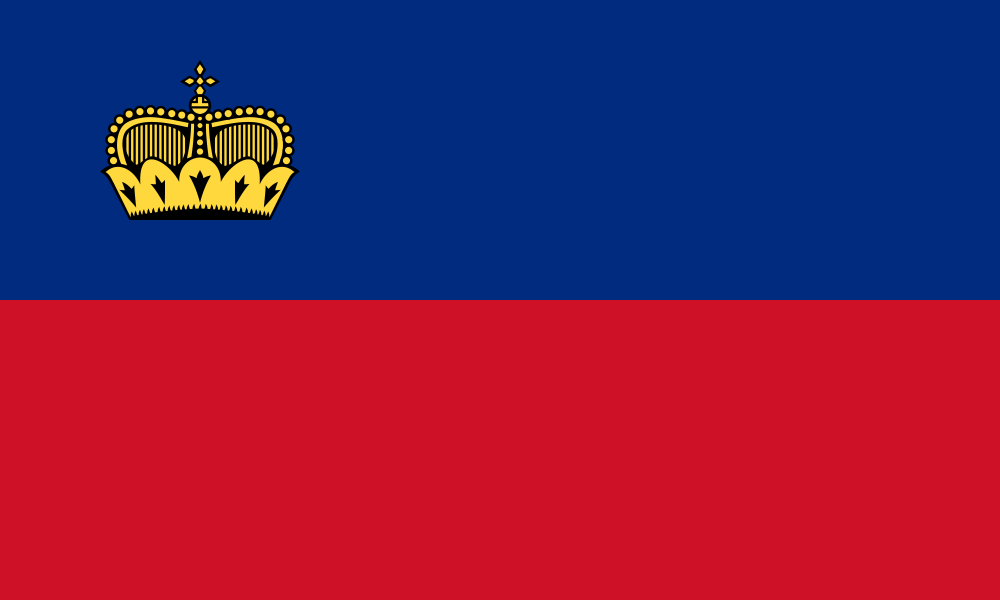
Liechtenstein is a tiny German speaking principality in the Alps, between Switzerland and Austria. It became a sovereign state in 1806. It is a constitutional monarchy under the House of Liechtenstein, one of the richest countries in the world per person.
Liechtenstein is a small principality in the Alps between Switzerland and Austria, and Vaduz is its capital. The population is about 40,000 (2024 estimate). German is the official language. Liechtenstein is a constitutional monarchy: the prince is head of state and holds powers that include vetoing laws and dismissing the government, and an elected parliament, the Landtag, passes legislation.
The principality was formed in 1719, when the House of Liechtenstein bought the lordships of Schellenberg and Vaduz and the Holy Roman emperor united them as a principality. The family had held high office in Austria for centuries but had owned no territory of its own inside the empire. When the Holy Roman Empire dissolved in 1806, Liechtenstein became sovereign. It belonged to the German Confederation from 1815 to 1866 and abolished its small army in 1868. It stayed neutral in both world wars.
A customs treaty of 1923 tied Liechtenstein to Switzerland, and the country uses the Swiss franc. After the Second World War it built up a finance sector and precision manufacturing, and household income per person ranks among the highest in the world. Hans Adam II has been prince since 1989. Voters approved a new constitution in 2003 that confirmed and in places widened the prince's powers, and his son Alois has served as regent since 2004.
Facts
- Founded
- 1806, sovereignty gained when the Holy Roman Empire dissolved.
- Source: CIA World Factbook
- Capital
- Vaduz.
- Source: CIA World Factbook
- Major rulers
- Hans Adam II, prince since 1989; the Liechtenstein dynasty has ruled the land since 1719.
- Source: Encyclopaedia Britannica, Liechtenstein
- Government
- Constitutional monarchy with strong princely powers.
- Source: CIA World Factbook
Sources
Source links accessed 22 November 2026.
Images
What happened elsewhere
Pairings are by recorded year, not exact simultaneity.
- John Stuart MillWhile Liechtenstein (1806)
- HaitiWhile Liechtenstein (1804)
- Abraham LincolnWhile Liechtenstein (1809)
- ParaguayWhile Liechtenstein (1811)
- Søren KierkegaardWhile Liechtenstein (1813)
Meanwhile
Meanwhile, around the world — drag to spin, click a pulsing marker.
Keep reading
Test yourself
What was the capital?
- Vaduz
- Nuuk
- Tbilisi
- London
Answer
Vaduz — Capital: Vaduz.
When was Liechtenstein founded?
- 1806, sovereignty gained when the Holy Roman Empire dissolved
- 12 October 1968, independence from Spain
- 4 October 1830, independence declared from the United Kingdom of the Netherlands
- 20 August 1991, independence restored; first independent 1918 to 1940
Answer
1806, sovereignty gained when the Holy Roman Empire dissolved — Founded: 1806, sovereignty gained when the Holy Roman Empire dissolved.
What form of government does Liechtenstein have?
- Constitutional monarchy with strong princely powers
- Military junta since the 2021 coup
- Presidential republic under authoritarian rule
- Presidential republic; Islam is the state religion
Answer
Constitutional monarchy with strong princely powers — Government: Constitutional monarchy with strong princely powers.
True or false: Liechtenstein is a tiny German speaking principality in the Alps, between Switzerland and Austria.
- True
- False
Answer
True — True. Liechtenstein is a tiny German speaking principality in the Alps, between Switzerland and Austria.
My notes
Highlights on this page
None yet.
Spotted an error on this page? Email [email protected] and it will be checked against the sources.