
Artifacts · No. 8
Tutankhamun's Gold Mask
The most famous object from the ancient world: eleven kilos of gold and inlay laid over the face of the boy king, and the emblem of the only royal tomb of Egypt found nearly intact.
c. 1323 BCZoomable photographFamily viewing: YesCatalogue: JE 60672
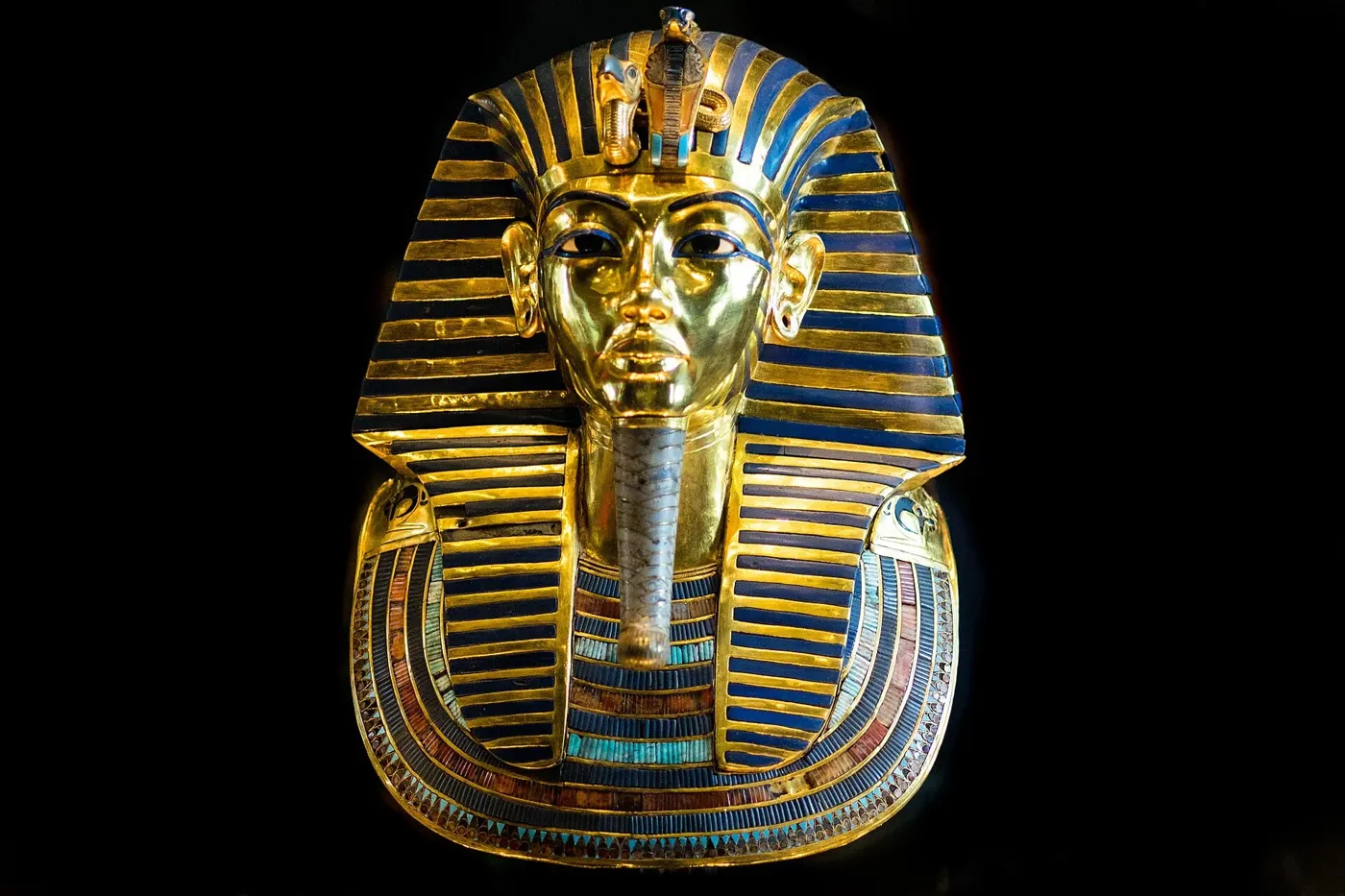
Photograph: Mark Fischer · CC BY-SA 2.0 · Source
Held by: Grand Egyptian Museum, Giza · Catalogue JE 60672
The story
Howard Carter's team cleared the last chamber of Tutankhamun's tomb in 1925 and lifted the lid of the innermost coffin. Inside, over the mummy's head and shoulders, lay the mask: gold sheet beaten and burnished, the stripes of the nemes headdress in blue glass, the eyes of quartz and obsidian, the broad collar of carnelian, lapis and turquoise. On the back, a spell from the Book of the Dead asks the gods to protect the king's body part by part.
The mask became the face of ancient Egypt for the whole world. It travelled on exhibition for decades, and since November 2025 the complete Tutankhamun collection, the mask at its head, has been displayed together for the first time at the Grand Egyptian Museum at Giza.
The record, not the myth
The mask may not have been made for Tutankhamun: a 2015 study argued its face plate was reworked from a mask made for Neferneferuaten, and the debate continues. The famous beard was knocked off during cleaning in 2014 and badly glued before being properly restored in 2015; that episode is documented, not rumour.
Sources
Image and model credits
- PhotographMark Fischer · CC BY-SA 2.0 · Source