
Artifacts · No. 9
Flood Tablet (Gilgamesh, Tablet XI)
The tablet whose flood story, a man warned by a god who builds a boat and grounds on a mountain, forced the Victorian world to rethink the age and setting of Genesis.
7th century BC (older sources)Zoomable photographFamily viewing: YesCatalogue: K.3375
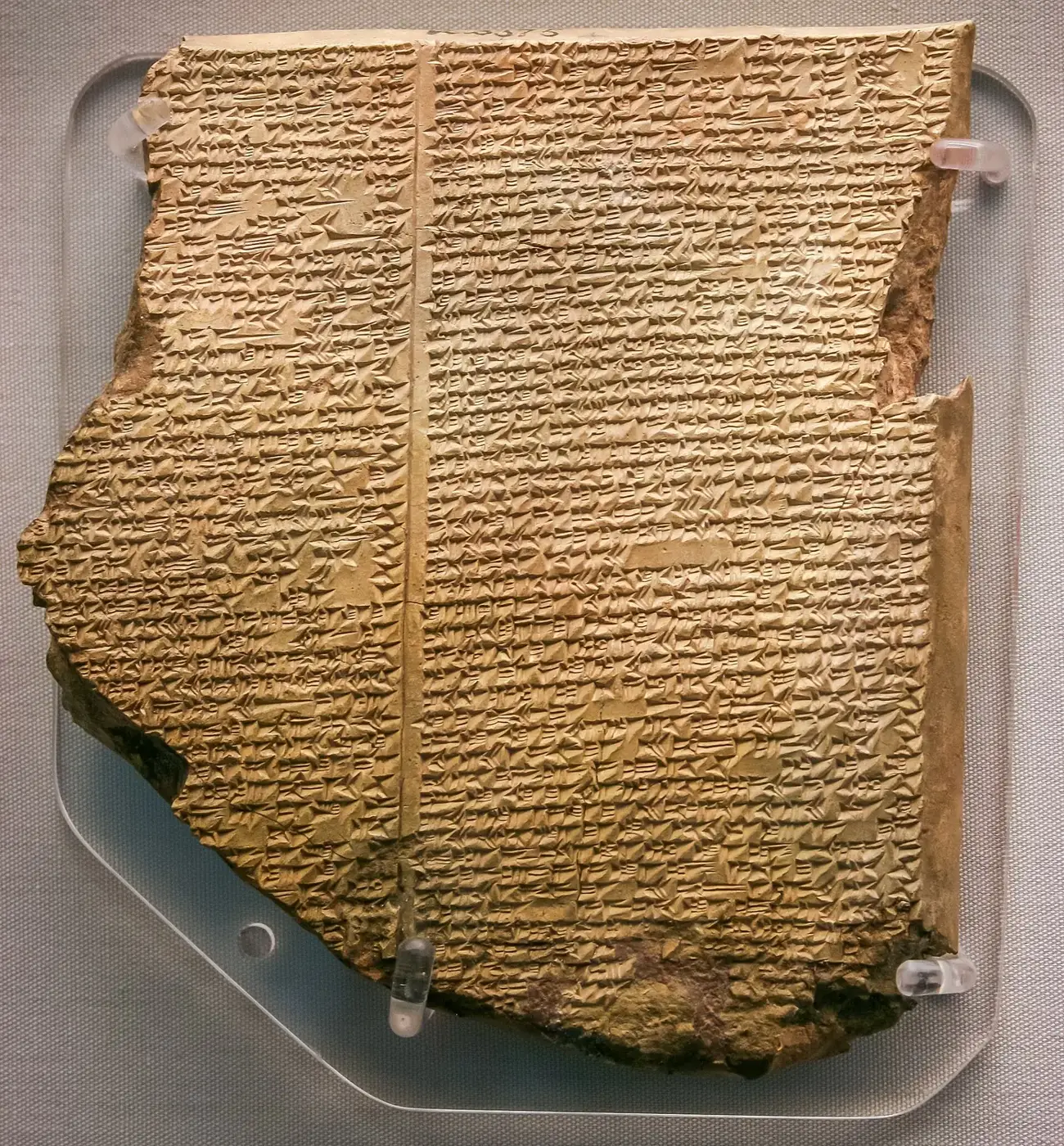
Photograph: Photograph by Mike Peel ( www.mikepeel.net ). · CC BY-SA 4.0 · Source
Held by: British Museum, London · Catalogue K.3375
The story
This baked clay tablet came from the library of Ashurbanipal at Nineveh and holds the eleventh tablet of the Epic of Gilgamesh. In 1872 George Smith, a banknote engraver turned self taught Assyriologist at the British Museum, read it and found a flood: the god Ea warns Utnapishtim, tells him to tear down his house and build a boat, take the seed of all living things aboard, and the boat grounds on Mount Nisir. Birds are sent out to test the waters.
Smith's announcement made headlines around the world and a newspaper funded his expedition to find the missing pieces, which he did. The tablet is older than the biblical text in its surviving form by centuries, and it draws on still older Mesopotamian flood poems. What the relationship between the traditions is remains a live scholarly question; the parallel itself is not in doubt.
The warning, as Utnapishtim tells it
“O man of Shuruppak, son of Ubartutu: tear down the house and build a boat. Abandon riches and seek life. Spurn possessions and keep alive living beings. Make all living beings go up into the boat.”
Tablet XI of the Epic of Gilgamesh, in the standard translation tradition. The god Ea speaks to the reed wall, so as not to break his promise to the other gods, and Utnapishtim hears.
The record, not the myth
The tablet is a 7th century BC library copy of a much older poem, not an eyewitness record of a flood. Parallels with Genesis are close in outline and different in theology and detail; both points belong in the account.
Sources
Image and model credits
- PhotographPhotograph by Mike Peel ( www.mikepeel.net ). · CC BY-SA 4.0 · Source