
Artifacts · No. 34
Gold Crown from Hwangnamdaechong Tomb
The largest and most ornate of the Silla gold crowns: a circlet of upright trees and antlers hung with jade and gold spangles, from the royal tombs of Gyeongju.
5th century ADZoomable photographFamily viewing: YesCatalogue: National Treasure No. 191
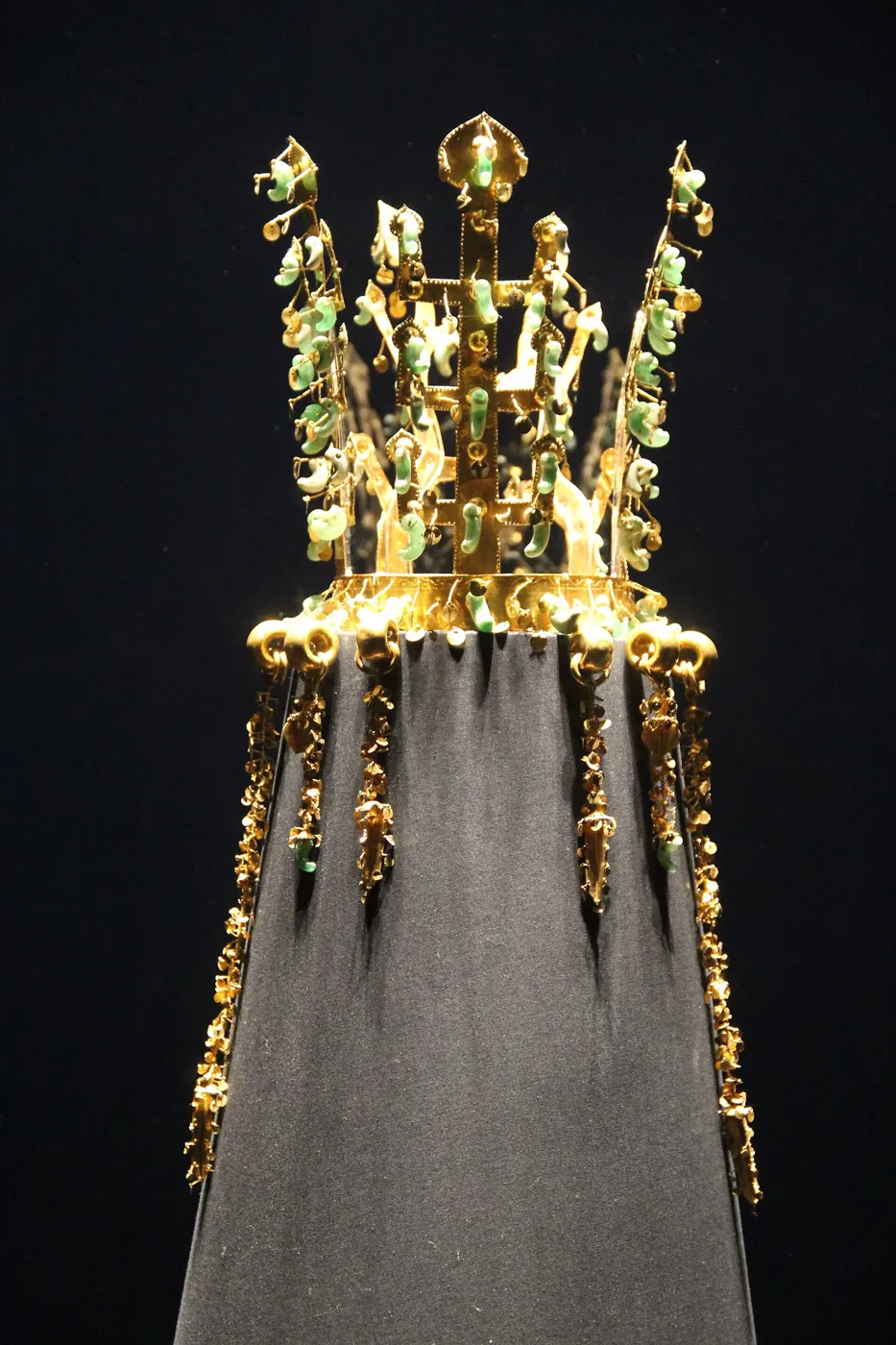
Photograph: Gary Todd · CC0 · Source
Held by: National Museum of Korea, Seoul · Catalogue National Treasure No. 191
The story
The kingdom of Silla buried its kings in mounds of stone and earth at Gyeongju so large that tomb robbers could not reach the chambers, which is why Silla's gold survived when other kingdoms' did not. From the north mound of the Hwangnamdaechong tomb, the largest of them, excavated in 1973-75, came this crown: a gold band set with three tree shaped uprights and two antler forms, hung all over with comma shaped jades and thin gold discs that moved and caught the light as the wearer moved.
Six such crowns are known, and they read as much shamanic as royal: the trees and antlers point to the sacred tree and the antlered spirits of the northern steppe world that Silla came from. This example, National Treasure No. 191, is the grandest, and the National Museum of Korea's signature piece.
The record, not the myth
Whether crowns like this were worn in life, made for burial, or both is argued from their fragility; the spangles would not survive a day's hard use. The tomb's royal occupant is not named by any inscription.
Sources
Image and model credits
- PhotographGary Todd · CC0 · Source
Continue on
Imperial Crown of the Holy Roman EmpireBehaim Globe (Erdapfel)