
Artifacts · No. 67
Shakōki-dogū (Goggle Eyed Dogū)
A clay figure with enormous goggle eyes from Jōmon Japan: the most famous of the dogū, the enigmatic figurines of the world's longest lived pottery culture.
c. 1000-400 BCZoomable photographFamily viewing: Yes
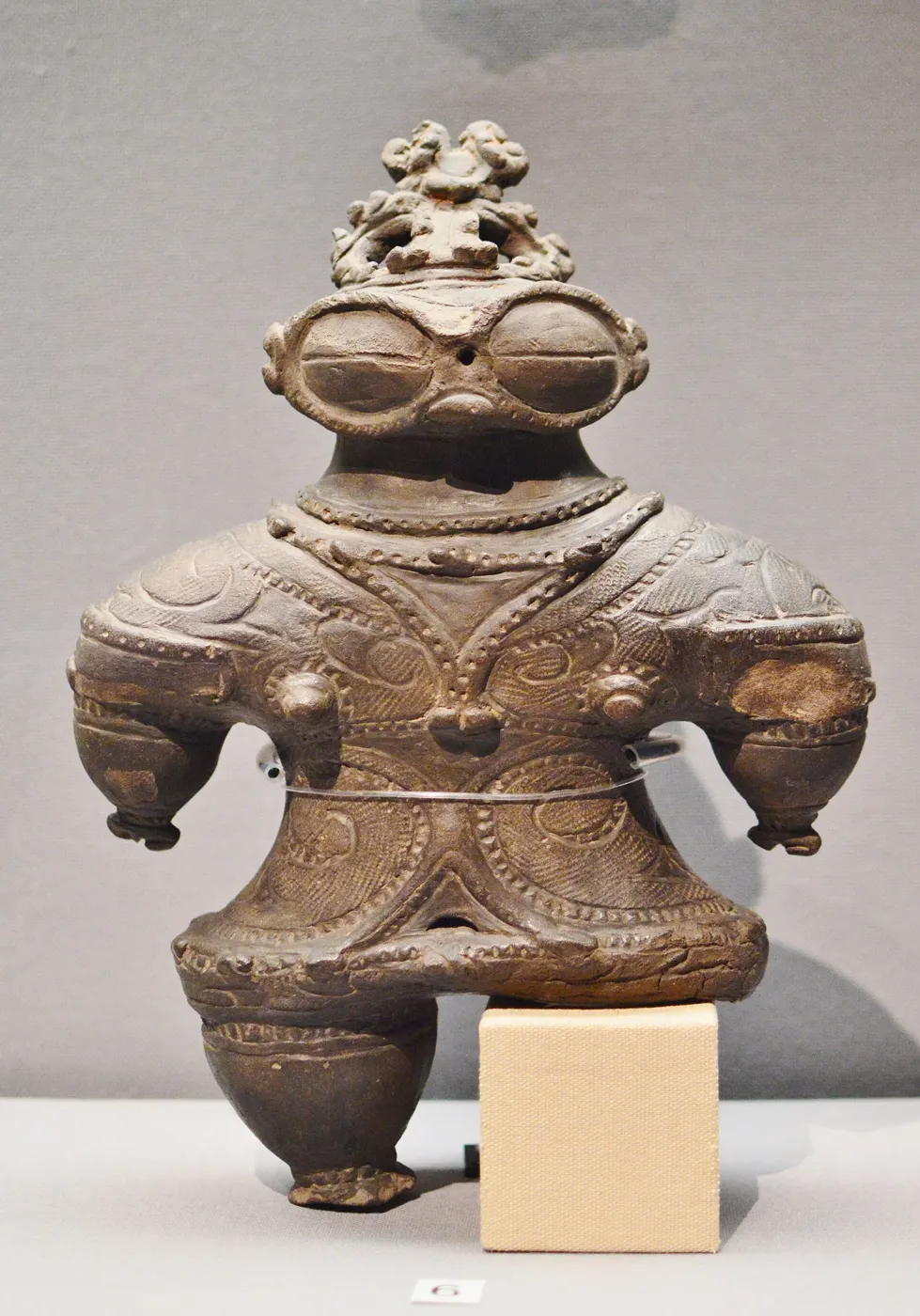
Photograph: Saigen Jiro · Public domain · Source
Held by: Tokyo National Museum
Seeing it. As of November 2026 the figure is in the Tokyo National Museum's Japanese archaeology gallery rotation; dogū rotate on and off display, and the museum's listing is the authority.
The story
The Jōmon people of Japan made pottery for over ten thousand years, and in the last phase of their culture they made dogū: clay figures, usually female in form, with exaggerated hips and breasts and faces dominated by great slit or goggle eyes, like snow goggles, which give this type its name. This example, an Important Cultural Property in the Tokyo National Museum, is the type specimen: snow goggle eyes, a small nose and mouth, patterns rolled and incised over the whole body.
Dogū are usually found broken, often deliberately, and scattered in settlements and middens rather than graves. What they were for, healing dolls broken where a body hurt, fertility figures, toys, spirits, is argued from those find patterns and nothing else, because the Jōmon left no writing at all.
The record, not the myth
The ancient astronaut reading of the goggle eyes, a space suit helmet, is a twentieth century invention with no evidence behind it; the eyes match the snow goggles of the northern world in shape, which is where the type name comes from. Function remains genuinely unknown.
Sources
Image and model credits
- PhotographSaigen Jiro · Public domain · Source