
Artifacts · No. 66
King of Na Gold Seal
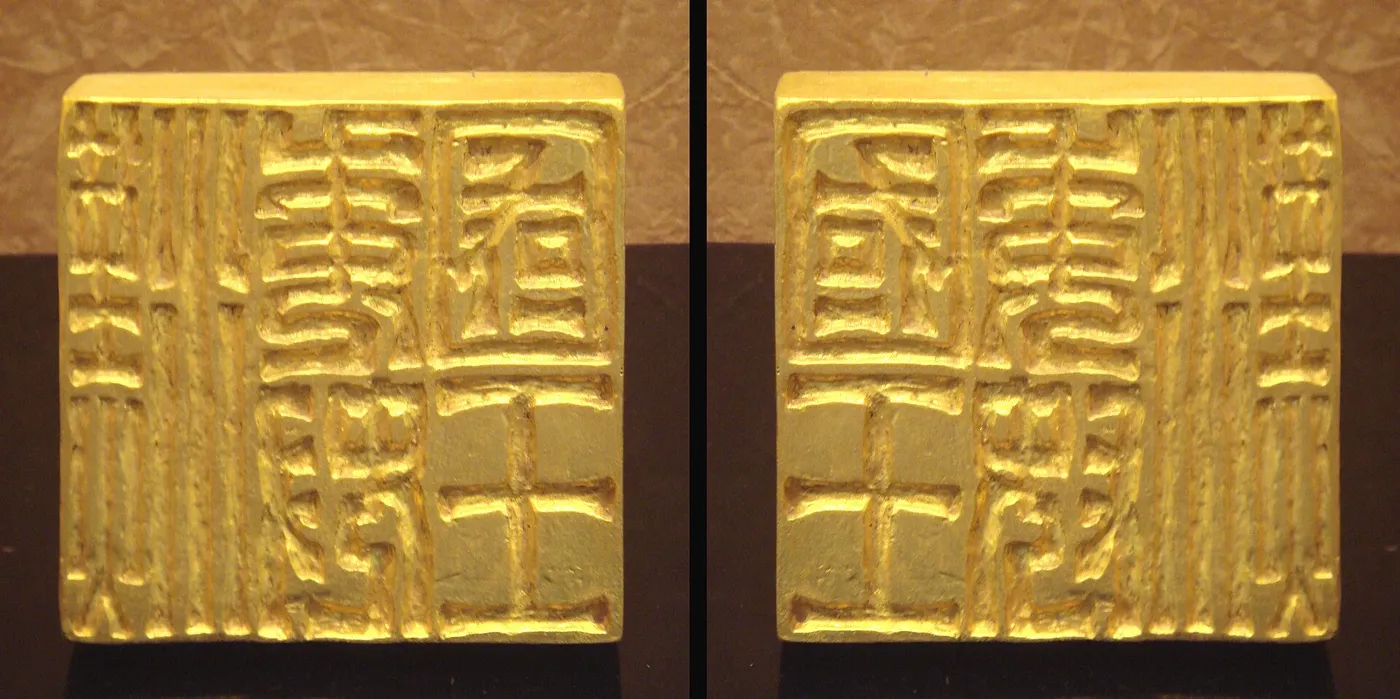
A solid gold seal of one cubic inch, given by the Han emperor to the king of Na in Japan in AD 57: the oldest physical proof of Japan's written dealings with the world.
AD 57 (bestowed)Zoomable photographFamily viewing: Yes
Photograph: PHGCOM · CC BY-SA 3.0 · Source
Held by: Fukuoka City Museum
The story
A farmer on Shikanoshima island in Hakata Bay found the seal in 1784, turning a field: solid gold, 2.3 centimetres square, its handle a coiled snake, its face cut with five characters: King of Na of Wa, of Han. The Book of the Later Han records the event behind it: in AD 57 envoys from Na, a small kingdom in what is now Fukuoka, reached the Han court, and the Emperor Guangwu gave their king a seal and ribbon. The object in the field and the line in the history match.
Wa is the old Chinese name for Japan, and the seal is the earliest surviving thing that ties a Japanese ruler to a dated event in a written record. It is Japan's first National Treasure by designation and the Fukuoka City Museum's founding piece.
The seal face
漢委奴国王
“King of Na of Wa, [vassal] of Han.”
Read in the Chinese manner: the Han emperor's gift names the little Japanese kingdom as a client of the empire, in gold.
The record, not the myth
The match between the seal and the history is as strong as such matches get, though the seal itself cannot prove the year it crossed the sea. Its authenticity was questioned in the Edo period and settled by the correspondence of text, material and find tradition.
Sources
Image and model credits
- PhotographPHGCOM · CC BY-SA 3.0 · Source
Continue on
Flying Horse of Gansu (Bronze Running Horse)Shakōki-dogū (Goggle Eyed Dogū)