
Artifacts · No. 68
Jade Mask of Pakal
A death mask of jade mosaic laid over the face of K'inich Janaab Pakal, the great king of Palenque, inside the most famous tomb in Maya archaeology.
AD 683 (burial)Zoomable photographFamily viewing: Yes
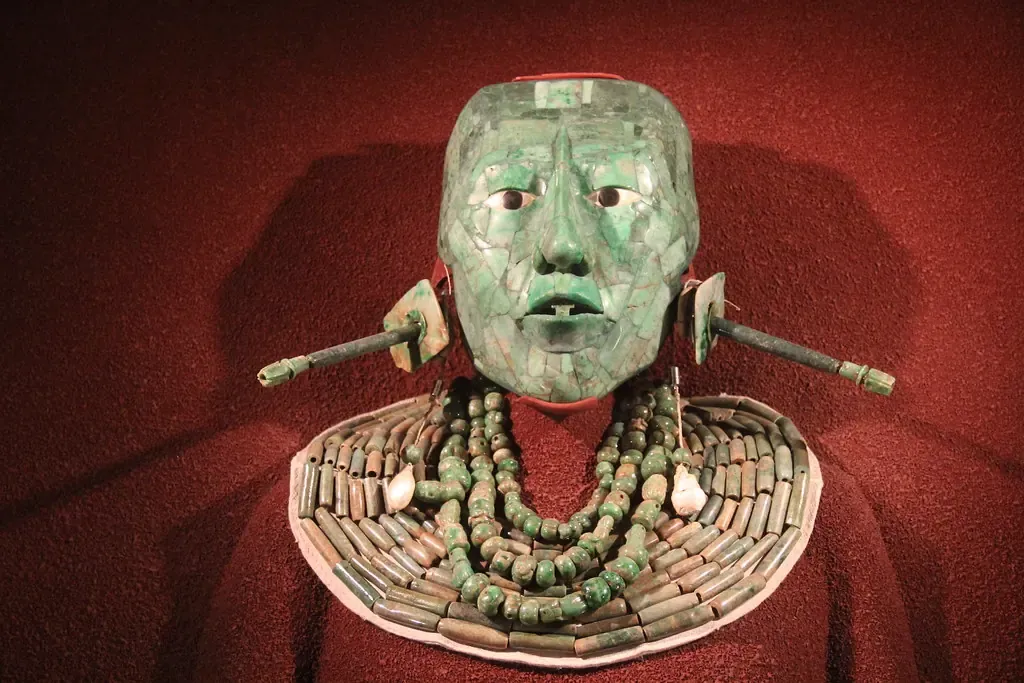
Photograph: Gary Lee Todd, Ph.D. · CC0 1.0 · Source
The story
In 1952, after four seasons of clearing rubble from a stairway hidden inside the Temple of the Inscriptions at Palenque, Alberto Ruz reached a chamber under the pyramid's floor. In a stone sarcophagus under a carved lid lay a skeleton covered in jade and cinnabar red, and over its face this mask: hundreds of jade tesserae fitted over a moulded core, eyes of shell and obsidian, the T shaped filed teeth of Maya royalty worked into the mouth.
The inscriptions named him: K'inich Janaab Pakal, who took Palenque's throne at twelve in 615 and ruled 68 years, building the palace and the temple that became his tomb. The mask is the centre of the Maya hall in Mexico City, and the tomb below the pyramid is its equal as the record of a single ancient American life.
The record, not the myth
Early accounts aged the skeleton at about 40, against the inscriptions' 80 years for Pakal, and the gap fed decades of argument; later analysis brought the bones closer to the texts. The mask's jade is a mosaic of many stones, not one carved block, which popular images rarely show.
Sources
Image and model credits
- PhotographGary Lee Todd, Ph.D. · CC0 1.0 · Source