
Artifacts · No. 19
Serpent Column
A twisted bronze column of three serpents, cast from the Persian spoils of Plataea and inscribed with the names of the 31 Greek states that fought: it still stands where Constantine put it.
479 BCZoomable photographFamily viewing: Yes
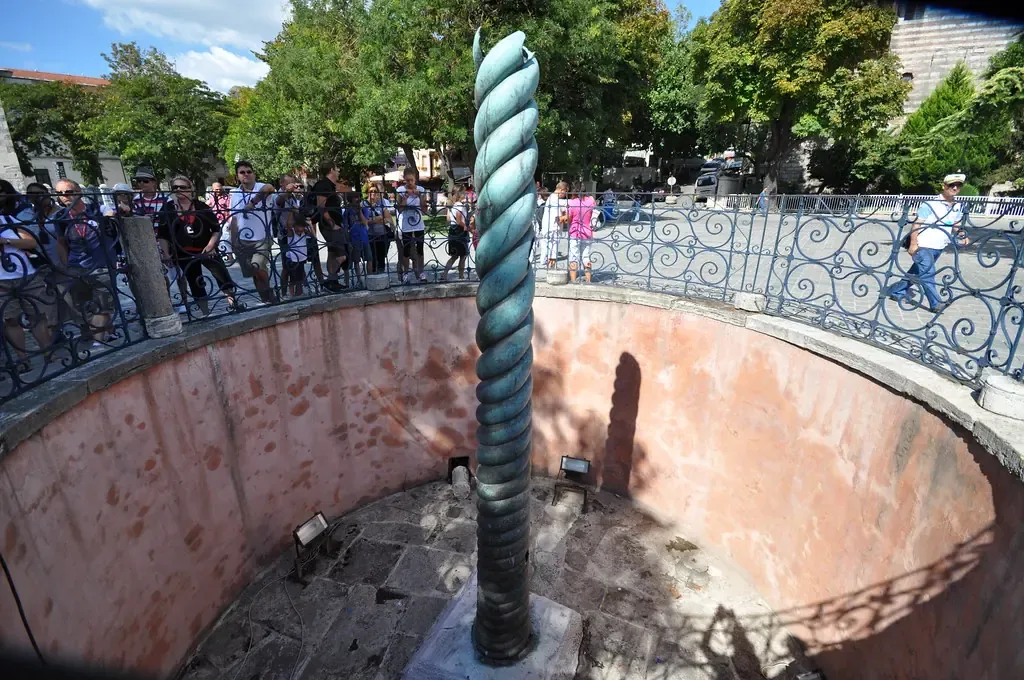
Photograph: Jorge Lascar · CC BY 2.0 · Source
The story
After the allied Greeks destroyed the Persian invasion at Plataea in 479 BC, a tenth of the spoils went to Apollo at Delphi as a golden tripod standing on a column of three intertwined bronze serpents. Down the serpents' coils the allies cut the names of the states that had fought the war, 31 of them, headed by the Lacedaemonians. It was the victory monument of the whole alliance, and a list that argued with itself: cities that had medised or stayed home are not on it.
The gold tripod was stolen in the fourth century BC. Constantine took the bronze column to his new capital and set it in the Hippodrome, where it stands today in Istanbul, about a third of its height buried by the rising ground, its serpent heads lost in the Ottoman centuries. One head survives in the Istanbul Archaeology Museum.
The roll of the allies
“These fought the war: the Lacedaemonians, the Athenians, the Corinthians, the Tegeans, the Sicyonians…”
Thirty one states are named in a single winding list down the coils. Herodotus and Thucydides give the alliance in prose; the column gives it in bronze.
The record, not the myth
Pausanias says the Spartan regent Pausanias first cut a boastful couplet of his own on the monument and the allies erased it for the city list: the list itself is partly a correction. The column's ancient height is reconstructed from its buried base and travellers' drawings.
Sources
Image and model credits
- PhotographJorge Lascar · CC BY 2.0 · Source
Continue on
Kleroterion (Allotment Machine)Artemision Bronze (God from the Sea)