
Artifacts · No. 43
Limburg Staurotheke
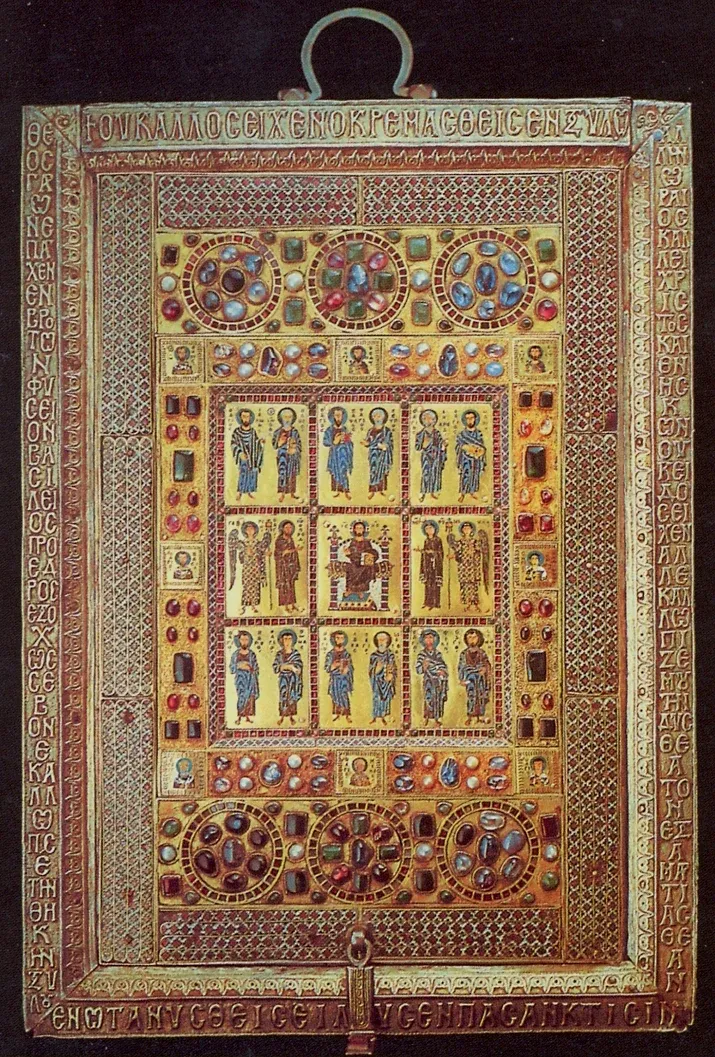
A Byzantine reliquary of the True Cross in enamel and gems, looted from Constantinople in 1204 and carried home by a crusader: the finest Byzantine enamel work in the West.
964-965 (frame 968-985)Zoomable photographFamily viewing: Yes
Photograph: Auteur byzantin du Xe siècle · Public domain · Source
Held by: Diocesan Museum, Limburg an der Lahn
The journey
- MadeConstantinople, 964-985
- TakenSack of Constantinople, 1204
- Held nowDiocesan Museum, Limburg an der Lahn
The story
A staurotheke is a box built to hold a piece of the True Cross, and this is the greatest one to survive. The sliding lid and inner frame are cloisonné enamel of the Constantinople court workshops, made under the emperors Constantine VII and Romanos II in 964-65, with the frame finished a few years later: Christ, the Virgin, the archangels and the apostles in enamel cells of gold, ringed with gems and pearls, and inside, the cross shaped cavity for the wood.
In April 1204 the Fourth Crusade sacked Constantinople, and the knight Heinrich von Ulmen took the staurotheke among his share of the loot, giving it in 1208 to the Augustinian nuns of Stuben near his home. It stayed in the Moselle valley through the centuries, and since the nineteenth century it has been the treasure of Limburg Cathedral's diocesan museum.
The record, not the myth
The relic's own history is tradition, not record. The object's documented journey begins in 1204; its presence in the sack of Constantinople is the shame and the fact of it together, and the museum presents both.
Sources
Image and model credits
- PhotographAuteur byzantin du Xe siècle · Public domain · Source