
Artifacts · No. 28
Gundestrup Cauldron
A silver cauldron pulled from a Danish bog, covered in gods, beasts and a bull killing: the richest single picture of Celtic religion, made somewhere far from where it was found.
2nd-1st century BCZoomable photographFamily viewing: No
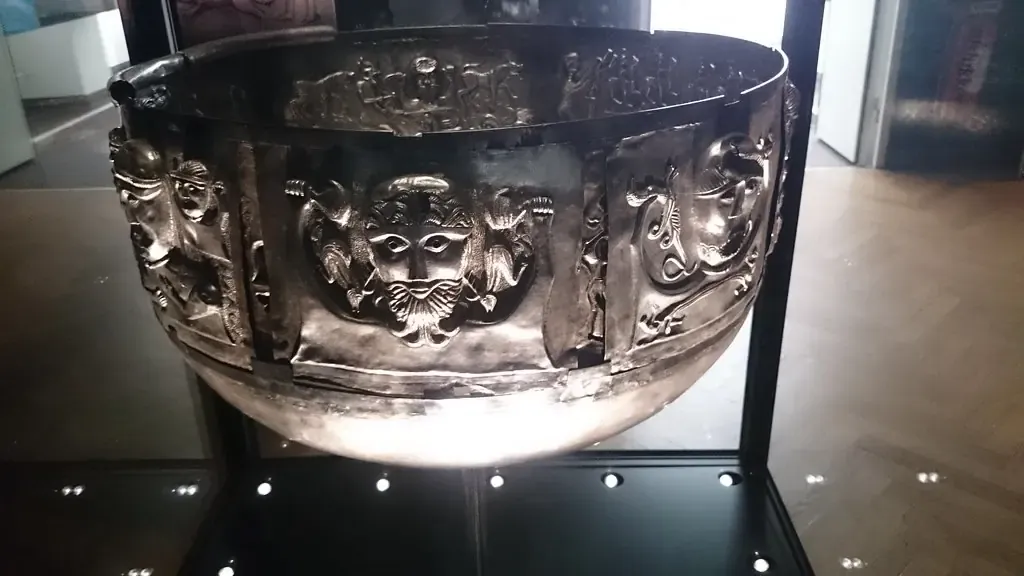
Photograph: martin_vmorris · CC BY-SA 2.0 · Source
The journey
- MadeLower Danube region (Thracian silver work)
- FoundGundestrup bog, Jutland, 1891
- Held nowNational Museum of Denmark, Copenhagen
The story
Peat cutters in the Gundestrup bog in Jutland in 1891 found the cauldron dismantled and stacked in the peat: thirteen silver plates, bent and separated, the vessel taken apart before it was laid in the bog, most likely an offering. Rebuilt, it stands about 42 centimetres tall, gilded silver inside and out, and every surface is worked: gods with torcs, elephants, griffins, a wheel god, warriors and priests, and on the base plate a great bull being killed.
Nothing else like it survives from the Celtic world, and its pictures are the largest single source for how the gods of Gaul and Britain may have been imagined, including a horned god often linked to Cernunnos. The workmanship points east, to Thracian silver workers on the lower Danube; how it travelled to a Jutland bog is its standing mystery.
The record, not the myth
Made in the Balkans, found in Denmark: every account of the journey between is a reconstruction. Reading its scenes as a connected myth is guesswork; the plates may not even be a single programme.
Sources
Image and model credits
- Photographmartin_vmorris · CC BY-SA 2.0 · Source