
October 6, 2026
Romania and the Ceaușescus
Nicolae Ceaușescu assumed control of Romania in 1965 following the death of Gheorghe Gheorghiu-Dej, later establishing an autocratic presidency and a pervasive cult of personality following political shifts in 1974.
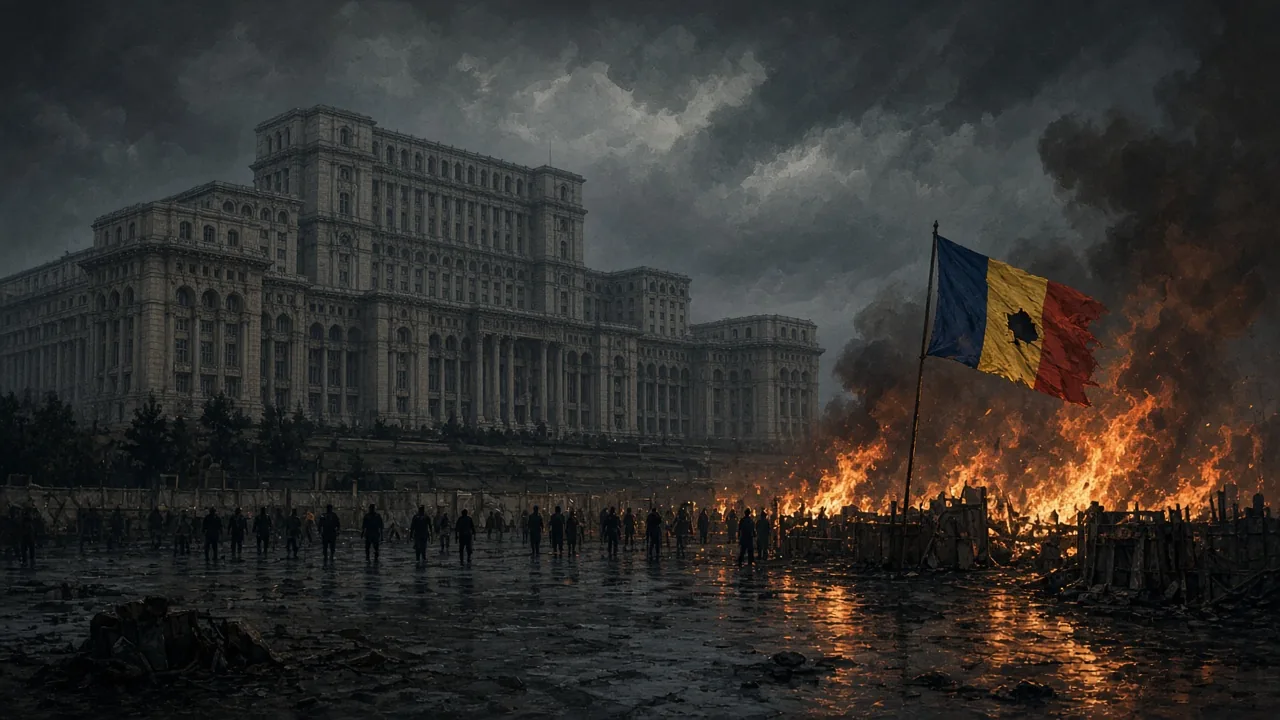
Nicolae Ceaușescu assumed control of Romania in 1965 following the death of Gheorghe Gheorghiu-Dej, later establishing an autocratic presidency and a pervasive cult of personality following political shifts in 1974. On August 21, 1968, Ceaușescu addressed a massive crowd in Palace Square, publicly condemning the Warsaw Pact invasion of Czechoslovakia as a grave error that threatened international socialist solidarity. This stance granted him significant foreign policy leverage, prompting Western nations to view him as a distinct political figure even as his administration constructed an oppressive internal security state. The international goodwill gained from this event was followed three years later by the July Theses of 1971, which instituted restrictive cultural policies influenced by his visits to China and North Korea.
Demographic engineering formed a core pillar of the regime's domestic strategy. Enacted on October 1, 1966, Decree 770 outlawed abortion and contraception, causing a sharp, immediate rise in national birth rates. The generation born under this decree encountered severe social and medical complications. Female workers were subjected to compulsory workplace gynecological examinations monitored by state authorities. Medical documentation indicates that roughly ten thousand women died from unsanctioned, unsafe abortion procedures. By 1977, the state imposed punitive financial levies on childless citizens, while approximately one hundred thousand children were placed in state care facilities where institutional neglect was widespread. Internal monitoring was managed by the Securitate, which deployed an estimated four hundred thousand informers across a national population of twenty-two million, maintaining systematic control over personal correspondence and typewriter registration.
During the 1980s, Ceaușescu prioritized the complete early liquidation of Romania's ten-billion-dollar foreign debt, shifting the financial burden directly onto the populace. Although the debt was fully settled by March 1989, the fiscal policy required severe domestic sacrifices. Essential agricultural output was exported while domestic stores faced severe supply shortages. In 1982, the state introduced a official "rational nutrition" initiative that framed food restrictions as a health necessity, declaring that citizens consumed excess calories. Rations were established for basic commodities, including bread, sugar, oil, and dairy products; private motor vehicle usage was limited to thirty liters of fuel per month; television broadcasts were reduced to two to three daily hours by 1985; and domestic hot water was restricted to one day per week. Power grid failures during the winter of 1983 caused infant casualties in medical intensive care units due to unpowered incubators, while daily consumer queues became a defining structural feature of urban life.
Concurrently, the state undertaken large-scale architectural restructuring under the policy of systematization, which sought to demolish traditional villages and historic urban districts in favor of standardized housing blocks and administrative centers. In Bucharest, approximately forty thousand residents were displaced on short notice to construct the Civic Centre and the Palace of the Parliament (People's House). The clearing process involved the demolition of twenty churches, three monasteries, multiple synagogues, medical facilities, and an Art Deco stadium. Construction of the palace, recognized as the heaviest building in the world, commenced in 1984, directing national material wealth toward administrative monuments while basic public utilities remained constrained.
Popular opposition materialized on December 15, 1989, in Timișoara during demonstrations against the forced relocation of pastor László Tőkés. On December 17, military forces fired upon demonstrators, resulting in seventy-three reported fatalities. On December 21, Ceaușescu convened a public assembly at the Central Committee building in Bucharest, where the crowd openly expressed dissent on live television, forcing the broadcast to end. The following day, Ceaușescu and his wife, Elena, escaped the headquarters by helicopter. They were apprehended near Târgoviște and detained in military barracks for three days.
On December 25, 1989, a summary military tribunal tried Nicolae and Elena Ceaușescu, delivering a guilty verdict within an hour on charges of genocide and economic sabotage. Ceaușescu rejected the legitimacy of the proceedings, stating he would answer only to the Great National Assembly. At 2:50 PM, both were executed by a military firing squad at the garrison. Following this execution, Romania formally abolished capital punishment, marking the definitive end of the regime's control.
Comments
Loading comments…