
Then and Now · W12
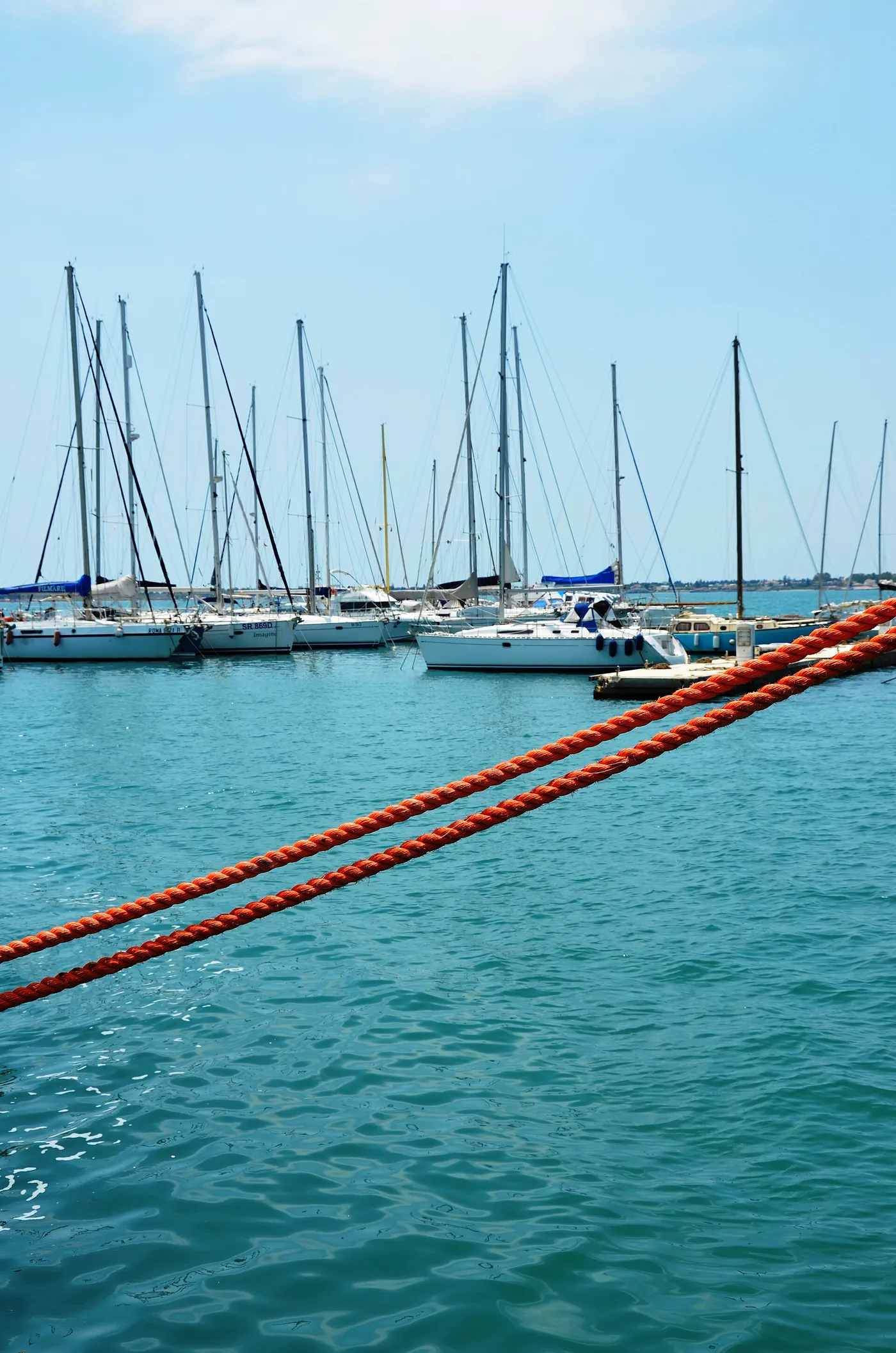
Syracuse harbor
Spence's 1895 painting shows Archimedes directing the defense of Syracuse, the claw and the mirrors of legend. The harbor below Ortigia keeps its ancient shape; the war machines are gone, and a marina fills the water.
Then: The Roman siege of 213 to 212 BCHistorical imageFamily viewing: Yes
 ThenNow
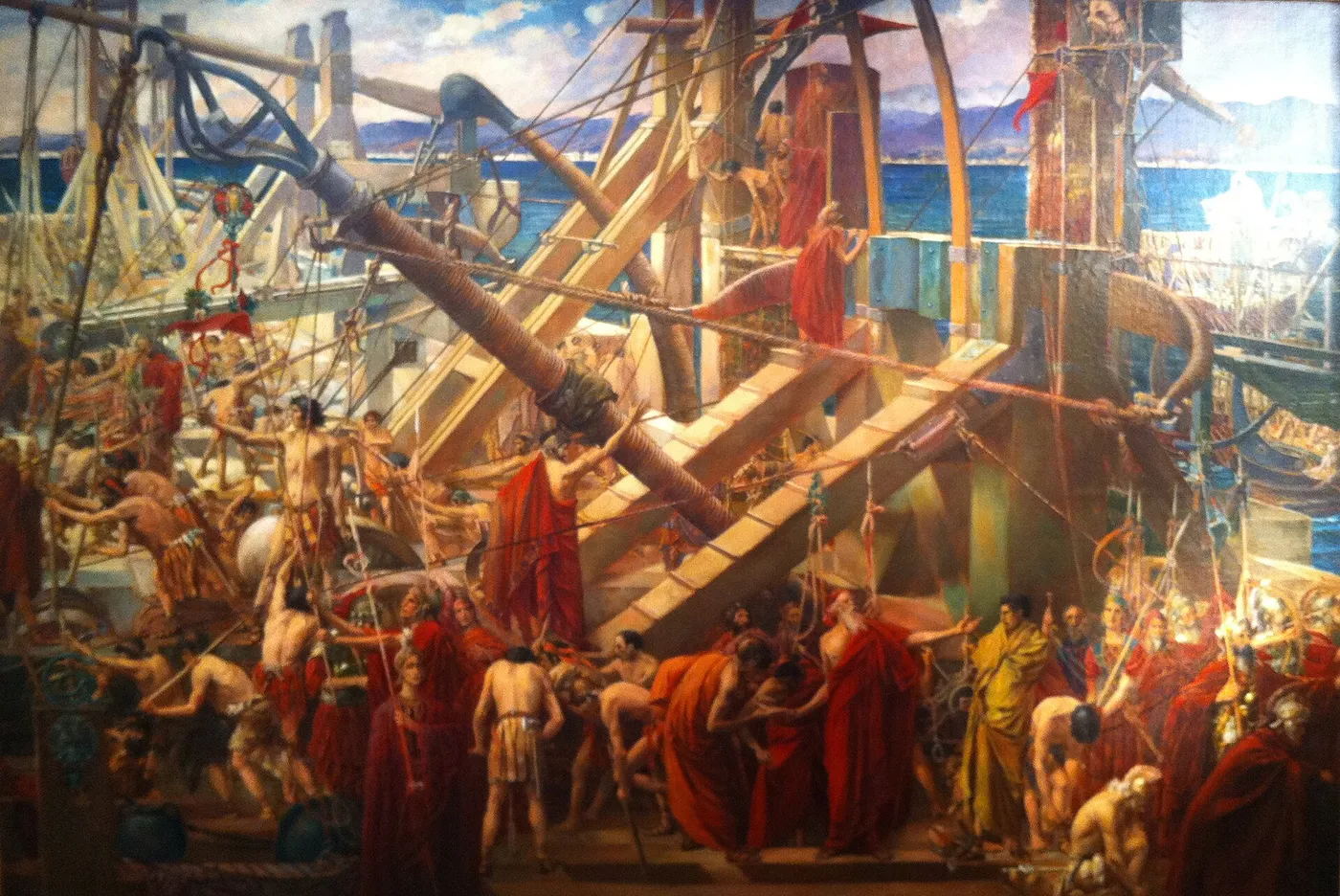
Then. The Roman siege of 213 to 212 BC. This is a real historical image of the place.
Now. A real photograph of the place as it stands.
Did you know? Archimedes was killed by a Roman soldier during the sack, against orders. The story that he was bent over his diagrams and told the man not to disturb his circles comes from the ancient accounts.
Then and now
Syracuse was the great Greek city of Sicily, and in 213 BC Rome came for it by land and sea. Its defense belonged to Archimedes, whose engines threw stones and grappled ships from the walls above the harbor, and held the Roman fleet off for two campaigning seasons.
The city fell in 212 BC to a night escalade, and Archimedes died in the sack. The Great Harbour still curves below Ortigia as it did for Marcellus' fleet; Ortigia is now a dense old town of churches built into temples, and the water carries yachts where the quinqueremes anchored.
What changed. The harbour keeps its shape; Ortigia is now a dense old town with a marina.
The record, not the myth
Archimedes' burning mirrors are doubtful legend; no ancient source close to the event describes them working.