
Then and Now · W13
Rhodes harbor
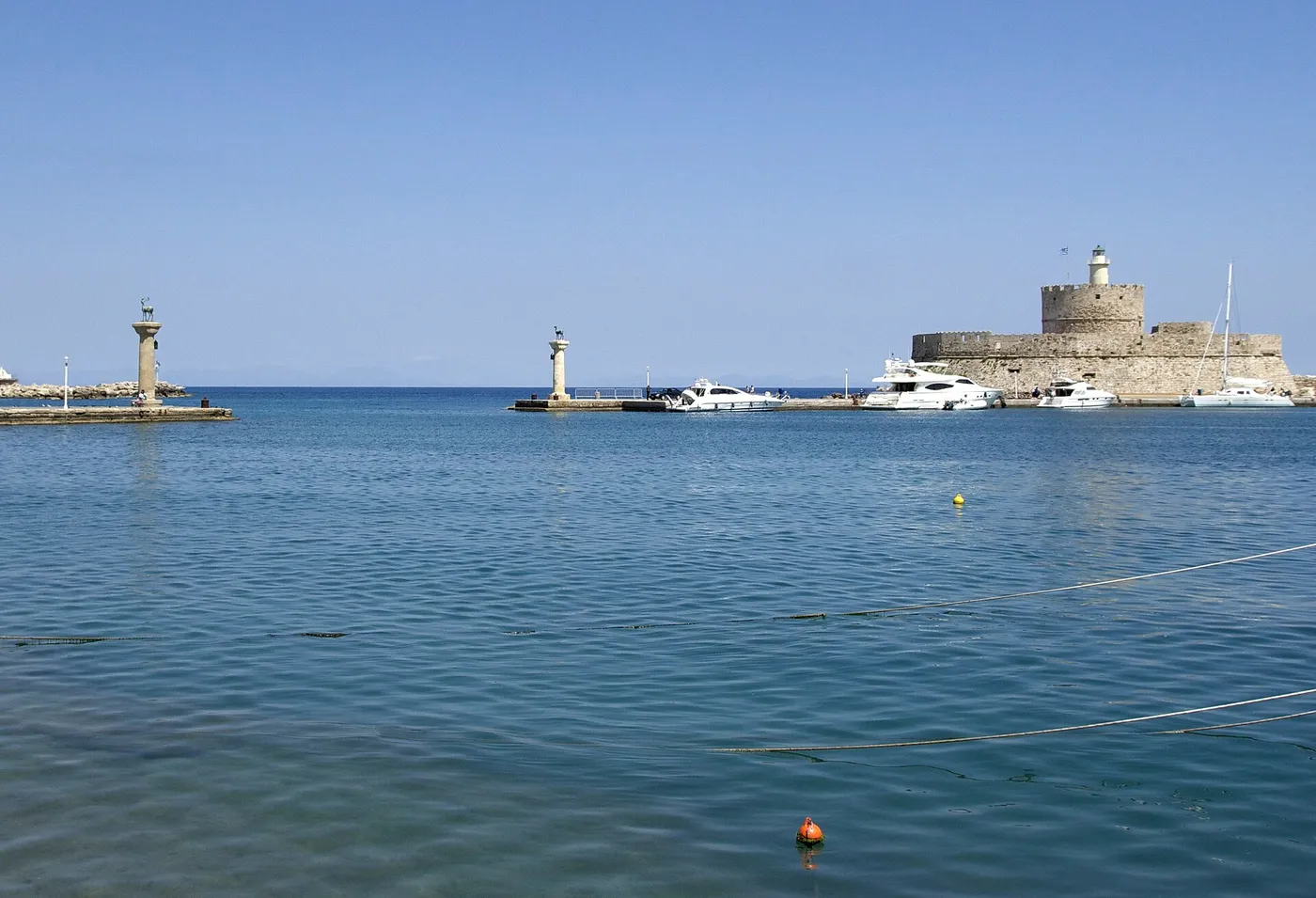
The famous engraving shows the Colossus of Rhodes straddling the harbor mouth, ships passing between its legs. That picture is a Renaissance invention. The statue stood somewhere in the city, fell in an earthquake about 226 BC, and its real site is unknown.
Then: The Colossus legendHistorical image · legendFamily viewing: Yes
 ThenNow
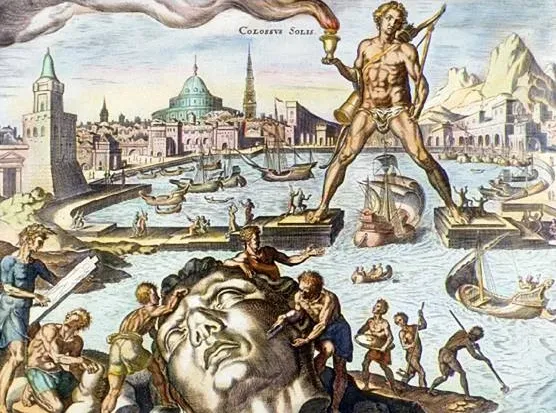
Then. The Colossus legend. This historical image shows the legend as later ages pictured it, and is labeled as legend, not record.
Now. A real photograph of the place as it stands.
Did you know? The fallen statue lay where it fell for over 800 years, so large that few men could wrap their arms around its thumb. Travelers came to see the ruin, not the statue standing.
Then and now
The Colossus was a bronze statue of Helios, about as tall as the Statue of Liberty from feet to crown, raised about 280 BC from the spoils of a failed siege. It stood for roughly half a century before an earthquake snapped it at the knees about 226 BC.
The engraving on this page, made in the 16th century, invented the harbor straddling pose, which is physically implausible and appears in no ancient source. Mandraki harbor today is guarded by two small deer statues on columns, and the Colossus' true site is still argued over.
What changed. The statue fell in an earthquake about 226 BC; deer columns now stand at the harbour mouth.
The record, not the myth
Straddling the harbour is a Renaissance myth and physically implausible; the real site is unknown. The engraving is shown as legend, not record.