
Then and Now · W28
Kalkriese, Teutoburg battle site
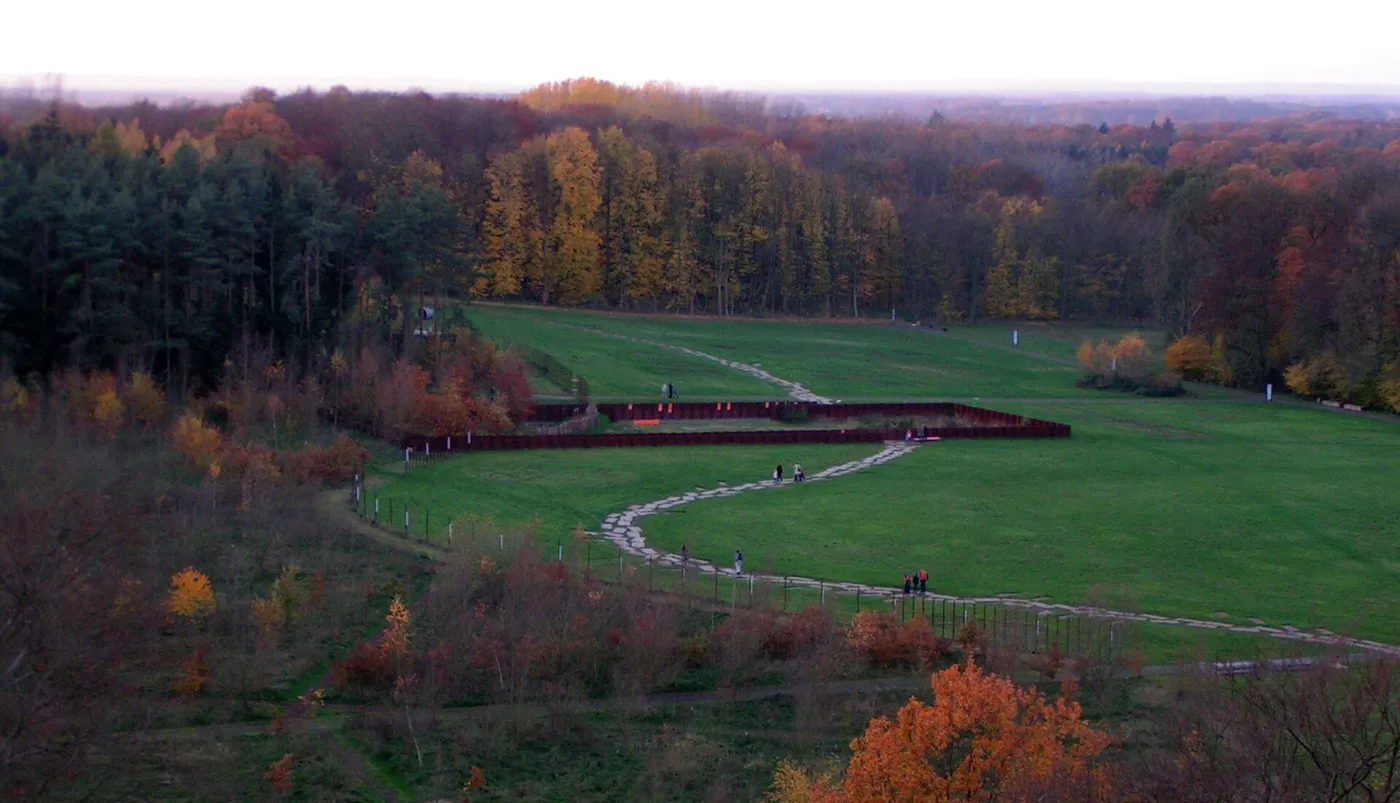
The reconstruction follows the presentation at Museum und Park Kalkriese: a Roman column strung out along a narrow track between hill and bog, where the Germanic tribes destroyed three legions in AD 9. The photograph looks over that ground from the museum tower, bog drained to farmland.
Then: The ambush of AD 9AI reconstructionFamily viewing: Yes
 ThenNow
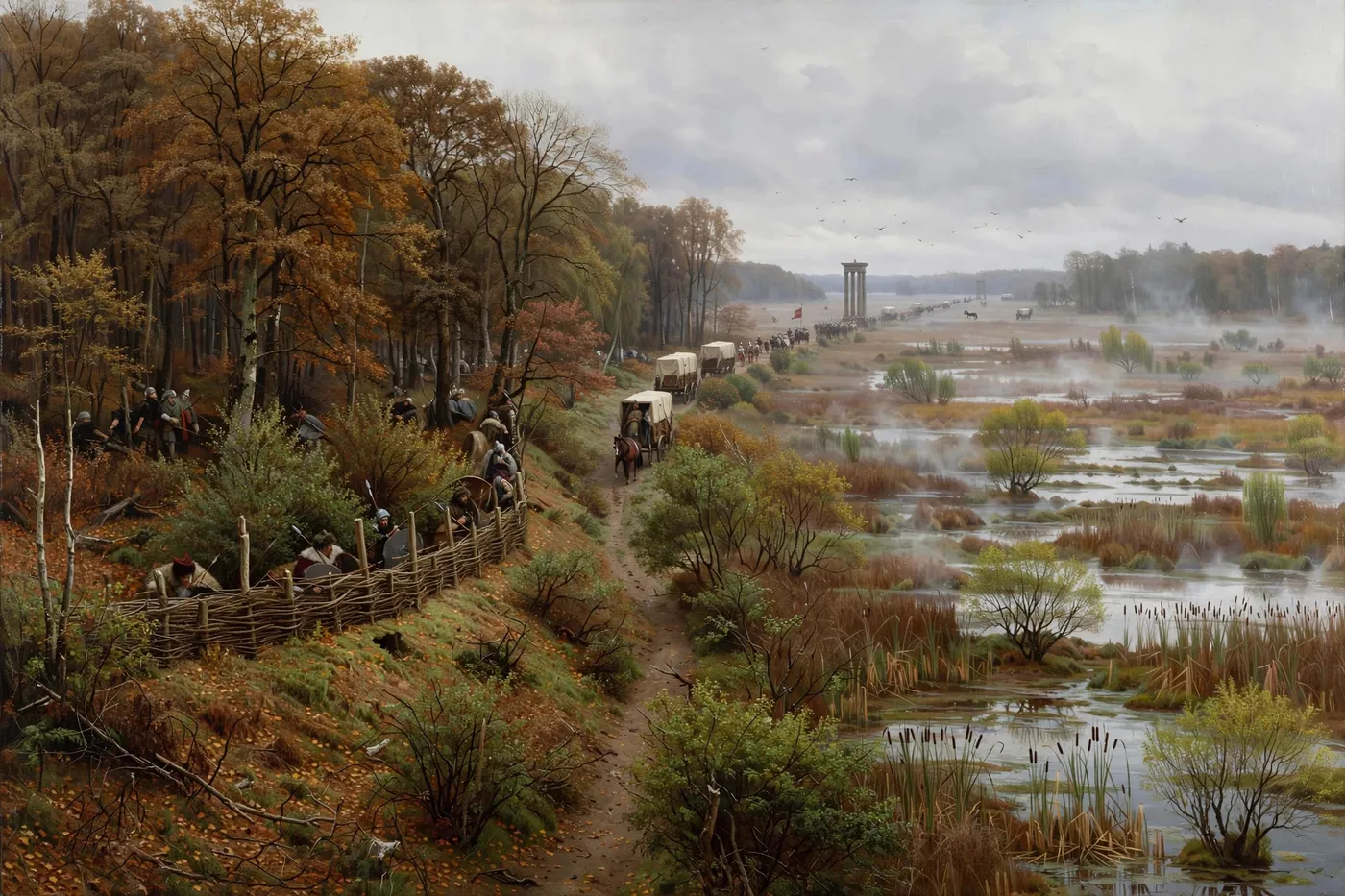
Then. The ambush of AD 9. This view is an AI reconstruction, built from the scholarship cited below. It is not a photograph.
Now. A real photograph of the place as it stands.
Did you know? A metal analysis reported in 2025 matched finds at Kalkriese to the 19th Legion, one of the three destroyed. The legions XVII, XVIII and XIX were never re-formed; Rome retired their numbers.
Then and now
In AD 9 Arminius, a Cheruscan who had served Rome, led Publius Quinctilius Varus and three legions into an ambush in the passes of northern Germany. Over days of fighting in rain and forest, the column was cut to pieces; about 20,000 men died, and Rome's advance to the Elbe stopped for good.
Since 1987 a British metal detectorist's finds and then excavation have uncovered a battlefield at Kalkriese: a turf and sand rampart along the track, Roman coins, equipment and bones in pits. The museum park stands on the ground. Whether this is the main field of Varus' defeat is still debated, but the 2025 metal signature tying finds to Legio XIX strengthened the case.
What changed. The bog was drained to farmland; a museum park stands on the site.
The record, not the myth
The site is still debated. Kalkriese is not in the modern Teutoburger Wald hills, whatever the battle's name suggests.