
Then and Now · W29
Aquileia
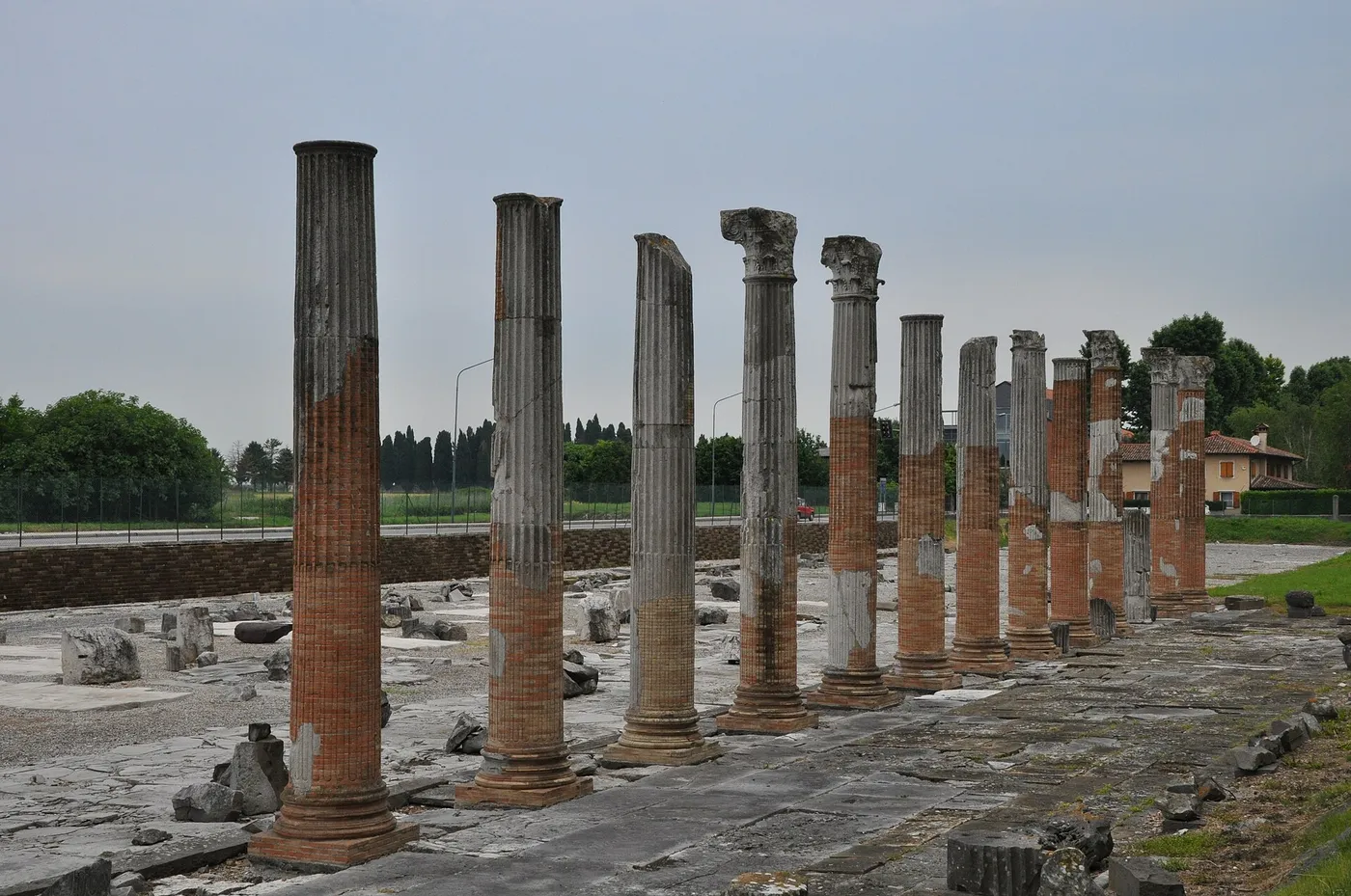
The reconstruction is built from the excavated river port: quays and warehouses along the Natissa, when Aquileia was one of the great cities of the empire. The photograph shows its forum today, in a village of about 3,000 people.
Then: The Roman river port and forumAI reconstructionFamily viewing: Yes
 ThenNow
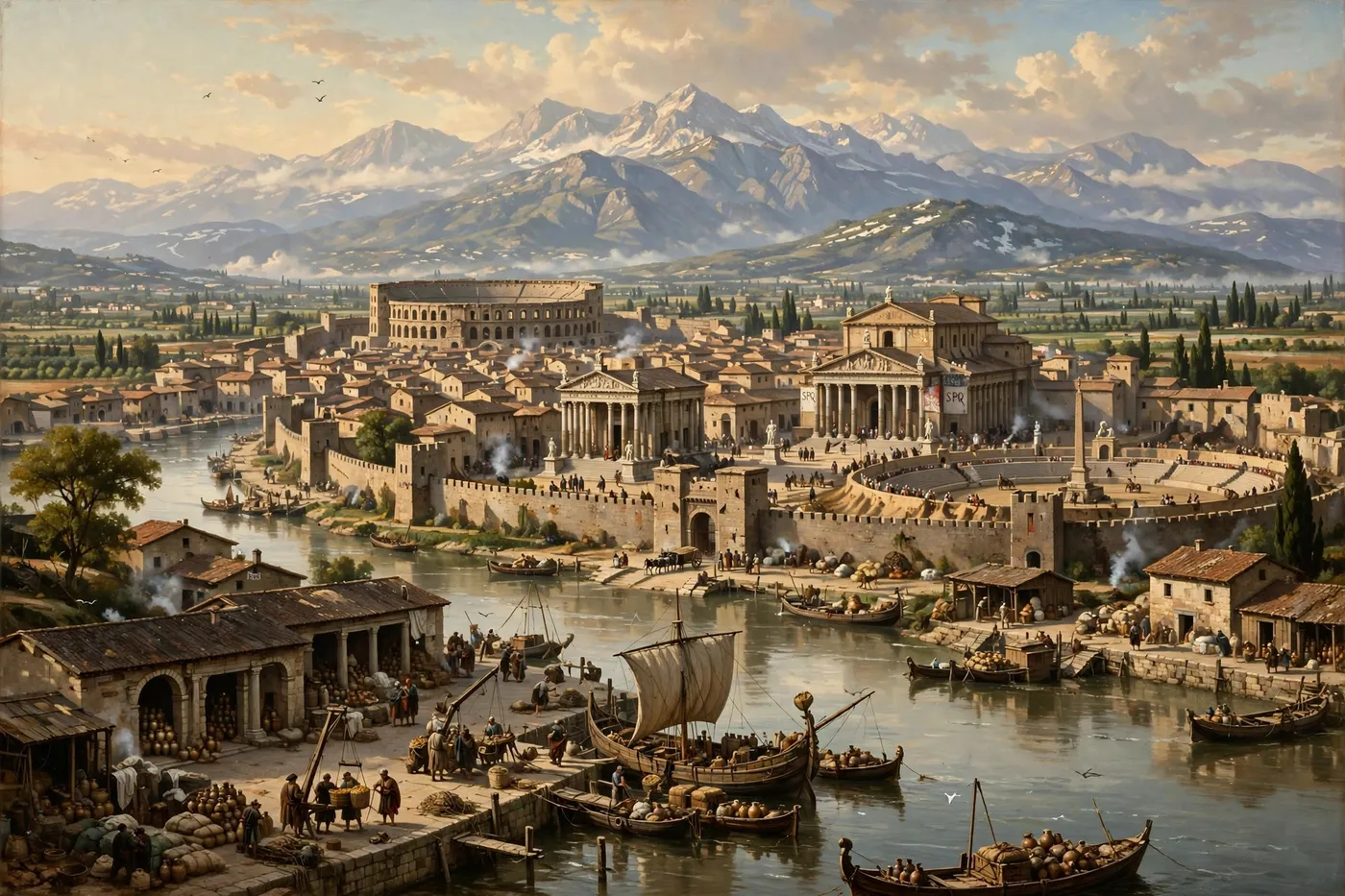
Then. The Roman river port and forum. This view is an AI reconstruction, built from the scholarship cited below. It is not a photograph.
Now. A real photograph of the place as it stands.
Did you know? Aquileia's patriarchal basilica holds one of the largest early Christian floor mosaics in the world, laid about 314 and hidden under the later church, which is how it survived.
Then and now
Founded in 181 BC as a frontier colony, Aquileia grew into a first rank imperial city: a river port moving goods between the Adriatic, Italy and the Danube lands, with perhaps 100,000 people, an imperial palace, and one of the earliest great Christian basilicas.
Attila sacked the city in 452, and it never recovered its size; earthquakes, flooding and the rise of Venice finished the decline. The excavated river port is a dry trench of quays in the fields, and the forum's columns stand in a quiet village. The reconstruction restores the water and the warehouses to the port trench as the excavators found its plan.
What changed. A major city sacked in 452 is now a village; the river port is a dry trench.
The record, not the myth
Aquileia's fall is often laid wholly on Attila's sack of 452; the city was already shrinking, and its patriarchate and trade drained away by degrees to Grado and Venice.